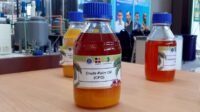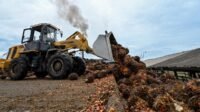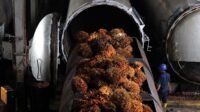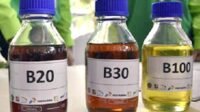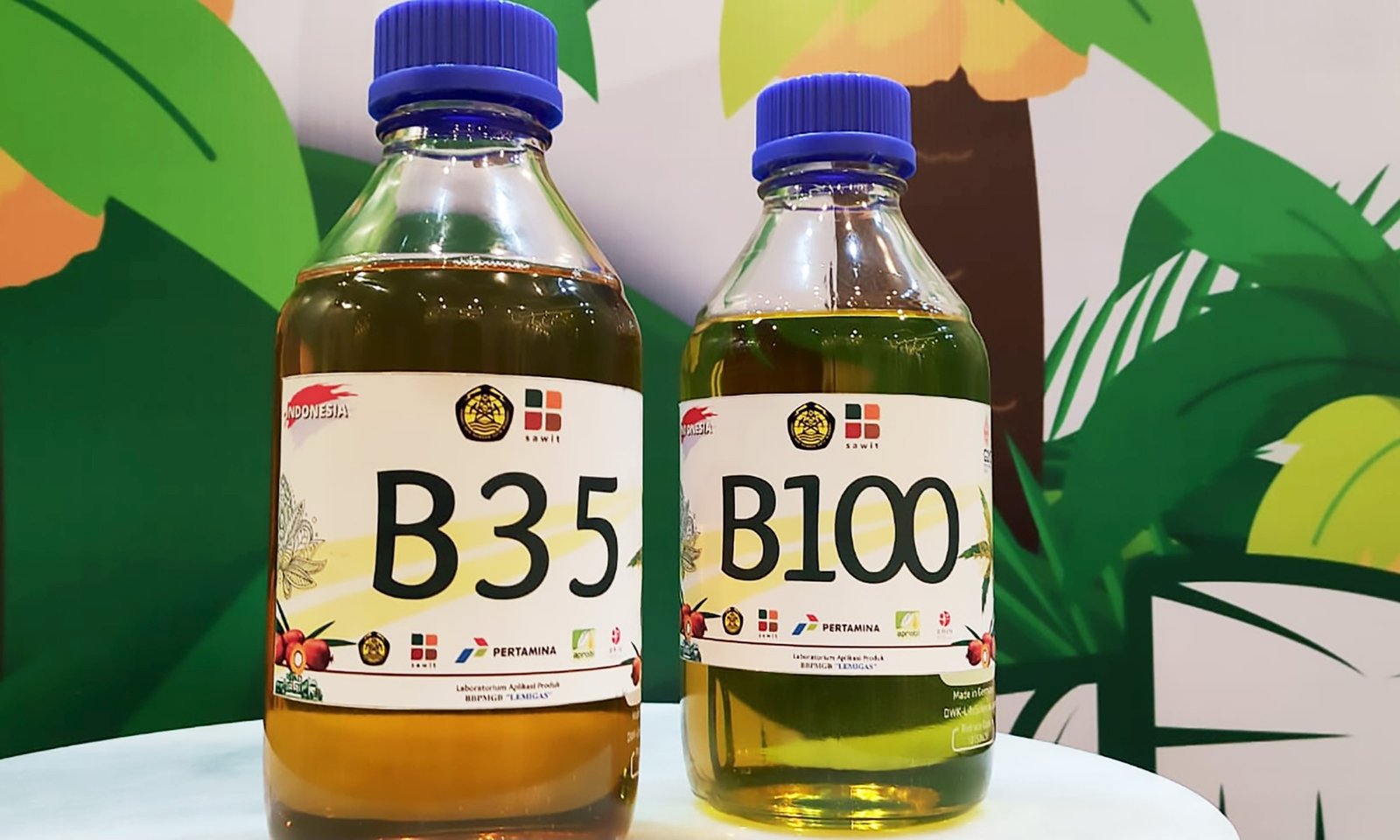
PALMOILMAGAZINE, JAKARTA — The Indonesian government is finalizing preparations for the implementation of 50% biodiesel (B50) blending with diesel fuel, targeted to begin in the second half of 2026. The initiative aims to eliminate diesel imports and enhance national energy independence by utilizing crude palm oil (CPO) as a domestic renewable energy source.
Minister of Energy and Mineral Resources (ESDM) Bahlil Lahadalia said the B50 program has passed three testing phases and is now entering its final stage. The latest trials are being conducted across various types of engines — including ships, trains, and heavy machinery — and are expected to take six to eight months to complete.
“This final testing phase will last around six to eight months. Once it’s complete and the B50 decision is made, God willing, Indonesia will no longer import diesel. The target is the second half of 2026,” said Bahlil at the Jakarta International Convention Center (JICC), Senayan, Thursday (October 9, 2025).
Also Read:
Bahlil emphasized that the B50 policy will not only strengthen Indonesia’s energy resilience but also create new opportunities for the palm oil industry. The government plans to maximize domestic CPO production to meet biodiesel demand, including through land optimization and expansion in high-potential regions.
“If intensification and land development proceed smoothly, we won’t need to reduce CPO exports,” Bahlil added, as quoted by Palmoilmagazine.com from Detik on Friday (October 10, 2025).
Indonesia to Require 19.7 Million Kiloliters of FAME for B50
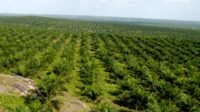
Deputy Minister of Energy and Mineral Resources Yuliot Tanjung explained that to achieve the B50 target by 2026, Indonesia will need 19.73 million kiloliters (KL) of Fatty Acid Methyl Ester (FAME) derived from palm oil. This volume, he noted, could be met with an additional 2.3 million hectares of palm oil plantations.
However, the government is also preparing a contingency plan in case FAME production falls short. Under this scenario, the government will first roll out B45, which requires approximately 17 million KL of FAME.
“We’re assessing the availability of raw materials. For B45, we’ll need around 17 million KL, while B50 requires about 19 million KL,”
Yuliot said at the JW Marriott Hotel, South Jakarta, Tuesday (September 23, 2025).
The B50 program builds on the success of B35, which has been implemented nationwide since 2023. Besides reducing dependence on imported fossil fuels, the initiative is expected to increase the added value of palm oil, absorb smallholder production, and cut carbon emissions from the transportation sector.
As the world’s largest biodiesel producer, Indonesia recorded domestic biodiesel consumption exceeding 12 million KL in 2024. With B50 in place, that figure is projected to nearly double, reinforcing Indonesia’s global leadership in renewable fuel innovation. (P2)