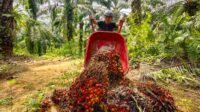
PALMOILMAGAZINE, JAKARTA — Indonesia’s palm oil industry continues to reinforce its position as one of the country’s most strategic sectors. Beyond contributing around 3.5% to national Gross Domestic Product (GDP), palm oil now plays a central role in strengthening energy security through the ongoing B40 biodiesel mandate and the government’s plan to raise it to B50 next year.
According to Baginda Siagian, Director of Oil Palm and Various Palma Crops at the Ministry of Agriculture, palm oil’s strength is not only economic—it also reduces Indonesia’s dependence on fossil fuels.
“Palm oil supports national energy security through B40 and the planned shift to B50. But if sustainability falters, export pressure becomes inevitable,” he said during the Forum Wartawan Pertanian (Forwatan) discussion themed “Palm Oil Industry Protecting Women and Eliminating Child Labor”, in Jakarta on Tuesday, December 2, 2025, attended by Palmoilmagazine.com.
Also Read:
Economic Engine for 50 Million Indonesians
Indonesia’s palm oil ecosystem is vast, employing 9.6 million direct workers and an additional 7–8 million indirect workers. Including their families, at least 50 million people rely on the sector for their livelihoods.
The economic contribution comes not only from CPO exports but also from the expanding biodiesel industry. The B40 mandate—which blends 40% palm-based biofuel into diesel—has reduced fuel imports and generated higher domestic value-added.
The planned move to B50 next year is expected to solidify Indonesia’s status as the world’s largest biodiesel producer.
Also Read: Indonesia Pushes for Stronger Palm Oil Growth, but Productivity and Technology Remain Key Challenges
Sustainability as the Defining Factor
Baginda stressed that sustainability has become a non-negotiable requirement for global market acceptance and for palm oil’s continued role in national energy policy. Ministerial Regulation 33/2025 on the Indonesian Sustainable Palm Oil (ISPO) scheme introduces stricter compliance across five criteria and 36 labor indicators.
“All company activities are now measured against their contribution to the 17 SDGs. ISPO must ensure zero child labor, gender equality, and full labor protection,” he said.
The Ministry of National Development Planning (Bappenas) will also link national development assessments to SDG compliance, meaning corporate sustainability practices will directly influence ISPO audit outcomes.
Also Read: Bappenas: Palm Oil Positioned as a Key Driver of Indonesia’s Green Transformation Toward Vision 2045
Lingering Field Challenges
Although major companies have met sustainability standards, problems persist among mid-sized firms, smallholders, and independent growers. These include wage disparities, limited personal protective equipment, inadequate childcare facilities, and uneven access to healthcare services.
Baginda also addressed widespread misconceptions about child labor. Many photos showing children in plantations are misinterpreted—most are merely accompanying their parents after school. Nevertheless, companies are strictly prohibited from employing children in any capacity.
Palm Oil Remains a Strategic Pillar
With its substantial economic impact, wide job creation, and major role in supporting Indonesia’s energy transition, palm oil remains a vital sector with no short-term substitute.
The successful implementation of ISPO and adherence to sustainability principles will determine whether Indonesian palm oil remains competitive globally while ensuring the country’s green energy programs continue to advance. (P3)