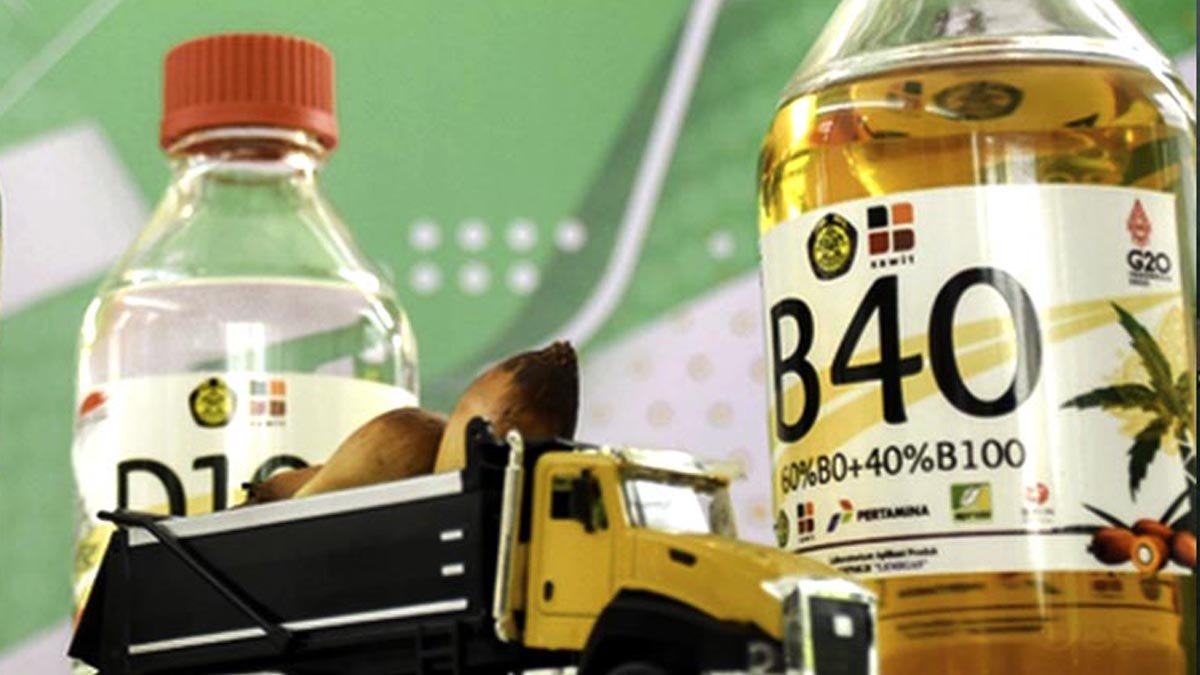
PALMOILMAGAZINE, JAKARTA — The Indonesian government, through the Ministry of Energy and Mineral Resources (ESDM), has officially set the 2026 allocation for biodiesel-type biofuel at 15,646,372 kiloliters (kL). The decision provides a key foundation for the mandatory biodiesel program aimed at strengthening the national energy mix and accelerating downstream palm oil development.
The allocation is stipulated in Ministerial Decree No. 439.K/EK.01/MEM.E/2025 on the designation of fuel oil business entities (BU BBM), biodiesel biofuel business entities (BU BBN), and the allocation of biodiesel volumes for blending with diesel fuel in 2026.
Director General of New, Renewable Energy and Energy Conservation (EBTKE), Eniya Listiani Dewi, explained that the biodiesel allocation is divided into two main categories: Public Service Obligation (PSO) and non-PSO.
Also Read: Indonesia Raises February CPO Reference Price, Export Duty and Levy Increase
Under the decree, the PSO allocation is set at 7,454,600 kL, while the non-PSO allocation amounts to 8,191,772 kL.
“The implementation of the mandatory biodiesel program in 2026 will be supported by synergies among 32 fuel oil business entities and 26 biodiesel producers appointed by the government, while maintaining the incentive scheme for the PSO sector as applied in previous years,” Eniya said in an official statement quoted by Palmoilmagazine.com, Teusday (February 3, 2026).
Boosting Energy Security and Palm Oil Downstreaming
According to the Ministry of Energy and Mineral Resources, the allocation is a strategic move to curb dependence on imported diesel fuel while strengthening national energy security and self-sufficiency. The policy is also designed to increase the use of domestic energy resources and support Indonesia’s greenhouse gas emission reduction targets.
Government calculations indicate that the 2026 biodiesel program could deliver significant economic and environmental benefits. These include an estimated IDR 21.8 trillion in added value from converting crude palm oil (CPO) into biodiesel, foreign exchange savings of around IDR 139 trillion from reduced diesel imports, and job creation for more than 1.9 million workers across the palm oil and renewable energy value chains.
From an environmental perspective, the program is projected to cut greenhouse gas emissions by approximately 41.5 million tons of CO₂ equivalent (CO₂e).
Tighter Quality Control and Distribution Oversight
The government also underscored its commitment to strengthening governance of the biodiesel program through enhanced supervision and transparency on the ground. Allocation decisions are made based on measurable criteria, including production capacity and the performance track record of business entities.
Oversight measures include monitoring biodiesel quality standards, controlling distribution at delivery points, and engaging independent surveyors to verify both volumes and quality of biodiesel supplied.
Also Read: Indonesia Sets January 2026 Biodiesel Market Index at IDR 13,631 per Liter
Stronger supervision is intended to ensure the B40 mandate is implemented effectively and delivers maximum benefits for all stakeholders, including industry players and palm oil smallholders. The government has also left room for evaluation and potential adjustments to volume targets should future energy needs or strategic policy directions change. (P2)