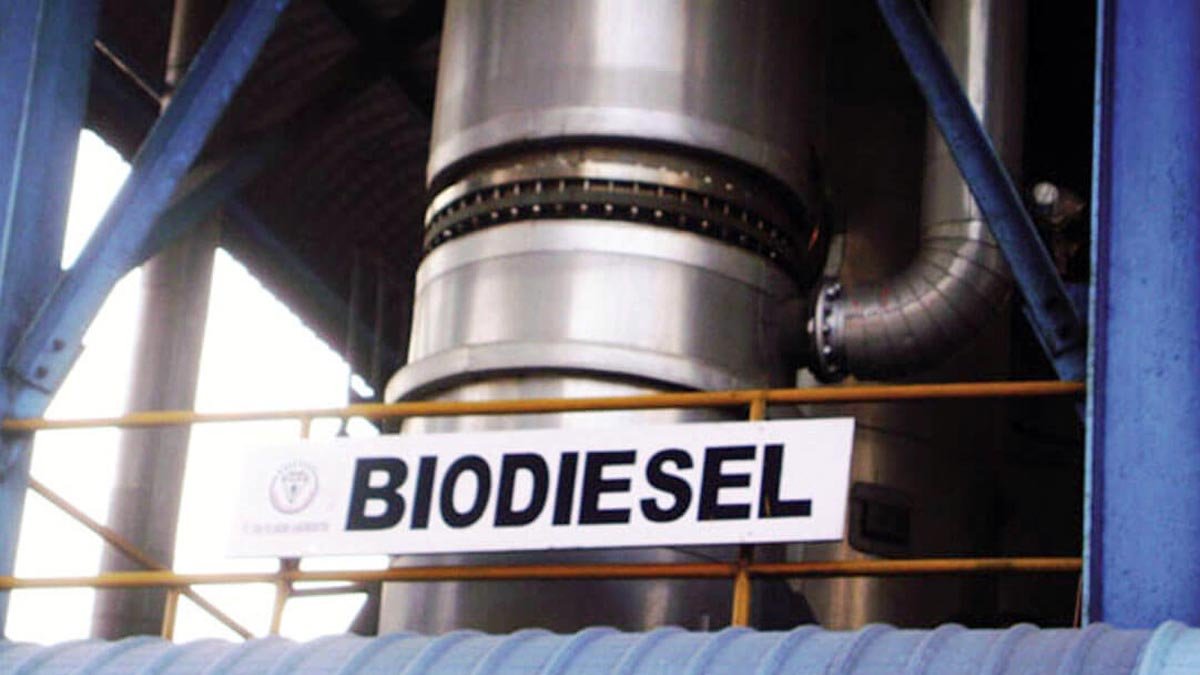
PALMOILMAGAZINE, DEPOK — As Indonesia grapples with a widening fuel deficit and mounting pressure over climate change and environmental degradation, biodiesel has emerged as a strategic policy instrument. While Europe and the United States began restructuring their energy policies years ago—starting with B5 blending mandates and gradually increasing to B10—Indonesia has moved further and faster.
“At that time, global palm oil demand surged ahead of production capacity,” said Mochamad Husni from the Communications Division of the Indonesian Palm Oil Association (GAPKI) to Palmoilmagazine.com after the 2026 Palm Oil Biodiesel Program Journalists Workshop in Depok on Thursday (5/2).
Motor vehicles remain the largest fuel consumers and key contributors to urban air pollution, particularly in cities such as Jakarta. Research conducted by Indonesia’s former Agency for the Assessment and Application of Technology (BPPT), now integrated into BRIN, in collaboration with the Bandung Institute of Technology (ITB), shows that biodiesel utilization can reduce vehicle pollutant emissions by 23% to 90%, depending on the pollutant type.
Also Read: Sustainability Risks Loom, GAPKI Pushes Productivity Over Papua Land Expansion
“These figures provide scientific legitimacy that biodiesel is not merely an emergency alternative, but part of a structural solution,” Husni explained.
Since 2009, Indonesia has implemented biofuel subsidy schemes, strengthened by the establishment of the Plantation Fund Management Agency (BPDP). Trillions of rupiah have been allocated to support mandatory biodiesel blending, which has steadily increased—from B15 in 2015, B20 in 2016, B30 in 2020, B35 in 2023, and is targeted to reach B40 in 2025–2026.
However, behind this consistent upward policy trajectory lies a fundamental question: where will the feedstock come from?
Also Read: CPO Outlook Steady at RM4,200, HLIB Flags Policy Watch on Indonesia’s B50
According to GAPKI data, CPO demand for biodiesel has nearly doubled within five years—from 7.4 million tons in 2020 to approximately 13.2 million tons in 2025. During the same period, palm oil demand for food has also increased, though at a slower pace—rising from 8.4 million tons in 2020 to around 10 million tons in 2025.
This creates a growing paradox. While the biodiesel program is considered successful, it requires an ever-expanding feedstock supply. Yet Indonesia’s CPO production has stagnated at around 52–53 million tons in 2024 and 2025. Of that volume, roughly 25 million tons are consumed domestically—52% for biodiesel, 40% for food, and 8% for oleochemicals.
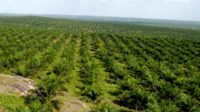
Meanwhile, oil palm plantation area has remained relatively unchanged over the past decade at approximately 15–16 million hectares, with average productivity hovering at around 3.3 tons per hectare. At the same time, global palm oil consumption continues to rise in line with population growth and expanding demand.
If domestic consumption keeps climbing while production stagnates, export supply will inevitably tighten—potentially eroding Indonesia’s competitiveness, particularly against Malaysia and in key markets such as the United States.
For an industry that consistently emphasizes sustainability principles, GAPKI stresses that expanding plantation land is not the solution. Ecological and political constraints limit such expansion. The answer lies in productivity.
Yet boosting output is not straightforward. Aging plantations, low smallholder yields, and suboptimal land conditions—including peatland constraints—pose structural challenges.
Productivity enhancement efforts are now moving into more technical—even biological—territory. The industry is encouraging the introduction of more effective pollinating insects to improve fruit formation. In Medan, the Indonesian Oil Palm Research Institute (PPKS) is developing three main pollinator species—Elaeidobius kamerunicus, Elaeidobius plagiatus, and Elaeidobius subvittatus—including the introduction of new pollinators from Tanzania.
The goal is clear: increase yields without expanding plantation area. “Our hope is that productivity can rise,” Husni said.
Ultimately, biodiesel is not just about energy. It sits at the intersection of food security, environmental sustainability, industrial development, and geopolitics. Maintaining a positive and stable climate for Indonesia’s palm oil industry, Husni emphasized, is essential—especially given the sector’s significant contribution to employment, export earnings, and domestic energy resilience through biodiesel development. (P2)