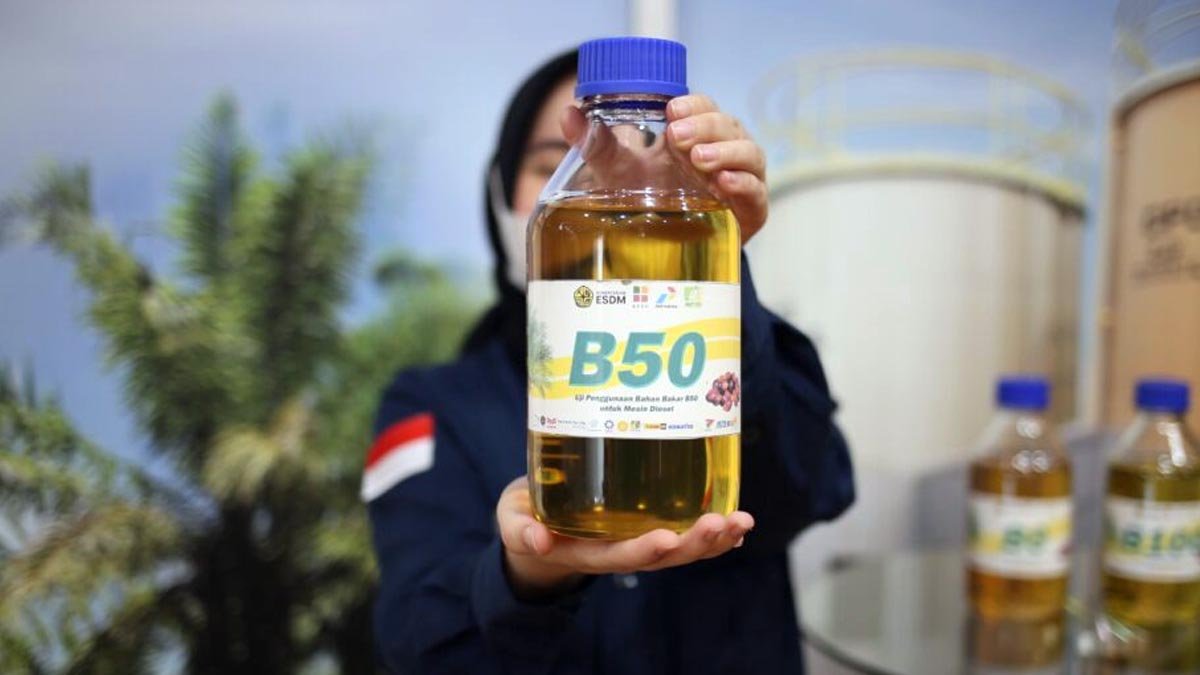
PALMOILMAGAZINE, JAKARTA – Indonesia’s Ministry of Energy and Mineral Resources (ESDM) has reported encouraging results from trials of 50% biodiesel (B50) usage in mining heavy equipment, reinforcing its potential as a key pillar of national energy security amid global market volatility.
Director General of New and Renewable Energy and Energy Conservation (EBTKE), Eniya Listiani Dewi, said preliminary findings indicate stable performance both technically and operationally.
“Overall, the use of B50 in diesel engines within the mining sector shows solid performance with no significant operational disruptions. This is a strong indication that biodiesel is ready to support industrial activities,” she said in an official statement.
Also Read: Indonesia Sets April 2026 Biodiesel Price at IDR 14,262/Liter Amid CPO-Based Adjustment
The B50 trials have been conducted comprehensively, covering fuel quality, engine performance, operational durability, and storage stability. As of the end of March 2026, dynamic endurance testing has exceeded 900 operating hours without any signs of engine issues linked to fuel quality.
From the industry side, field results have shown consistent trends. General Manager Plant of PT Harmoni Panca Utama (HPU), Rochman Alamsjah, revealed that the company has tested B50 alongside B40 by comparing two Komatsu HD785 heavy-duty units.
“We have been running close to 1,000 hours comparing two units—one using B40 and the other B50. So far, performance remains stable, although there are minor notes, particularly a slightly higher fuel consumption of around 1–3% for B50,” he explained.
Also Read: Indonesia to Launch B50 Biodiesel in July 2026, Saving 4 Million KL of Fuel
Despite the marginal increase in fuel consumption—recorded at around 3.12% compared to B40—the figure remains within acceptable operational limits and does not significantly impact productivity.
Further testing also confirmed that B50 meets the agreed technical specifications set by stakeholders, including parameters such as water content, oxidation stability, and Fatty Acid Methyl Ester (FAME) levels. This highlights its readiness for application in high-load, non-automotive sectors such as mining.
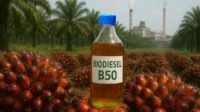
As part of Indonesia’s mandatory biodiesel policy, B50 consists of a 50% blend of biodiesel (B100) derived from vegetable oils—primarily palm oil—and 50% fossil diesel (B0). The policy aims to expand renewable energy utilization while reducing dependence on imported fossil fuels.
Also Read: B50 Ambitions Face Supply Risks Without Upstream Palm Oil Reforms
The development of B50 builds on Indonesia’s successful nationwide implementation of B40 since early 2025, positioning the country as a global leader in large-scale biofuel adoption.
Beyond energy security, the biodiesel program delivers multiple economic and environmental benefits, including reduced greenhouse gas emissions, foreign exchange savings from lower diesel imports, and increased domestic palm oil absorption.
“The development of B50 is a crucial step toward achieving national energy independence. By leveraging domestic resources, we not only strengthen energy resilience but also create added value for the economy,” Eniya added.
Also Read: New Pollinating Insects Introduced to Strengthen Indonesia’s Palm Oil Future
Looking ahead, the government plans to expand B50 trials across various sectors, including transportation, power generation, railways, and agricultural machinery. The results will serve as the foundation for policy formulation and technical standards for broader national implementation.
Eniya concluded that advancing biodiesel to the B50 level is part of Indonesia’s broader energy transition toward a cleaner, more sustainable, and sovereign energy system. (P3)