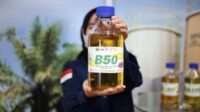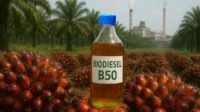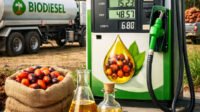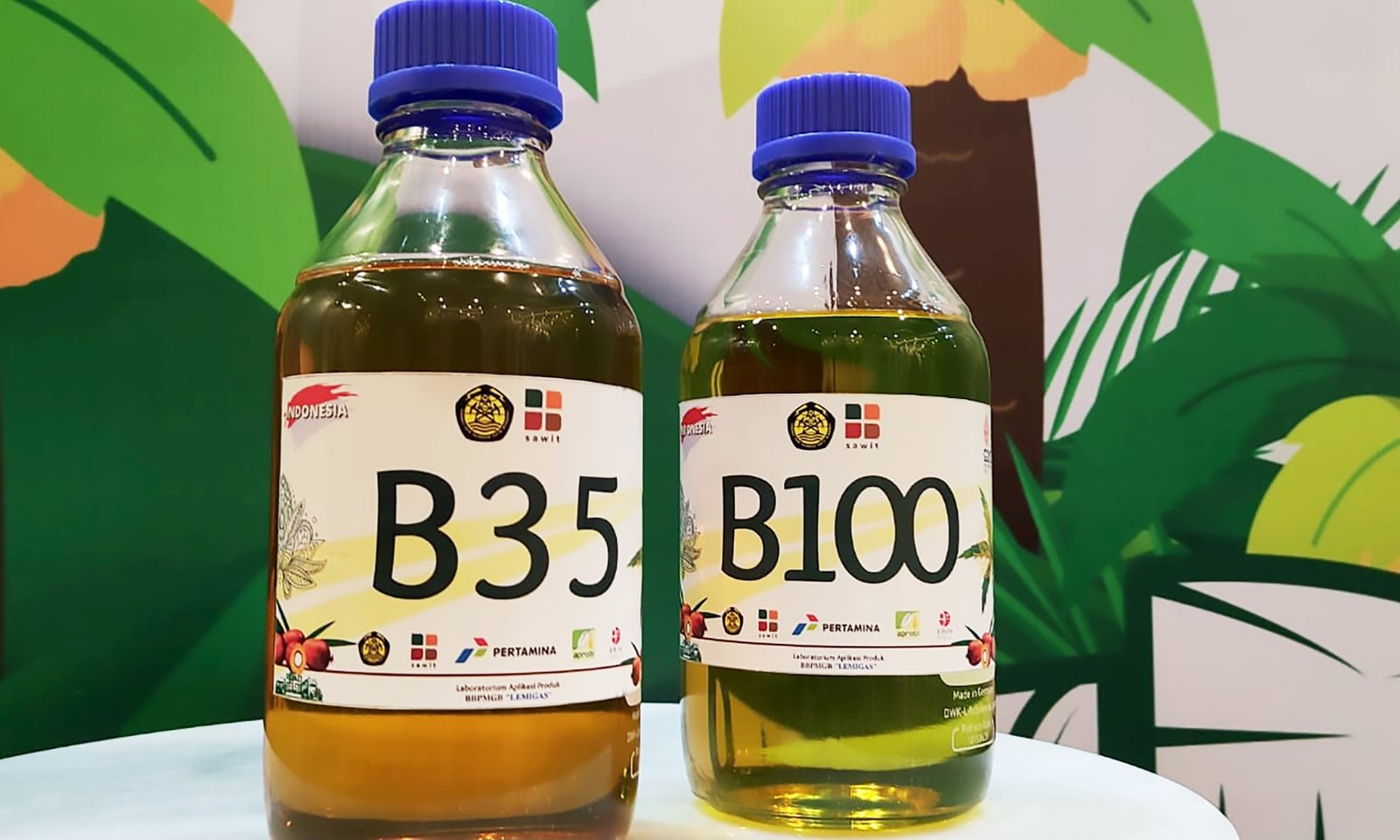
PALMOILMAGAZINE, KUALA LUMPUR – Biodiesel derived entirely from palm oil, known as B100, is emerging as a promising alternative energy source with strong potential to enhance competitiveness and sustainability, particularly as global uncertainties persist due to geopolitical tensions in West Asia.
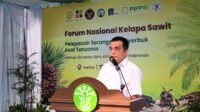
According to Bernama cited by Palmoilmagazine.com on April 9, 2026, Chairman of the Federal Land Development Authority (FELDA), Ahmad Shabery Cheek, stated that the implementation of B100 remains at the policy stage and will initially be introduced within FELDA’s own ecosystem.
He noted that the proposal has been discussed with Prime Minister Anwar Ibrahim and Deputy Prime Minister Ahmad Zahid Hamidi as part of broader efforts to reinforce Malaysia’s national energy resilience.
Also Read: Prabowo Subianto Targets Palm-Based SAF Expansion with Massive Refinery Investment
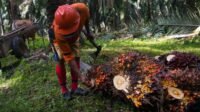
“At this stage, strong government policy support is essential, as the supply of crude palm oil (CPO) may not yet be sufficient for large-scale B100 implementation,” he said.
From a pricing perspective, B100 is estimated to have an ex-factory cost of around RM4.50 per liter, depending on fluctuations in CPO prices. With projected prices remaining below RM5.00 per liter, the fuel is seen as a viable option to reduce dependence on fossil diesel while helping stabilize domestic energy prices.
Ahmad Shabery also highlighted the need to expand production capacity to support wider adoption. He revealed that FELDA is currently in discussions with FGV Holdings Bhd to explore the development of B100 biodiesel processing facilities.
Also Read: Malaysian CPO Prices Slide at Week’s End as Supply Pressure and Weak Demand Weigh on Market
“We are evaluating potential collaboration models—whether through full private sector involvement, government support, or partnerships with other stakeholders—to scale up B100 production capacity,” he explained.
As part of early-stage testing, a pilot project using B100 has been underway since 2025, involving passenger vehicles over a 15-month period covering more than 50,000 kilometers.
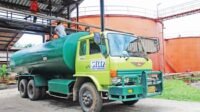
Earlier, in 2024, a four-month trial using tanker trucks was also conducted to assess the fuel’s performance and reliability under heavy-duty operational conditions.
Also Read: Bappenas Pushes Palm Oil–Cattle Integration to Drive Food Security and Circular Economy
With ongoing trials and development plans, B100 is expected to play a strategic role in advancing Malaysia’s transition toward renewable energy and strengthening long-term energy security. (P2)