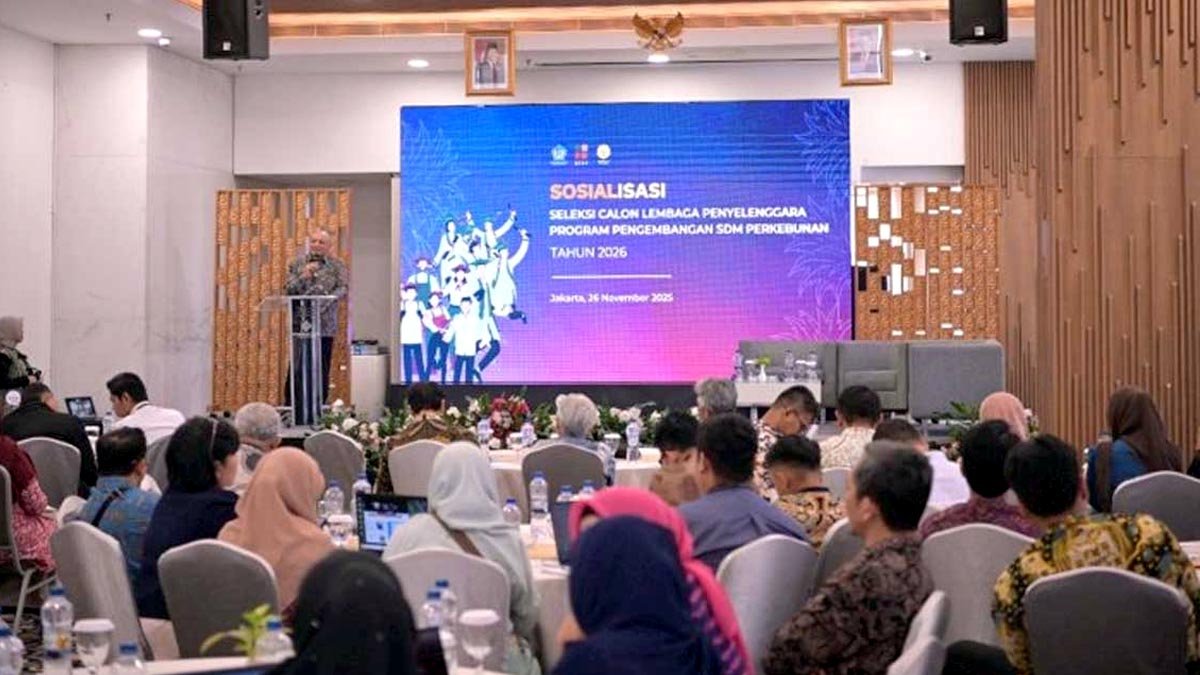
PALMOILMAGAZINE, JAKARTA — The Plantation Fund Management Agency (Badan Pengelola Dana Perkebunan/BPDP) has launched the socialization of the Selection of Prospective Implementing Institutions for the Palm Oil Human Resources Development Program (PKS HR Program) 2026, marking an early step to ensure the quality and credibility of partners tasked with strengthening Indonesia’s palm oil workforce.
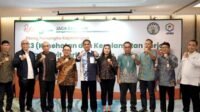
The event, held on Tuesday, November 26, 2025, brought together the Director of Palm Oil and Other Palms at the Ministry of Agriculture, members of the Palm Oil HR Development Committee (PKS Committee), BPDP management, and leaders of education and training institutions from across the country.
Opening the session, BPDP Director of Downstream Fund Distribution Mohammad Alfansyah emphasized that human resource development is the cornerstone of a productive, competitive, and sustainable palm oil industry.
Also Read:
“The palm oil industry does not rely solely on technology and capital. It needs competent, professional, and high-integrity human resources. HR development programs are a long-term investment to safeguard the sustainability of this sector,” Alfansyah said, as quoted by Palmoilmagazine.com from BPDP on Tuesday (December 16, 2025).
The socialization continued with two technical presentations. The first, delivered by the Directorate General of Plantations at the Ministry of Agriculture, outlined the selection mechanism for prospective implementing institutions. The briefing was presented by Mula Putera, Coordinator for Palm Oil Development at the Directorate General of Plantations.
The second session provided detailed explanations from the PKS HR Development Committee and BPDP on institutional eligibility criteria, assessment guidelines, and proposal submission procedures. The materials were delivered by BPDP Acting Head of the Plantation HR Development Fund Distribution Division, Lucki Bagus, and Chair of the PKS HR Development Committee, Darmansyah Basarudin.
Also Read: Prabowo Pushes Palm Oil–Based Renewable Energy to Boost Papua’s Self-Reliance
During the event, BPDP also expressed appreciation to the PKS HR Development Committee, which consists of seven representatives from government, industry practitioners, and associations. The committee plays a strategic role in evaluating proposals, issuing recommendations for implementing institutions, and conducting program monitoring and evaluation.
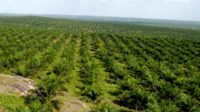
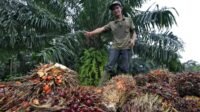
The socialization materials reaffirmed the importance of strengthening the palm oil sector across economic, social, and environmental dimensions. Properly managed oil palm plantations are seen as capable of increasing smallholder household incomes, expanding employment opportunities, and driving innovation, including the conversion of palm oil waste into value-added products. Sustainable cultivation practices were also highlighted as key to boosting productivity while reducing emissions and preserving environmental integrity.
BPDP explained that the PKS HR Development Program covers both education assistance through scholarship schemes and vocational training programs. In 2025, training funds were distributed to 10,786 participants, while scholarships were awarded to 4,000 students. Since the program began in 2016 through 2024, a total of 3,910 students have graduated from the scholarship program, and more than 30,000 participants have taken part in various palm oil–related training initiatives.
The selection process for prospective implementing institutions of the PKS HR Development Program 2026 has officially opened. The deadline for proposal submissions is set for January 12, 2026, at 11:59 p.m. (WIB). BPDP aims to improve the quality of its implementing partners in 2026, in line with the expansion and enhancement of program beneficiaries. (P2)