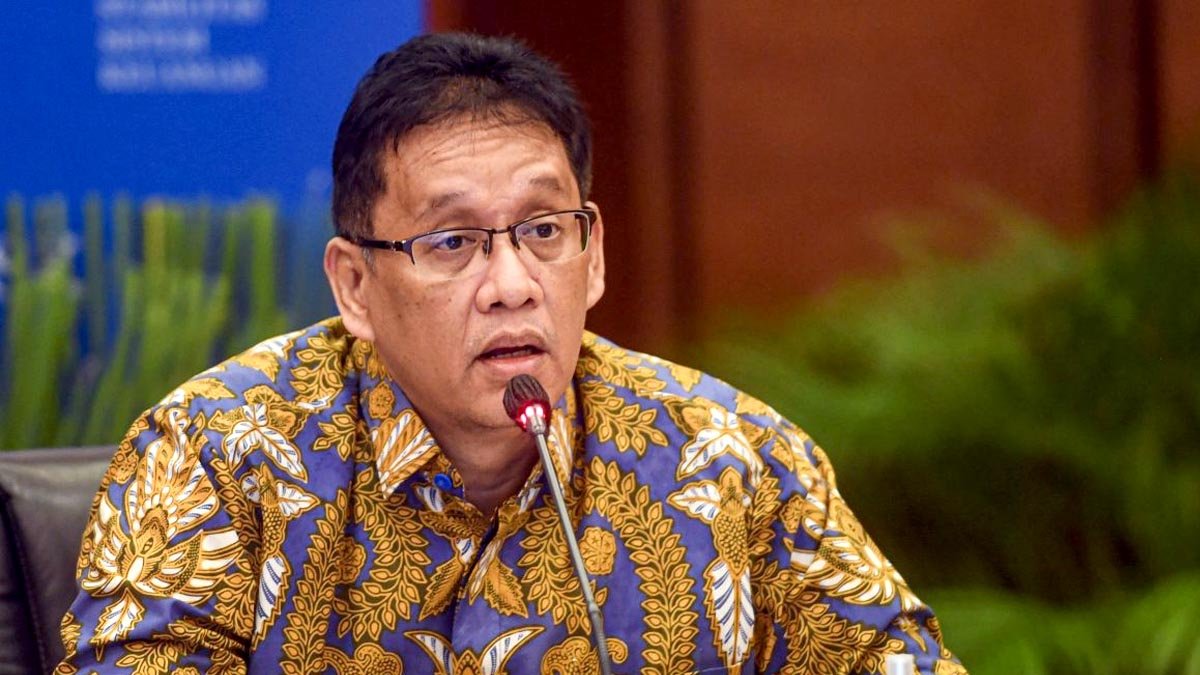
PALMOILMAGAZINE, JAKARTA — Finance Minister Purbaya Yudhi Sadewa has revealed alleged manipulation in Indonesia’s crude palm oil (CPO) export practices that may have caused substantial losses to state revenue. Speaking at a working meeting with House of Representatives (DPR RI) Commission XI on Wednesday (February 4, 2026), Purbaya said Indonesia had been “misled for years” by a number of CPO exporters through export schemes that were not fully reported to domestic authorities.
According to Purbaya, several companies exported CPO to the United States via Singapore, but only reported the shipment data up to Singapore to Indonesian authorities. Subsequent exports from Singapore to the US were allegedly never recorded in Indonesia’s official data.
“For example, a company exports CPO to the US via Singapore. What gets reported to us is only the shipment to Singapore. The data showing exports to the US never appears,” Purbaya told lawmakers.
He suggested the practice was driven by Singapore’s relatively low tax rates, allowing profits to be booked at intermediary entities based there. As a result, Indonesia allegedly lost significant potential tax and export revenue.
“This means that for several years we have been misled by some CPO exporters. Coal is something we have not fully addressed yet, but CPO will be our main focus going forward,” Purbaya said, as quoted by Palmoilmagazine.com from Detik on Thursday (February 5, 2026).
Purbaya added that the National Single Window Agency (LNSW) under the Ministry of Finance is currently conducting an in-depth investigation. The government is also assessing whether export data obtained from US authorities can be used as admissible evidence in court.
Also Read: Indonesia’s Palm Oil Export Volume Climbs 9.09% in 2025, BPS Reports
“At the very least, Indonesia now has ship-by-ship data indicating extraordinarily serious manipulation,” he said.
With the support of artificial intelligence (AI) technology, the Ministry of Finance has identified around 10 major companies suspected of being involved. Preliminary findings indicate that the export values reported to Indonesian authorities were, on average, only about half of the prices recorded in the US market.
“On average, what they reported here was half the actual price in the US, with the profit being taken at intermediary companies in Singapore,” Purbaya explained.
He stressed that the alleged practice has caused major losses to the state, and affirmed the government’s commitment to pursuing missing revenues—particularly from the CPO sector, which remains one of Indonesia’s most important export earners. (P2)