PALMOILMAGAZINE, KUALA LUMPUR — The global palm oil market traded cautiously on Thursday (January 8, 2026), with crude palm oil (CPO) futures on the Malaysian exchange moving little after failing to sustain early gains. Expectations of rising domestic inventories capped prices, even as sentiment was partially supported by stronger rival vegetable oils and a weaker ringgit.
The benchmark March 2026 CPO contract on the Bursa Malaysia Derivatives Exchange slipped marginally by RM1 per ton, or 0.02 percent, to RM4,032 per ton by the midday break. The flat movement reflects a wait-and-see stance among market participants amid competing fundamental signals, Reuters reported.
Regionally, market attention has turned to Indonesia, which is considering raising its palm oil export levy to help finance the national biodiesel program. An official from Indonesia’s Ministry of Energy said the option is under review as funding pressures tighten.
Also Read: Palm Acid Oil Emerges as a Strategic Commodity as Europe Accelerates Renewable Energy Shift
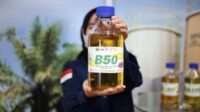
Government data show Indonesia’s palm-based biodiesel consumption reached 14.2 million kiloliters in 2025, up 7.6 percent from the previous year, following the implementation of the mandatory 40 percent biodiesel blend (B40). The policy underscores palm oil’s growing role in Indonesia’s energy transition, while also becoming a key variable for export supply dynamics.
Movements in competing vegetable oils were mixed. On the Dalian Commodity Exchange, the most-active soyoil contract rose 0.18 percent, while palm oil futures surged 1.27 percent. In contrast, soyoil prices on the Chicago Board of Trade edged down 0.16 percent. The divergent trends highlight how global markets are still searching for direction amid the interplay of energy demand, food consumption, and policy factors.
Investors are also closely monitoring recent remarks by Indonesian President Prabowo Subianto, who said on Wednesday that the government is considering seizing an additional 4 to 5 million hectares of oil palm plantations this year, after reclaiming around 4.1 million hectares last year. The statement has drawn attention due to its potential implications for medium-term supply, industry governance, and the investment climate in the palm oil sector.
Also Read: Malaysia Shifts Palm Oil Growth Strategy from Expansion to Technology
With stock expectations, biodiesel policy, and regulatory direction all in play, the CPO market is likely to remain volatile in the near term. Industry players are now waiting for clearer signals—both from supply data and policy certainty—before prices can establish a firmer trend. (P3)