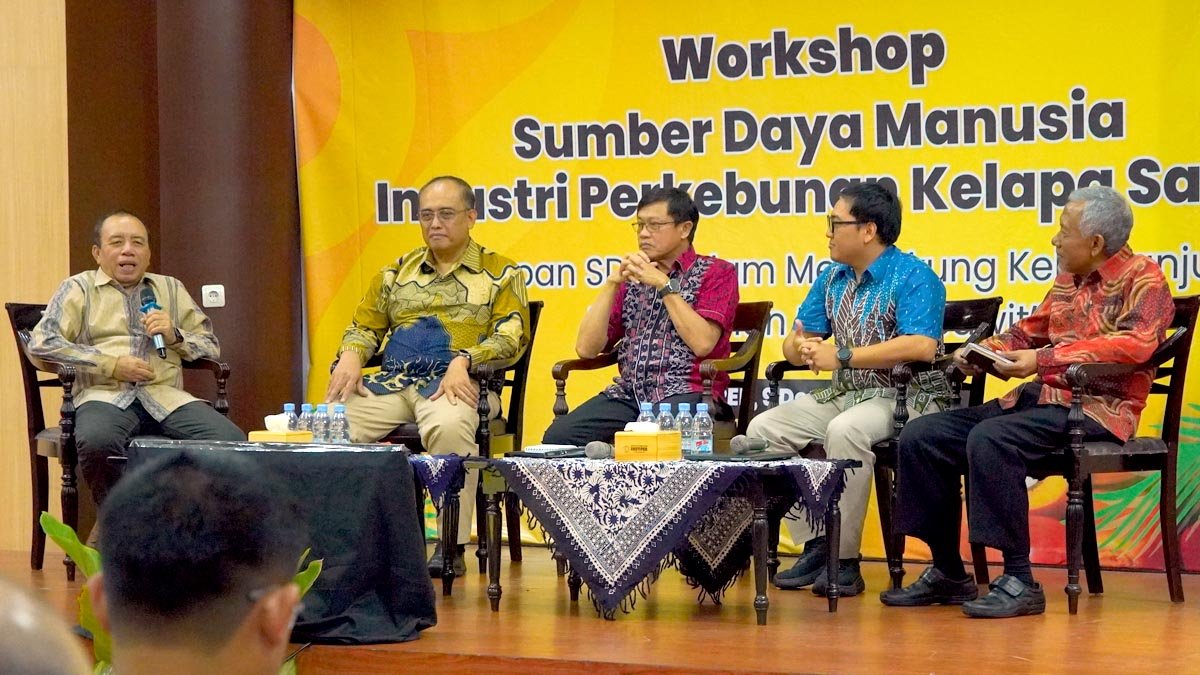
PALMOILMAGAZINE, YOGYAKARTA — Indonesia’s palm oil industry is facing an increasingly urgent demand for skilled, adaptive, and technically capable human resources as the sector navigates sustainability challenges and rapid technological change. This issue took center stage at the Palm Oil Plantation Industry Human Resources Workshop themed “Preparing Human Capital to Support Sustainable Palm Oil Plantations”, held at the INSTIPER Yogyakarta campus on Tuesday (December 9, 2025). The event formed part of the institution’s 67th anniversary celebrations.
Director of the INSTIPER Palm Oil Science Center (PSKS), Dr. Purwadi, who also served as moderator, stressed that higher education institutions play a pivotal role in addressing the national plantation workforce gap.
“The palm oil industry is one of the main pillars of Indonesia’s economy. Universities focusing on this sector must be able to produce job-ready graduates with strong character and a solid understanding of field realities. That has been INSTIPER’s commitment,” Purwadi said in a statement received by Palmoilmagazine.com on Tuesday.
Also Read: Planters Push Productivity Drive to Strengthen Indonesia’s Palm Oil Output
He underlined that sustainability in the palm oil sector cannot be achieved without quality human capital. More than 12 million workers—both directly and indirectly—depend on the palm oil ecosystem for their livelihoods. Given the scale of the industry, Purwadi noted, Indonesia needs a steady supply of competent, skilled workers who also understand sustainability principles.
Purwadi also called for closer collaboration between universities, companies, industry associations, and other stakeholders. “We invite all palm oil industry players to jointly prepare human resources that truly match the needs of Indonesia’s palm oil sector—not only competent, but also adaptive to technological advancements,” he emphasized.
Technology and Learning Innovation as Key Enablers
INSTIPER Rector Dr. Harsawardana echoed these views, stating that human capital remains the decisive factor in the progress of any industry, including palm oil. He emphasized that the sector’s development must remain aligned with sustainable agriculture principles.
“Human resources are the key to a nation’s success. In the palm oil sector, we continue to innovate in learning methods, including the use of the latest technologies, to ensure INSTIPER graduates are fully prepared for the industry’s rapidly evolving demands,” he said.
Also Read: Indonesia Nears 4 Million Hectare Target as Government Steps Up Palm Oil and Mining Land Enforcement
According to Harsawardana, INSTIPER has mapped out the key human resource challenges facing the palm oil sector and designed curricula to address them. Future palm oil professionals, he added, must be field-ready, resilient, and proficient in emerging technologies such as digital agronomy, data analytics, and modern mechanization applications.
Input from palm oil companies participating in the workshop will serve as critical feedback for the university. The aim is to ensure that INSTIPER graduates possess not only strong technical skills, but also solid work ethics and a deep understanding of sustainability.
“Stakeholder feedback is extremely valuable. We will use it to refine our learning strategies so that INSTIPER graduates become more critical thinkers, resilient, skilled, and adaptive to the latest technologies,” Harsawardana concluded. (P2)