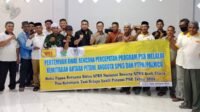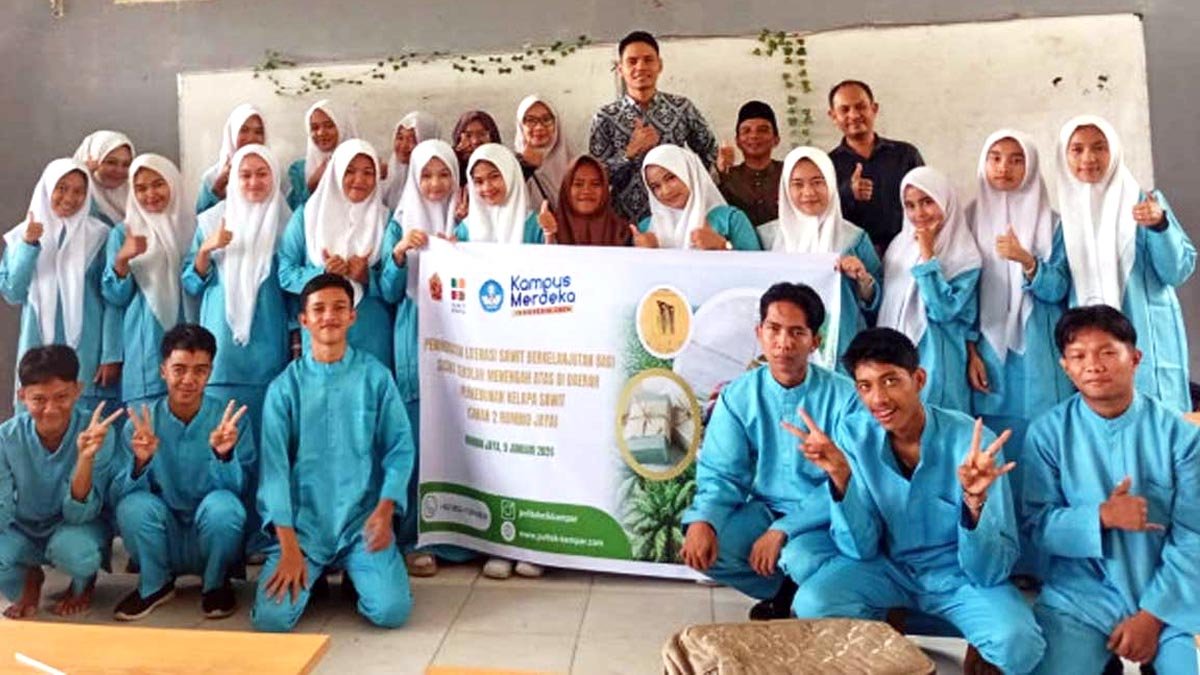
PALMOILMAGAZINE, KAMPAR – Efforts to build a more comprehensive understanding of palm oil continue to intensify, including through formal education channels. Kampar Polytechnic, through its Community Service Program (PKM), held an educational initiative titled “Enhancing Sustainable Palm Oil Literacy for Students of SMAN 2 Rumbio Jaya” in Kampar Regency, Riau.
The activity took place at SMAN 2 Rumbio Jaya, Rumbio Jaya District, and involved dozens of students accompanied by school representatives. The program aims to strengthen young people’s understanding of responsible palm oil management, particularly in Riau, one of Indonesia’s major palm oil production centers.
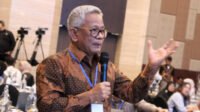
Head of the PKM team from Kampar Polytechnic, Ardiansyah Hamid, S.Si., M.Si., said the initiative was designed to provide students with a more comprehensive perspective on sustainable palm oil amid the flood of information circulating on social media.
Also Read: GAPKI and ILO Strengthen Responsible Business and Human Rights Due Diligence in Palm Oil Sector
He noted that negative narratives surrounding palm oil often spread widely but are not always grounded in scientific facts.
“Many negative issues about palm oil circulate that are not necessarily based on scientific evidence. Through this program, we want to correct the understanding that the main problem is not palm oil itself, but how it is managed. Palm oil can deliver enormous benefits if it is managed sustainably,” Ardiansyah said, as quoted by Palmoilmagazine.com from the Kampar Regency Government on Thursday (January 29, 2026).
During the educational sessions, the PKM team explained the three main pillars of sustainable palm oil: environmental, economic, and social. Students were encouraged to understand that cultivation and management practices must maintain a balance among all three aspects.
From the environmental perspective, students were introduced to ecosystem protection principles and non-destructive land management. On the economic side, palm oil was presented as a sector capable of improving community welfare when managed productively and fairly. The social pillar emphasized the importance of harmony and healthy relationships within communities surrounding plantations.
Interactive Discussions Foster Critical Thinking
Rather than relying solely on one-way lectures, students actively participated through interactive discussions. They were encouraged to ask questions, express opinions, and explore palm oil issues frequently encountered on social media and in their surroundings.
This discussion-based approach was considered essential for building critical thinking skills and helping students learn to filter information, reducing their vulnerability to hoaxes and misleading narratives.
Head of Public Relations at SMAN 2 Rumbio Jaya, Budi Irawan, welcomed the initiative and said literacy programs of this kind are highly relevant to local conditions.
“We hope students will not only excel academically, but also develop accurate and critical perspectives on development issues, including palm oil,” he said.
Students Gain New Perspectives
One student participant admitted gaining a new outlook after joining the session. Previously, palm oil was always associated with environmental damage, but the program helped clarify that responsible practices can lead to sustainable palm oil development.
“I used to think palm oil always damages the environment. After this activity, I understand that palm oil can be sustainable if it is managed properly,” the student said.
Through this initiative, students are expected to become literacy ambassadors, capable of sharing accurate information with peers, families, and their communities. They are also expected to help counter misinformation surrounding palm oil.
The Kampar Polytechnic PKM team confirmed that similar programs will continue to be expanded to reach more schools across Kampar Regency and other parts of Riau.
According to the organizers, sustainable palm oil literacy must be instilled early so that younger generations are not trapped by misleading narratives and can actively contribute to sustainable development in their regions. (P2)