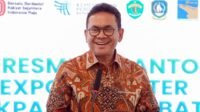
PALMOILMAGAZINE, JAKARTA — Indonesian Deputy Foreign Minister Arif Havas Oegroseno has raised serious concerns over the European Union Deforestation Regulation (EUDR), citing its disproportionate impact on smallholder farmers in Indonesia. He warned that the policy not only hampers the country’s export access to the EU but also risks introducing discriminatory practices in global trade.
“One of the biggest challenges we face today is the direct impact on smallholders — especially those in the rubber, cocoa, coffee, and palm oil sectors,” Havas stated, as quoted by Palmoilmagazine.com from Antara on Friday (July 4, 2025).
He explained that small-scale farmers would likely struggle to comply with EUDR’s stringent requirements, particularly digital traceability and geolocation mandates. These obligations demand infrastructure and technical capacities that are still unevenly distributed across rural Indonesia, putting smallholders at risk of losing access to EU markets.
Also Read: Palm Oil: More Than Just a Commodity, A Field Where Future Generations Will Thrive
Adding to the controversy, Havas highlighted a recent EU proposal that would exempt European local farmers from some of the regulation’s provisions by introducing a “negligible risk” category—an exemption that would only apply within EU territories.
“If this is accepted, it clearly establishes a double standard — one rule for European farmers, and another for farmers outside the EU,” Havas emphasized.
However, he clarified that the EUDR issue is not part of the ongoing negotiations under the Indonesia-European Union Comprehensive Economic Partnership Agreement (IEU-CEPA). Instead, Indonesia is addressing the matter within a separate forum alongside 18 other affected nations, collectively known as the Like-Minded Countries (LMC) group.
“We have our own platform to discuss this,” Havas explained.
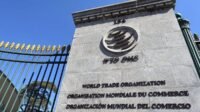
Regarding the possibility of bringing the case to the World Trade Organization (WTO) dispute settlement body, Havas said that it remains under consideration. The government is still evaluating its options, although some international trade experts have already suggested that EUDR may breach WTO principles related to fair trade.
“The process is still ongoing, but even European trade experts are saying this policy could very well be challenged at the WTO by non-EU countries,” he noted.
It is worth noting that Indonesia and the EU held a bilateral dialogue on June 4, 2025, in Brussels, specifically to address the EUDR. During that meeting, the Indonesian delegation firmly objected to the regulation, describing it as a unilateral measure with extraterritorial implications — extending beyond the EU’s legal jurisdiction and imposed without prior consultation with commodity-producing nations.
Indonesia also requested clarity on the legal basis and risk classification methodology used by the EU, urged recognition of Indonesia’s own national legality systems, and questioned whether EUDR may constitute a violation of WTO rules. The administrative burden on smallholders was also a central point of concern.
In response, the EU committed to providing written answers to all of Indonesia’s legal and technical questions in the near future. (P2)