PALMOILMAGAZINE, TANGERANG — Indonesia is intensifying preparations for the implementation of the European Union Deforestation Regulation (EUDR), which will be fully enforced by the end of 2025. The regulation requires all products entering the EU market to be traceable to their source and verified as not linked to deforestation.
While the policy presents a major challenge for businesses, the government sees it as a valuable opportunity to accelerate the shift toward greener, more sustainable trade. With the implementation delayed until December 30, 2025, for large and medium enterprises, and June 30, 2026, for small and micro businesses, Indonesia has time to establish an integrated national traceability system.
Acting Director General of Foreign Trade at the Ministry of Trade, Tommy Andana, stated that Indonesia’s key commodities — palm oil, coffee, rubber, and timber — will be the main focus in adapting to the new regulation.
Also Read:
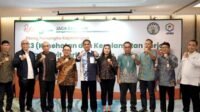
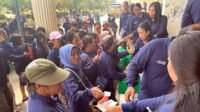
“The critical task is developing a robust traceability system that aligns with EUDR requirements. We hope this forum can create a shared formula to ensure EUDR does not hinder our export performance,” said Tommy during a discussion titled “Commodity Traceability Platform: Facing the Challenges of the European Union Deforestation Regulation (EUDR)” held during the 40th Trade Expo Indonesia (TEI) at ICE BSD City on Thursday (October 16).
The forum gathered multi-sectoral speakers from ministries, agencies, exporters, and cooperatives, and was moderated by Nurimansyah, Head of the Center for Data and Information Systems at the Ministry of Trade.
According to Hedi Idris, Senior Planner at the National Development Planning Agency (Bappenas), developing a traceability system that meets EUDR standards is a strategic move to enhance supply chain transparency and stimulate national economic growth.
“Traceability provides clear benefits for farmers, planters, exporters, and local governments. With greater transparency, access to international markets will improve, and state revenues can increase,”
Hedi explained.
PT Surveyor Indonesia, represented by Sustainability Project Director Martinus Nata, revealed that the company is currently developing a cloud-to-cloud Due Diligence Statement (DDS) Information System. The system will help farmers, cooperatives, and exporters prepare due diligence reports required for EU exports.
Also Read: European Commission Considers Postponing EUDR Amid IT Concerns
“We ensure all incoming data is verified on-site to maintain its validity. The reports will later be officially certified by PT Surveyor Indonesia,” said Martinus, adding that the DDS system complies with international standards under a Mutual Recognition Agreement (MRA) and ISO 17065 certification.
Growing Global Consumer Awareness
From the business perspective, coffee exporter Daroe Handoyo emphasized that traceability is now an unavoidable norm in global trade.
“Traceability is inevitable. Consumers have evolved into responsible consumers — they want to know where their products come from, the environmental impact, and the social aspects behind their production,”
he said, noting that global markets increasingly demand full transparency not just on product quality, but also on ethical and sustainable practices.
At the farmer level, Kerta Semaya Samaniya (KSS) Cocoa Cooperative has already implemented systematic farmer group registration. Each group has a unique identity and cannot be registered under multiple cooperatives.
“This is vital for accountability — if an issue arises, we can immediately trace the product’s origin. This system helps maintain quality and build market trust,”
explained I Ketut Wiadnyana, KSS Chairman.
Meanwhile, Berliana Purba, Chairperson of the Geopark Danau Toba Cooperative, welcomed the government’s initiative and encouraged more regular stakeholder engagement ahead of the EUDR enforcement.
“We hope government facilitation continues and is clearly communicated so cooperatives can make the most of it,”
she said.
Through strong cross-sector collaboration, Indonesia has the potential not only to meet EUDR standards but also to take the lead in advancing green trade across Asia. The challenge posed by this regulation could become a stepping stone toward a more transparent, sustainable, and equitable trading system — benefitting everyone from small farmers to major exporters. (P2)