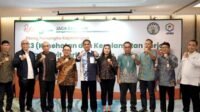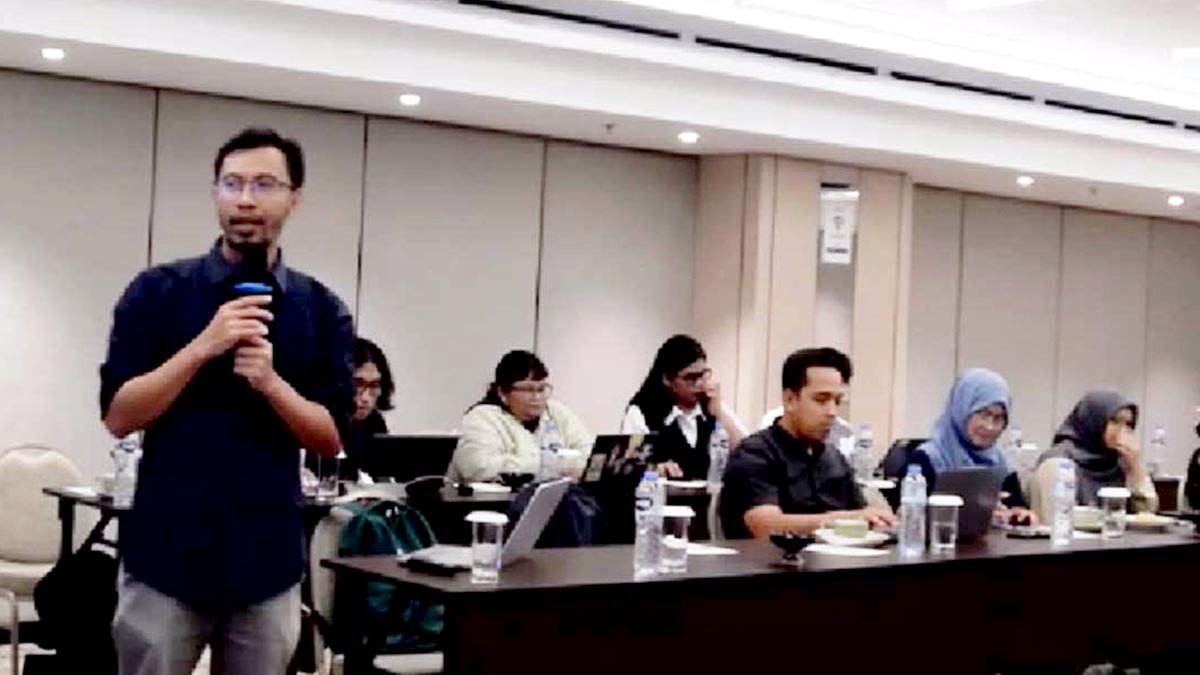
PALMOILMAGAZINE, JAKARTA — The process of obtaining Indonesian Sustainable Palm Oil (ISPO) certification remains a steep challenge for smallholder palm oil farmers. Obstacles range from high certification costs and limited assistance to land legality issues, particularly plantations located within forest areas. These concerns emerged during the ISPO Update Focus Group Discussion (FGD) attended by Palmoilmagazine.com on Monday (22/12/2025).
Alwan Ridha Ramdani, Communications Manager of the Indonesian Forum for Sustainable Palm Oil Smallholders (Fortasbi), explained that all Fortasbi members are farmers who already hold both Roundtable on Sustainable Palm Oil (RSPO) and ISPO certifications. Farmers who are still undergoing audits or in the certification process receive assistance but are not yet registered as official members.
“All Fortasbi members are 100% certified. If farmers are still in the audit stage, we provide assistance first. Only after the certificate is issued can they officially join. Everything is clear,” Alwan said.
Also Read:
He noted that the journey toward certification is neither short nor inexpensive. The process involves establishing farmer institutions, mapping plantations, organizing administrative systems, conducting training, internal audits, and finally external audits.
“Even just persuading farmers to join can take repeated visits. In some areas, we come more than a dozen times just to form a farmer group,” he explained.
In 2025, Fortasbi aims to add around 3,000 newly certified smallholders. However, realities on the ground continue to slow progress. In regions such as Central and West Kalimantan, the area of smallholder land eligible for certification often shrinks due to unresolved land legality issues.
“Out of 13,000 registrations in the E-STDB system during the 2024 ISPO acceleration program, only 4,000 STDBs were issued. This makes it difficult to accelerate ISPO, because STDB is a mandatory requirement,” Alwan said.
Also Read:
He added that many of these farmers are transmigrants whose land was originally allocated by the state. However, verification through government systems has reclassified some of these plots as forest areas, automatically excluding them from certification schemes.
Another major challenge is that many farmers still operate individually and are not part of formal institutions. Economically, independent farmers can still sell their fresh fruit bunches, reducing incentives to join farmer groups.
“Farmers feel their palm oil will sell anyway, whether to mills or middlemen. So they ask, what’s the benefit of joining an institution if the process is long and complicated?” he said.
Limited availability of qualified trainers also remains an issue. Under ISPO requirements, lead trainers must come from certified farmers, yet their numbers remain limited, especially in rural areas.
“We usually use a farmer-to-farmer training approach. But for ISPO, trainers must already be certified. Finding ISPO-certified farmers who are also ready to become trainers is not easy, particularly in remote regions,” Alwan explained.
Also Read: CPOPC Highlights Palm Oil’s Critical Role in Global Food Security
From a financial perspective, certification costs and surveillance audits pose a heavy burden, especially for independent farmers without NGO or institutional support. Training expenses, audit fees, and administrative costs often become major barriers.
“For farmers without assistance, the burden is extremely heavy. With NGO or institutional support, the pressure can be reduced,” he said.
Alwan also pointed to the underutilization of support funds, including palm oil revenue-sharing funds (DBH) and financing from the Plantation Fund Management Agency (BPDP). In several regions, local governments still prioritize infrastructure and other programs over ISPO certification.
“Some regions were actually ready to fund ISPO certification. But when local leadership changes, everything goes back to square one,” he noted.
In addition, accessing BPDP funding is often complicated for farmers. Proposal preparation and data entry through digital applications pose challenges, particularly for farmer groups without dedicated administrative staff.
“If the institution is strong and has staff, it’s easier. But if it’s 100% farmers, they’re managing their plantations while handling proposals at the same time—it’s overwhelming,” Alwan said.
He emphasized that multi-stakeholder collaboration is essential to ensure ISPO certification is truly accessible for smallholders. Continuous assistance, simplified procedures, and optimized funding support are critical.
“Not all farmers can easily access training and certification. That’s why collaborative assistance is crucial so smallholder palm oil can genuinely become sustainable,” Alwan concluded. (P2)