Conservation through RSPO Certification
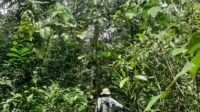
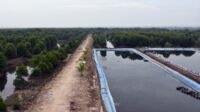
In 2022, 362,000 hectares of forests and areas assessed as necessary for conservation have been protected globally through RSPO standards, systems and procedures, which is an area nearly six times the size of DKI Jakarta. Indonesia represents the largest proportion of this conservation area, amounting to 150,000 hectares or 40% of total RSPO conservation area.
WWF, a founding member of the RSPO, actively promotes sustainable palm oil production through various programmes and projects in several conservation priority landscapes across Indonesia. Its main goal is taking deforestation out of palm oil supply chains through innovation as well as combined landscape and jurisdictional approaches.
WWF is also involved in market intervention by encouraging downstream companies to source certified sustainable palm oil (CSPO). The initiative is driven by the Indonesia’s domestic market potential. Based on WWF’s survey with Nielsen and MarkPlus, the willingness of consumers (in big cities) to buy sustainable commodity products (such as CSPO-based products) has increased from 63% in 2017 to 82% in 2020. However, the availability of CSPO-based products in the market is still limited, due also to a limited number of CSPO suppliers.
READ ALSO: FFB Price in South Sumatera in the First Period – November 2023 Increases Rp 42,82/Kg
“WWF is also involved in market intervention by encouraging downstream companies to source certified sustainable palm oil (CSPO)”, said Angga Prathama Putra, WWF Indonesia Sustainable Palm Oil Project Leader.
Remediation as a requirement of RSPO Certification
In 2015, the Remediation and Compensation Procedure (RaCP) was adopted, to provide RSPO Members with an avenue to address past deforestation issues as a prerequisite for RSPO Certification. As of 31 December 2022, completed land use change assessment (LUCA) identified 658 cases globally requiring a Remediation Plan or a Compensation Plan, depending on the nature of non-compliance. RSPO Members operating in Indonesia accounted for 29% of the 311 Compensation Plans approved for implementation, remediating 69,804 hectares, an area larger than the size of DKI Jakarta.
RSPO Member, PT Bio Inti Agrindo (PT BIA), whose plantations and scheme smallholder areas are RSPO Certified, is an example of how palm oil operators in Indonesia are prioritising the development of remediation and compensation procedures to improve sustainability standards within the sector.
Kartika Dewi, ESG Manager, PT BIA, said, “As one of the first plantations in Papua to be RSPO certified, we have a strong commitment towards our environmental liabilities, conservation and community development programmes.
From 20-22 November 2023, the RSPO will host its flagship Annual Roundtable Conference on Sustainable Palm Oil (RT2023) in Jakarta. The conference, which preempts the RSPO’s 20th Anniversary in April 2024 is themed ‘Partners for the Next 20’ and will feature key trends and collective action that the industry can capitalise on to further boost the development of sustainable palm oil globally. Experts from around the world will converge to address pressing topics including labour, climate financing, traceability systems, the future of assurance, smallholder inclusion, food security, jurisdictional approaches and more. More information on RT2023 is available here. (*)