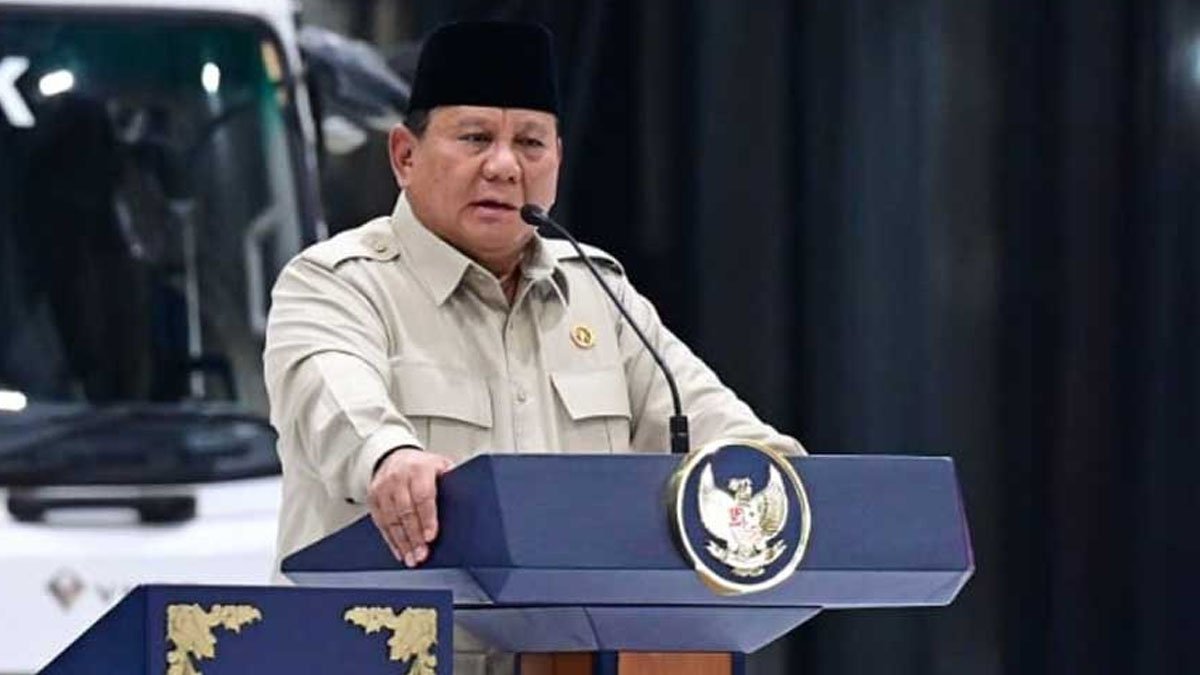
PALMOILMAGAZINE, MAGELANG – President Prabowo Subianto has reaffirmed the government’s commitment to driving large-scale investment in palm oil-based refining facilities, including the conversion of used cooking oil into sustainable aviation fuel (SAF).
Speaking during the inauguration of an electric commercial vehicle assembly plant owned by PT VKTR Sakti Industries in Magelang, Central Java, the President highlighted Indonesia’s vast potential to transform palm oil into cleaner energy solutions for the aviation sector.
He emphasized that not only crude palm oil (CPO), but also downstream waste such as used cooking oil, can be processed into jet fuel. According to him, this opens a significant opportunity for Indonesia to lead in the production of sustainable aviation fuel.
Also Read: Indonesia to Launch B50 Biodiesel in July 2026, Saving 4 Million KL of Fuel
Prabowo also revealed that the government is preparing to establish multiple refining centers in the near term to support this initiative. These facilities are expected to become the backbone of Indonesia’s push toward renewable energy while adding value to the palm oil industry.
Beyond energy, the President praised the rapid development of Indonesia’s electric vehicle (EV) industry. He expressed confidence in the country’s growing capability to manufacture electric buses and trucks domestically, marking a key milestone in the national industrial transformation.
Looking ahead, the government is targeting mass production of electric sedans by 2028, further strengthening Indonesia’s position in the global EV market.
Also Read: Indonesia’s B50 Push May Create Diesel Oversupply While Fuel Prices Stay Unchanged
Prabowo also noted that the domestic component level (TKDN) of VKTR’s electric vehicles has reached 40 percent and is projected to increase significantly. Within the next two years, the figure is expected to rise to 60 percent, and potentially reach 80 percent in the following phase.
This dual push—expanding palm-based renewable energy and accelerating EV development—signals a strategic effort to build a more sustainable, self-reliant industrial ecosystem while enhancing the competitiveness of Indonesia’s downstream sectors. (P2)