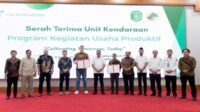
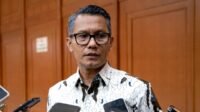
PALMOILMAGAZINE, JAKARTA – The long-standing dispute over customary land (tanah ulayat) in Nagari Inderapura, Pesisir Selatan Regency, has once again come to the forefront. On Thursday, May 8, 2025, Andre Rosiade, Deputy Chair of Commission VI of the Indonesian House of Representatives (DPR RI), brought the concerns of local residents directly to Minister of Forestry Raja Juli Antoni at the Manggala Wanabakti building, seeking a resolution to a conflict that has spanned decades.
In the meeting, Andre revealed that three Inderapura residents have been named suspects by the West Sumatra Police for allegedly encroaching on protected forest areas. He warned that the number of individuals charged could potentially grow to dozens—or even thousands.
“This is a crisis of justice. These lands have been cultivated by the people since before Indonesia’s independence, and now the state claims them as protected forest. The government should protect its citizens, not criminalize them,” Andre said, as quoted by Palmoilmagazine.com from Jurnal Sumbar (Saturday, May 10, 2025).
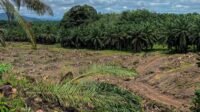
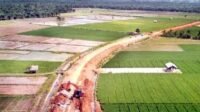
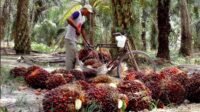
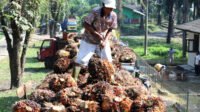
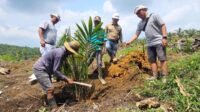
The conflict traces back to 1992, when areas recognized as ulayat land were reclassified as protected forest (HL) and conversion production forest (HPK) as part of the government’s efforts to replace land used for the Koto Panjang Hydropower Plant project in Riau. However, palm oil plantations had already been developed in the area since the early 1990s, with the support of local traditional leaders (ninik mamak) and in collaboration with Incasi Raya Group, a company holding plantation permits.
Shockingly, the status change was not communicated to local communities until 2021, even though the palm oil plantations had been productive for over two decades. Since then, enforcement raids by forestry officials and police have begun, and locals have faced increasing legal pressure.
Rasadi Rangkayo Tama Alam, spokesperson for the ninik mamak of Inderapura, emphasized that there had never been any visible boundary signs or official forest markers in the areas cultivated by residents since 2000. He also noted that no warnings or notices were ever issued until the 2021 announcement.
Also Read: National Palm Oil Agency Proposed to Reform Indonesia’s Palm Oil Governance
“In 2022, we filed a formal objection with the Ministry of Environment and Forestry (KLHK) and the National Police. But in February 2025, raids resumed, and three of our residents were declared suspects,” Rasadi said. He urged the government to reclassify the disputed land back as tanah ulayat and halt legal proceedings against local residents.
Responding to these concerns, Minister Raja Juli Antoni expressed his commitment to finding a fair resolution. He indicated that the government would consider revoking the forest designation if evidence shows that communities had occupied the land before it was reclassified.
“We will study the case and follow up. If it’s proven that the community was there first, the forest status can be revoked. The Inver PPTPKH mechanism will be used for verification,” he stated. However, the legal proceedings against residents would remain under the jurisdiction of the KLHK’s Directorate General of Law Enforcement (Ditjen Gakkum).
Andre Rosiade was accompanied by a delegation of ninik mamak, the Chair and Vice Chair of the Pesisir Selatan DPRD, and dozens of community members, demonstrating the unity and determination of the people of Inderapura in defending their ancestral land rights.
All parties now hope that a just and sustainable solution can be reached—one that respects the rights of Indigenous communities without further hardship. (P2)