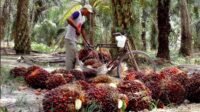
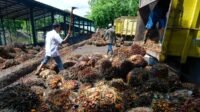
PALMOILMAGAZINE, JAKARTA — Ahmad Zazali, Chair of the Center for Agrarian Law and Conflict Resolution (PURAKA), has stressed that law enforcement efforts against illegal oil palm plantations in Tesso Nilo National Park (TNTN), Riau, must not focus solely on smallholder farmers. He called on the Forest Area Enforcement Task Force (Satgas PKH) and law enforcement agencies to investigate the full supply chain—from fresh fruit bunches (FFB) harvested in TNTN to the palm oil mills (PKS) and companies purchasing crude palm oil (CPO).
“Law enforcement shouldn’t stop at the farmers. Authorities must trace who is buying and processing FFB from this conservation area. This is a supply chain crime, not just a land-use violation,” Zazali told Palmoilmagazine.com on Wednesday (June 25, 2025).
According to PURAKA’s findings, several mills are suspected of sourcing FFB from within TNTN, including PT Peputra Supra Jaya, PT Mitra Unggul Perkasa, and PT Agritasari. These companies are reportedly connected to larger supply chains involving major firms that are members of the Roundtable on Sustainable Palm Oil (RSPO).
Also Read: EU and Indonesia Launch EU Desk at BKPM to Boost Sustainable Investment
Zazali emphasized that RSPO explicitly prohibits its members from sourcing FFB from forested areas or from companies under legal scrutiny. If these allegations prove true, the mills involved could face criminal charges for receiving stolen goods, and possibly even money laundering charges, for profiting from environmental crimes.
He urged RSPO to launch a comprehensive investigation into any of its members directly or indirectly linked to palm oil sourced from TNTN.
“If RSPO wants to maintain credibility, it must be bold enough to revoke the membership of companies involved. There should be zero tolerance for practices that destroy conservation areas,” said Zazali, who is also a member of Sawit Watch.
He also called on major CPO buyers not to turn a blind eye, stressing that they bear both moral and legal responsibility to ensure their CPO supply does not come from mills processing illegal palm oil.
Beyond RSPO and buyers, Zazali urged the Indonesian government and the Indonesian Sustainable Palm Oil (ISPO) certification body to act decisively. He called for a full audit of ISPO-certified companies suspected of receiving FFB from TNTN, stating that certificates should be revoked immediately if violations are found.
“This is not just a matter of legality—it’s about the reputation and integrity of Indonesia’s palm oil certification system on the global stage,” he added.
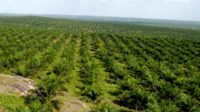
Tesso Nilo has long been a critically endangered conservation area due to widespread illegal land conversion for oil palm plantations. While the government has made efforts through Satgas PKH to crack down on these activities, Zazali argued that targeting only smallholders will not resolve the core issue unless players at the industrial level are also held accountable.
Through this statement, PURAKA is pushing for a supply chain-based enforcement approach—targeting all links in the network, including companies operating under the guise of legality but involved in illegal practices. (P2)