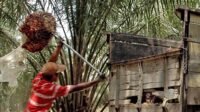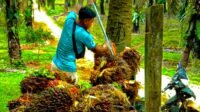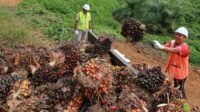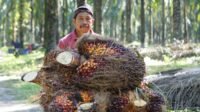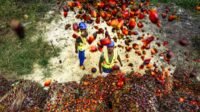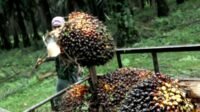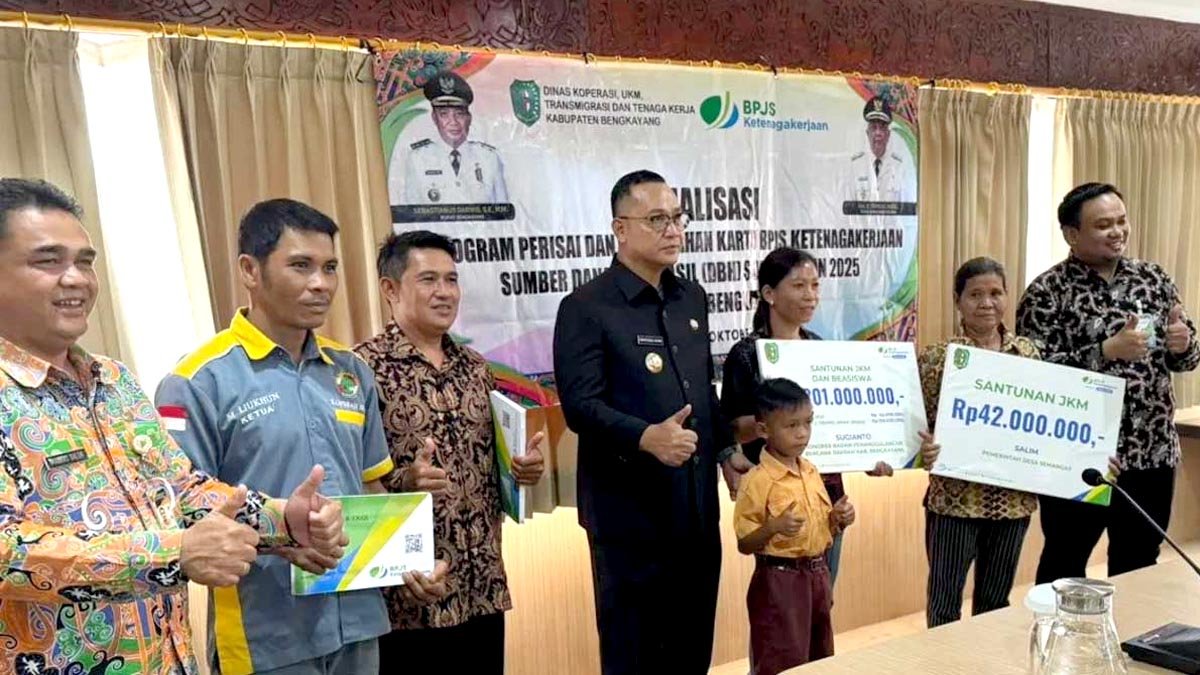
PALMOILMAGAZINE, BENGKAYANG — The Bengkayang Regency Government in West Kalimantan reaffirmed its commitment to expanding social protection coverage for workers in the palm oil sector. This initiative is being realized through a labor protection program funded by the Palm Oil Revenue-Sharing Fund (DBH Sawit).
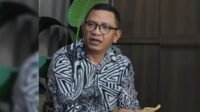
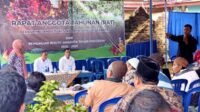
“This program is a tangible expression of the local government’s concern for the welfare and work security of farmers and plantation workers, who serve as the backbone of the regional economy,” said Bengkayang Regent Sebastianus Darwis during the launch of the Perisai Social Security Program and the distribution of employment protection cards for palm oil workers on Friday (October 10, 2025).
According to Darwis, social protection is both a moral and constitutional responsibility of the government toward its citizens, especially those in high-risk informal sectors. He emphasized that the regional administration is not only focused on improving plantation productivity but also on ensuring the safety and well-being of field workers.
Also Read:
“Palm oil workers play a crucial role in driving the regional economy. Therefore, they deserve proper social protection. The government is here to guarantee their rights are fulfilled,” he said, as quoted by Palmoilmagazine.com from Antara on Sunday (October 12, 2025).
In the 2025 fiscal year, a total of 2,116 palm oil workers in Bengkayang received BPJS Employment premium assistance funded by DBH Sawit. The support provides 12 months of protection, covering both work accident insurance and death benefits for eligible participants.
The initiative reflects the national government’s policy to ensure that the benefits of DBH Sawit are felt directly by local communities, particularly palm oil workers at the grassroots level. The Bengkayang government remains committed to expanding the program’s coverage so that more workers can gain protection in the future.
“Not all palm oil workers are covered yet, but we are working closely with BPJS and related agencies to expand membership. Our goal is for all palm oil workers in Bengkayang to eventually be enrolled in employment social security,” Darwis explained.
He added that as community welfare improves, the government’s financial contribution is expected to decrease over time. Therefore, workers are encouraged to continue their BPJS Employment participation independently, given that the monthly premium is only around Rp16,800 but offers comprehensive protection benefits.
“The government cannot bear the full cost indefinitely. That’s why we encourage the community to understand the importance of social protection and continue it independently. This is part of building self-reliance and shared responsibility,” he said.
The Regent also expressed appreciation for the strong collaboration between BPJS Employment, local authorities, and other stakeholders in implementing the program. He stressed that cross-sectoral cooperation is key to ensuring that social protection initiatives are effective, well-targeted, and beneficial for palm oil workers throughout Bengkayang. (P2)