PALMOILMAGAZINE, JAKARTA — Indonesia may be the world’s largest palm oil producer, but a series of structural challenges shows the industry has significant work ahead. Plantation productivity, supply chain efficiency, and technological readiness remain behind Malaysia, which has advanced steadily over the past decade.
These concerns were highlighted by Umi Mu’Awanah, Head of the Research Center for Economics, Industry, Services, and Trade at OR-TKPEKM BRIN. According to her, the national palm oil sector is standing at a crossroads. With the government’s growing ambition to expand palm-based energy—from biodiesel to bio-avtur—an essential question emerges: is Indonesia ready to control the full value chain, or will it remain a supplier of raw materials?
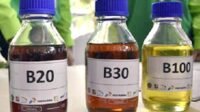
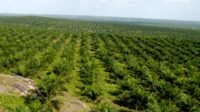
Umi said the industry’s most urgent challenge is competitiveness. “We are the biggest producer, yet progress in productivity and technology remains slow,” she wrote. The issue becomes more critical as discussions on launching B50 biodiesel continue, while domestic feedstock capacity still raises concerns.
Also Read:
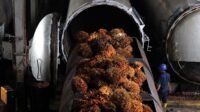
For now, most processing machines and advanced technologies remain imported, and the country’s research potential has yet to be fully tapped. Umi urged stronger research and innovation ecosystems through cross-sector collaboration—bringing together the government, industry players, researchers, academia, and financing bodies such as the Plantation Fund Management Agency (BPDP).
“Research must not stay on paper. It must address real industry needs—from improving yields and increasing efficiency to accelerating downstream development,” she said during an event attended by Palmoilmagazine.com in Jakarta in early October 2025.
She emphasized that palm oil must be positioned within Indonesia’s broader agenda for sustainable energy and national resilience. Its role should extend beyond food products to future energy sources such as bio-based aviation fuel. To achieve this, Indonesia needs an integrated research strategy capable of tackling productivity issues, environmental considerations, and waste-management solutions.
In the global arena, Indonesia cannot move alone. Sustainability standards continue to evolve, competition is intensifying, and markets demand higher efficiency. Despite its vast potential, the national palm oil industry risks losing ground internationally without concrete execution.
“It is time for Indonesia’s palm oil sector to move up the value chain—not merely as an export commodity, but as a strategic pillar for energy independence and long-term economic sustainability,” Umi asserted. (P2)