PALMOILMAGAZINE, JAKARTA — As 2026 approaches, food self-sufficiency is once again at the top of the government’s national agenda. The strategy is not merely political ambition but an urgent necessity amid global price volatility, logistical disruptions, and Indonesia’s longstanding reliance on food imports. Yet the road toward full self-sufficiency remains steep. Agricultural GDP growth continues to lag behind national economic expansion, the post-pandemic recovery remains uneven, productivity shows signs of stagnation, and the adoption of modern technology is far from uniform.
Disparities between commodities also persist: rice remains stable, corn is improving, while soybeans and sugar continue to decline. Even the arrival of more than 223,000 tons of imported specialty rice from January to July 2025 highlights the inadequacy of domestic production.
Against this backdrop of global pressures, the concept of a Food–Energy–Water Nexus has gained prominence. The government is increasingly recognizing the need to integrate water, energy, and food policies into a single, interconnected ecosystem from upstream to downstream. Without consistent governance, achieving food independence will be difficult.
Also Read:
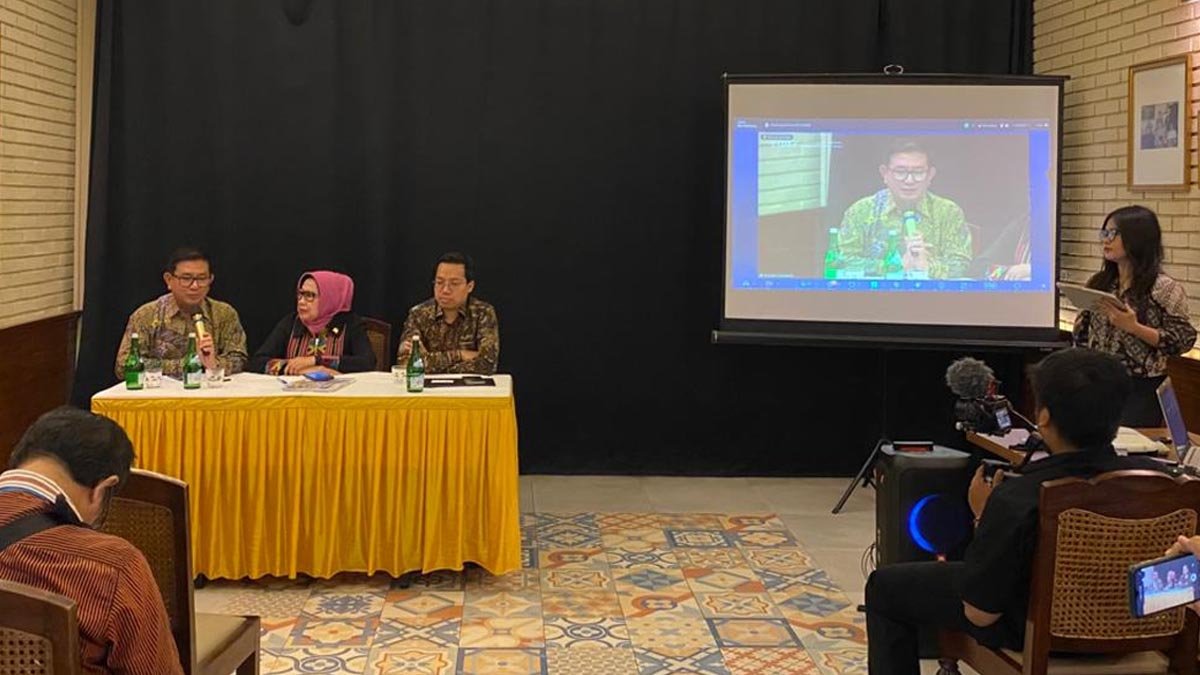
From Senayan, Endang Setyawati Thohari, a member of Commission IV of the Indonesian House of Representatives (DPR RI), echoed these concerns, stressing that food security is not solely about boosting production. She emphasized the importance of regulatory clarity, conflict-free land governance, and comprehensive protection for smallholder farmers.
“Global risks such as price fluctuations, geopolitical tensions, and supply chain uncertainty demand that Indonesia build a far more resilient food system,” Endang said in an official statement quoted by Palmoilmagazine.com on Friday (Dec 5, 2025).
According to her, agricultural transformation must be more comprehensive — starting from strengthening seed research, improving input efficiency, modernizing logistics, to revitalizing irrigation infrastructure, which has long been a weak link in the sector. Commission IV, through its budgeting and oversight functions, is committed to strengthening food-sector financing and accelerating the implementation of the one-map policy to reduce land conflicts that hinder farmers. Endang also underscored that smallholder farmers, local communities, and youth must be placed at the center of the food ecosystem through better access to capital, technology, and fair partnerships.
Also Read: Finance Minister Purbaya: Palm Oil Industry Remains the Backbone of Indonesia’s Economy
From the fertilizer industry, Dwi Satriyo Annurogo, Director of Operations at PT Pupuk Indonesia (PIHC), stressed a similar point: food productivity cannot be separated from fertilizer availability, particularly nitrogen. With projected rice demand surging ahead of Indonesia Emas 2045, an additional 5.69 million tons of production must be secured through precise, efficient, and sustainable fertilization.
Dwi noted that national fertilizer production capacity remains adequate and continues to be strengthened. Distribution systems are being upgraded through digitalization—ranging from command centers and monitoring dashboards to electronic reporting systems that ensure transparent delivery of subsidized fertilizers down to the farmer level. Moving forward, PIHC will enhance energy efficiency, advance precision fertilization, and prepare for the construction of new fertilizer plants in eastern Indonesia to reinforce national supply chains. These efforts, he said, form a critical foundation for Indonesia’s transition to modern, low-emission agriculture.
A sharper analysis comes from INDEF. Abra Talattov, Head of the Institute’s Food, Energy, and Sustainable Development Center, examined quarterly agricultural performance data dating back to 2015. The sector grew 4.9% in Q3–2025, but fluctuations remain more pronounced than national GDP, which has stabilized above 5%.
“Our agriculture sector has not structurally recovered from the pandemic,” Abra said.
Data shows that rice and corn posted rising output, but key commodities such as sugar and soybeans remained stagnant or declined. Meanwhile, demand for imported food—wheat, sugar, and soybeans—continues to rise without matching domestic production capacity. This trend further strains the 2025 food balance sheet, already pressured by supply constraints and unstable prices.
Looking ahead to 2026, Abra warned of potential supply disruptions, suboptimal institutional coordination, and rising production costs that could squeeze household purchasing power. He also noted that subsidies for key commodities and social protection programs could heighten fiscal pressures if policies are not directed more efficiently.
For these reasons, he emphasized that the Food–Energy–Water Nexus is no longer optional but essential. The integration of water management, energy inputs, and food systems will determine Indonesia’s ability to withstand global shocks. According to Abra, only through improved productivity, supply-chain efficiency, better data quality, and consistent governance can the agricultural sector regain its role as a primary pillar of national economic growth. (P1)