PALMOILMAGAZINE, PALEMBANG — The Indonesian Planters Society (IPS) has reaffirmed its role as a key driver of human capital development in Indonesia’s palm oil industry. Through a Technical Meeting for Oil Palm Plantations and Mills themed “Strategies for Successfully Increasing Palm Oil Productivity”, held in South Sumatra, the organization demonstrated its strong commitment to more professional and sustainable plantation and mill management practices.
IPS Chairman Jamalul said Indonesia’s crude palm oil (CPO) production in 2025 is projected to reach 46–47 million tons—equivalent to around 58% of global output estimated at 80.3 million tons. Together, Indonesia and Malaysia are expected to supply up to 87% of global palm oil demand.
“Indonesia is widely recognized as the world’s largest CPO producer. That is why IPS consistently organizes seminars and technical forums to ensure the sustainability of national CPO production,” Jamalul said in a statement received by Palmoilmagazine.com on Tuesday (December 9, 2025).
Also Read:
He also stressed the importance of understanding global regulatory dynamics affecting palm oil trade. According to Jamalul, standards such as the Roundtable on Sustainable Palm Oil (RSPO) and the European Union Deforestation Regulation (EUDR) should not be viewed solely as obstacles.
“In my view, these regulations should not become a scare factor. We must also recognize that they can function as trade strategies. Indonesia has introduced its own standard through ISPO to ensure the palm oil industry remains sovereign and competitive,” he said.
Founded in Jakarta in 2018, IPS serves as a professional platform for human resources across the perennial crop plantation sector, particularly oil palm—ranging from estate workers, foremen, assistants, managers, and general managers to CEOs and plantation owners. With its broad membership network, IPS aims to strengthen dialogue and knowledge exchange among plantation practitioners.
“The goal of IPS is to enable members to share ideas and access education. IPS exists as a space for exchanging perspectives and gaining new knowledge,” Jamalul added.
Also Read: Riau Independent Palm FFB Prices Rise in Mid-December on Stronger CPO Benchmarks
At the same event, South Sumatra Plantation Agency Secretary Dian Eka Putra highlighted the relatively low productivity of smallholder oil palm plantations in the province. Average yields currently stand at about 3.4 tons per hectare per year—leaving a significant gap compared with optimal potential.
According to Dian, this productivity gap must be addressed through improved cultivation practices and better access to high-quality planting material. He therefore welcomed the decision to select South Sumatra as the host of the IPS event.
“We feel honored that South Sumatra was chosen as the venue. Technical meetings like this are crucial for broadening insights and providing a platform to share concrete solutions,” he said.
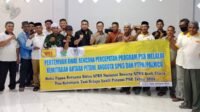
Since 2017, South Sumatra has implemented the Smallholder Oil Palm Replanting (PSR) program, benefiting more than 30,000 farmers. Various surveys indicate productivity improvements following the program’s implementation. However, rising palm oil demand—both for export markets and domestic consumption—means productivity enhancement efforts must continue.
“The palm oil industry is highly dynamic. Forums like this are essential to strengthen knowledge and identify practical solutions to boost productivity,” Dian concluded.
In addition to technical presentations and discussions, the program also included a field trip to Sampoerna’s plantation. Participants observed nursery operations, planting techniques, and estate management practices firsthand—approaches considered valuable references for improving productivity among both smallholders and corporate plantations. (P2)