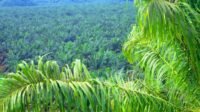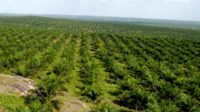
PALMOILMAGAZINE, JAKARTA — The government’s plan to open hundreds of thousands of hectares of new land for oil palm plantations has reignited public debate, particularly amid claims that oil palm trees can perform ecological functions similar to natural forests, such as water absorption and flood prevention.
Those claims have drawn criticism from academics. Febri Arif Cahyo Wibowo, M.Sc., a forestry lecturer at the University of Muhammadiyah Malang (UMM), warned that equating oil palm with forest trees risks misleading the public about forest ecosystems and environmental carrying capacity.
Febri explained that the fundamental difference lies in root structure and vegetation characteristics. Oil palm trees have fibrous root systems with an average depth of about one meter, limiting their capacity to absorb and store water. In contrast, forest trees develop much deeper root systems—typically two to three meters, and in some cases reaching up to ten meters—making natural forests far more effective at regulating hydrology, stabilizing soil, and controlling surface runoff.
Also Read: Palm Oil Amid Black Campaigns and Misguided Policies
“Oil palm is a plantation crop, not a forest species. People cannot simply equate the ecological capacity of oil palm with that of natural forest trees. When it comes to water retention, forests are clearly superior,” Febri said, as quoted by Palmoilmagazine.com from UMM’s official website, Monday (December 15, 2025).
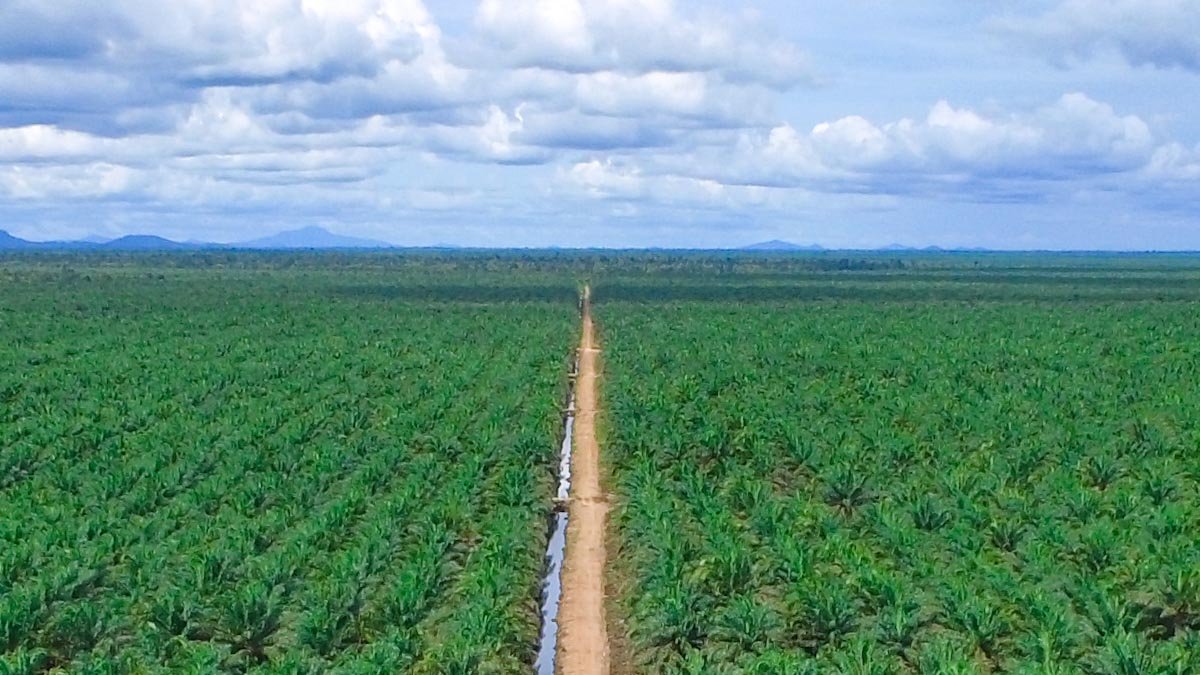
He also pointed to the predominantly monoculture planting system used in oil palm estates, which increases ecological vulnerability. Plantation floors are often kept relatively clean of undergrowth, allowing rainwater to strike the soil surface directly without natural vegetation buffers.
This contrasts sharply with natural forests, which have multi-layered vegetation structures. Tree canopies, shrubs, and ground cover work together to intercept, slow, and disperse rainfall before it reaches the soil, helping to maintain soil moisture while significantly reducing erosion risks.
“In the context of palm oil expansion policy, erosion is the most immediate threat, especially in sloping areas. Many studies show that erosion rates on oil palm plantations on slopes are relatively high,” Febri said.
Also Read: KPBN Inacom CPO Prices Rise on Thursday (Dec 18), Malaysian Palm Oil Futures Strengthen
He warned that the risk could intensify as climate change increases rainfall intensity. Without land-use planning that accounts for site-specific characteristics, oil palm expansion could trigger environmental disasters.
“If rainfall intensity is high and there is no protective vegetation, the impacts can be severe. The regulations are actually very clear—it’s a matter of compliance,” he stressed.
Febri urged the government to ensure that oil palm development does not take place in disaster-prone areas and continues to consider land carrying and buffering capacity. He noted that relevant ministries already have regulations governing production forests and industrial plantation forests, meaning ecological considerations should not be sidelined.
He emphasized that palm oil expansion policies should not be driven solely by short-term economic interests at the expense of forest ecological functions.
“Designate specific zones for oil palm, and restore forest functions in areas that are ecologically unsuitable for plantations. Don’t force oil palm to grow where it is not meant to thrive. If conservation is to work, forests must function according to their purpose,” he said.
Febri also called for a more balanced public discourse on palm oil, weighing economic benefits against conservation needs. While palm oil contributes significantly to the economy, he argued, it was never designed by nature to replace the ecological functions of natural forests.
A similar view was expressed by Bayu Krisnamurthi, Professor of Agribusiness Policy at IPB University. He acknowledged the long-standing debate over palm oil’s place within ecosystems. While oil palm plantations are not tropical rainforests, he said, palm oil remains a strategic commodity with certain ecological functions.
“What’s needed is a proportional view of palm oil—as a strategic commodity with major economic benefits, but with clear ecological limits,” Bayu said, as quoted by Antara.
The former deputy trade minister (2011–2014) explained that oil palm trees can live for decades and absorb carbon dioxide through photosynthesis, storing carbon in their trunks, litter, and fruit. However, these ecological functions cannot be equated with those of tropical forests, which have layered structures and far more complex biodiversity.
“Oil palm plantations are not the same as natural forests in terms of biodiversity, ecological capacity, or hydrological function,” Bayu stressed.
At the same time, Bayu underlined that the economic contribution of palm oil to communities and the state cannot be dismissed. The industry serves as a backbone of the national economy, with plantation areas exceeding 16 million hectares and employment reaching an estimated 16–20 million people, both directly and indirectly.
Indonesia’s annual crude palm oil (CPO) output of more than 50 million tons also positions the country as the world’s largest producer and exporter of palm oil.
The debate underscores the urgency of science-based and precautionary palm oil policies, ensuring that the development of this strategic commodity does not come at the cost of environmental resilience and public safety. (P2)