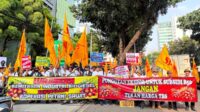
PALMOILMAGAZINE, BOGOR — Sawit Watch has firmly rejected plans to expand large-scale oil palm plantations in Papua, which are being promoted as part of alternative fuel (biofuel) development. The organization argues that the policy represents a dangerous “shortcut” that could trigger new ecological disasters, fuel agrarian conflicts, and deepen the food crisis.
The proposed expansion aligns with the government’s target to extend oil palm plantations by up to 600,000 hectares by 2026 and the implementation of the B50 biodiesel mandate. However, Sawit Watch stressed that Papua should not be positioned as an energy solution. “This plan is extremely dangerous. It threatens the last remaining tropical rainforests in Indonesia and ignores the bitter lessons from the environmental crises now unfolding in Sumatra,” said Sawit Watch Executive Director Achmad Surambo.
According to Surambo, the palm oil expansion strategy in Papua lacks a solid ecological and spatial planning foundation. Sawit Watch’s analysis, based on Environmental Carrying Capacity and Environmental Load Capacity (D3TLH) research, indicates that the total area suitable and optimal for oil palm cultivation across Papua Island is only about 290,837 hectares. By contrast, existing oil palm plantations had already reached 290,659 hectares in 2022—nearly exhausting the ecosystem’s ideal capacity.
Also Read:
Moreover, Sawit Watch found that around 75,308 hectares of existing plantations in Papua are located in areas with critical limiting factors, including primary forests, conservation zones, Key Biodiversity Areas (KBAs), and habitats of birds-of-paradise. “This shows the situation is already highly critical. Any additional land clearing risks exceeding environmental carrying capacity,” Surambo warned.
Social risks, the organization added, are no less severe. Sawit Watch cautioned that expansion in Papua could trigger a new wave of agrarian conflicts. Its data records at least 1,126 conflicts in Indonesia’s oil palm sector, involving 385 companies and 131 corporate groups. “Indigenous Papuan communities, with their customary land rights, would become the primary victims—facing criminalization and violence under this extensification scheme,” Surambo said in a statement received by Palmoilmagazine.com on Thursday (December 18, 2025).
Sawit Watch also pointed to Sumatra as a clear example of governance failure in the palm oil sector. “The climate crisis and ecological disasters occurring in Sumatra are concrete evidence of violations of environmental carrying capacity. Opening new land in Papua would be tantamount to permanently destroying ecosystems that are vital for Indonesia and the world,” Surambo said.
Also Read: Beyond Deforestation: Climate Extremes Behind Sumatra’s Repeated Disasters
From an economic standpoint, Sawit Watch argued that the government’s policy calculations are deeply flawed. Based on its research, an expansion scenario without a moratorium is projected to generate a negative impact on gross domestic product (GDP) of up to minus Rp30.4 trillion by 2045, driven by rising social costs, disaster mitigation expenses, and the loss of ecosystem services. In contrast, a permanent moratorium combined with large-scale Smallholder Palm Oil Replanting (PSR) is estimated to deliver a positive GDP output of up to Rp30.5 trillion and create approximately 827,000 jobs by 2045.
On these grounds, Sawit Watch urged President Prabowo to take corrective action. First, to cancel plans for palm oil expansion in Papua and the 600,000-hectare extensification target, and instead shift policy toward equitable intensification through massive PSR programs. Second, to reinstate a Presidential Regulation on a permanent moratorium on new oil palm permits, accompanied by a comprehensive audit of all plantation licenses—particularly in areas with limiting environmental variables in Sumatra and Papua. Third, to strengthen protections for indigenous peoples’ rights through formal recognition of customary territories and the resolution of existing agrarian conflicts.
“The ecological disasters in Sumatra are a stark warning. Palm oil expansion in Papua would be a disaster waiting to happen,” Surambo asserted. He called on the government to heed science and community voices in order to pursue policies that genuinely safeguard public safety and ensure long-term economic sustainability. (P2)