PALMOILMAGAZINE, JAKARTA — The hydrometeorological disasters that struck parts of Sumatra in late November were not merely a series of natural events. They exposed deeper structural weaknesses in Indonesia’s development path and posed a serious test to the country’s constitutional commitment to environmental protection.
This was emphasized by Dr. Rasminto, Executive Director of the Human Studies Institute, during a public discussion titled “Quo Vadis the Constitution and the Ecological Crisis: Lessons from Sumatra’s Hydrometeorological Disasters,” attended by Palmoilmagazine.com on Tuesday (23/12/2025).
According to Rasminto, Indonesia’s position along the Ring of Fire makes it inherently vulnerable to disasters ranging from earthquakes and volcanic eruptions to floods and landslides. These risks, however, become far more dangerous when development is unbalanced. “The development triangle—environmental, social, and economic—should be in equilibrium. In reality, it is not,” he said.
Also Read:
He criticized development practices that sacrifice environmental sustainability and the interests of future generations, not only at the community level but also within bureaucratic systems and conglomerate circles. Law enforcement, he added, must be questioned: is the legal and constitutional framework insufficient, or is the real problem weak implementation?
The recent disasters in Aceh, North Sumatra, and West Sumatra, Rasminto noted, have shaken public awareness, but the underlying issues are far from new. He traced the roots of the problem back to the post-Reformasi era following 1998. “During the New Order, zoning regulations were firm. Protected areas were clearly defined and untouchable. After reform, those boundaries became increasingly loose,” he explained.
The consequences are evident across regions outside Java, including Kalimantan, Sulawesi, and Papua, where forest landscapes have been fragmented into residential plots and industrial concessions. An estimated 1.4 million hectares of forest have been lost to industrial activities, severely weakening hydrological functions. As a result, extreme rainfall now triggers floods carrying logs into residential areas—clear signs that river basins are in critical condition, with forest cover in some regions falling to just 66–70 percent.
Rasminto highlighted the scale of the impact in Sumatra: 1,112 fatalities, 176 people still missing, hundreds of thousands displaced, and economic losses exceeding Rp54 trillion. Beyond material damage, the disasters have also triggered social and political repercussions, particularly in Aceh, where delays in emergency response became a contentious issue on social media.
Also Read: South Sumatra Palm Oil FFB Prices Strengthen in Late December 2025
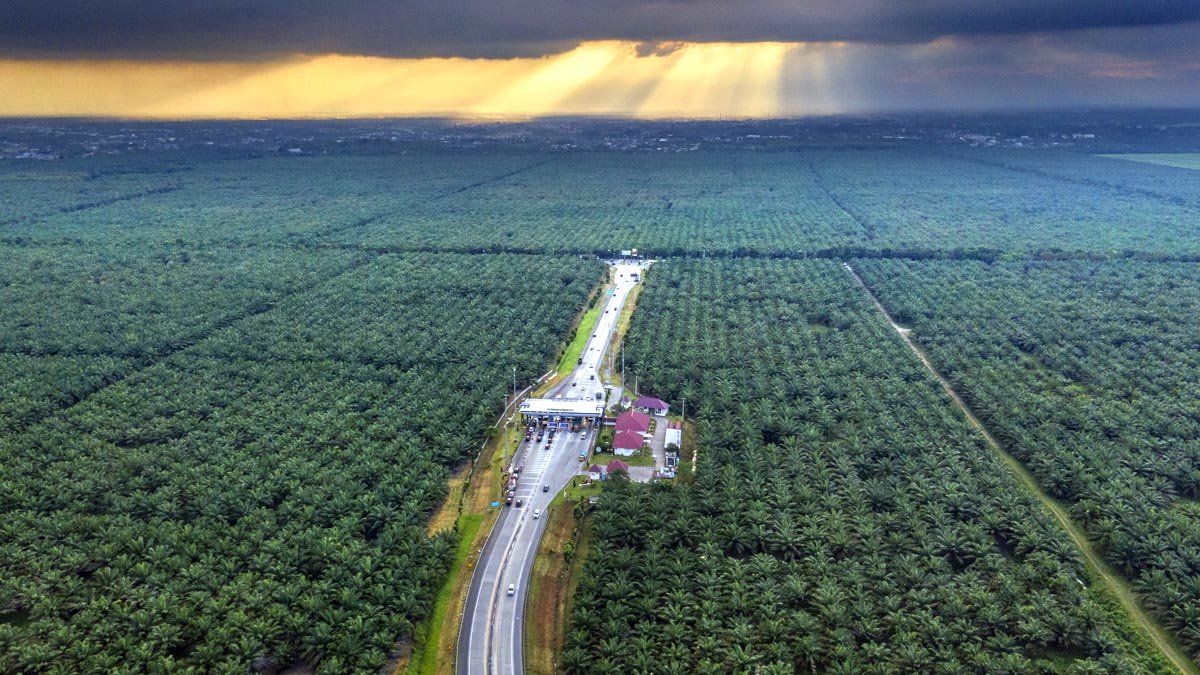
In this context, Rasminto warned against turning palm oil into a convenient scapegoat. “Disaster issues are often ‘fried up’ into accusations of palm oil-driven deforestation, when the problem is far more systemic,” he said. The real issue, in his view, lies in post-Reformasi policies that have been overly permissive toward deforestation and extractive practices—whether in mining, oil and gas, or plantations—in the name of economic growth.
He welcomed what he described as firm initial steps taken by President Prabowo Subianto’s administration. Through the Ministry of Forestry, the government has revoked forest utilization permits covering around 750,000 hectares. Since February 2025, 18 forest concession licenses (PBPH) spanning more than half a million hectares have also been canceled. “This sends a strong signal that forestry regulations are non-negotiable,” Rasminto said.
Law enforcement has been further reinforced by Presidential Regulation No. 5/2025 on Forest Area Enforcement and the establishment of the Forest Area Enforcement Task Force (Satgas PKH). To date, more than 3.7 million hectares of forest land have been formally reclaimed by the state. These measures, Rasminto argued, are beginning to affect major players, including oligarchic interests in palm oil, mining, and oil and gas.
Also Read: Palm Oil Prices Slip on Monday as High Stocks Threaten Short-Term Rally
However, he cautioned that resistance persists, often in the form of disinformation campaigns, fake social media accounts, personal attacks, and deliberate attempts to blur the real causes of environmental disasters. “There is little point in talking about the constitution and ecological crisis if law enforcement is ultimately defeated by narrow interests,” he warned.
Rasminto concluded by calling for the constitution to be enforced in earnest. Articles 28H and 33 of the 1945 Constitution, which guarantee the right to a good and healthy environment and mandate state control over natural resources for public welfare, must be translated into concrete action. Palm oil, he stressed, does not have to be positioned as the perpetual problem. With firm law enforcement and fair governance, the sector can instead become part of Indonesia’s solution to sustainable development. (P2)