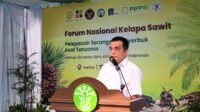
PALMOILMAGAZINE, JAYAPURA – Papua Governor Mathius Fakhiri has called on local governments to utilize former palm oil plantation land whose permits have been revoked for the development of cocoa. The policy is seen as a strategic step to safeguard environmental sustainability while creating greater economic value for communities across Papua.
“This is part of a restructuring of Papua’s plantation sector, particularly for palm oil land whose permits were withdrawn due to companies failing to meet their obligations,” Fakhiri said in Jayapura, as quoted by Palmoilmagazine.com from Antara on Monday (5 January 2026).
Fakhiri firmly stressed that these areas will not be converted back into new palm oil plantations. The Papua Provincial Government, he said, is committed to closing the door on new palm oil permits as part of its efforts to protect the environment. “We are not issuing new palm oil permits,” he stated.
Also Read: Papua Governor Bans New Palm Oil Permits, Pushes for Processing Plants and Value Addition
According to the governor, former palm oil land will instead be directed toward more environmentally friendly commodities, with cocoa identified as a key alternative. Cocoa development, he added, aligns with central government policy and has received support from the Ministry of Agriculture, including the provision of cocoa seedlings for Papua.
“Cocoa has strong economic potential and can be managed sustainably by local communities. This creates an opportunity for farmers to improve their livelihoods,” Fakhiri said.
Beyond economic considerations, the use of former palm oil land for cocoa is also intended to restore soil conditions that have long been left unmanaged and to prevent environmental degradation caused by new land clearing. The provincial government, he continued, will coordinate closely with district administrations and relevant agencies to ensure the program is implemented effectively.
Also Read: Sawit Watch Warns Palm Oil Expansion in Papua Risks Ecological Crisis and Social Conflict
At the same time, Fakhiri emphasized that strict evaluations will be carried out on palm oil companies still operating in Papua. Firms found to be non-compliant with licensing requirements and environmental obligations will face firm sanctions, including potential permit revocation.
“Papua must not be sacrificed in the name of investment. All policies must stand on the side of the people and environmental sustainability,” he said.
Fakhiri expressed hope that cocoa development on former palm oil land will help create new jobs, increase farmers’ incomes, and strengthen Papua’s local economy in a sustainable manner. (P2)