PALMOILMAGAZINE, JAKARTA — Indonesia’s palm oil industry is facing mounting concern after the Forest Area Control Task Force (Satgas PKH) imposed massive administrative fines on plantation companies, a policy that academics, legal experts, and industry observers say could push hundreds of firms toward bankruptcy, undermine the national investment climate, and trigger widespread job losses.
As of December 2025, the task force had collected IDR 38.6 trillion in administrative penalties from 71 companies, most of them operating in the palm oil and mining sectors. The government argues that these firms were operating within designated forest areas, citing Government Regulation (PP) No. 45/2025, which amends PP No. 24/2021, as the legal basis.
Pressure on the industry is expected to intensify in 2026. The government estimates potential administrative fines from the palm oil sector alone could reach IDR 109.6 trillion, with the mining sector projected to contribute a further IDR 32.63 trillion. At the same time, authorities claim to have regained control over 4.08 million hectares of forest land.
Behind the aggressive enforcement drive, however, concerns are growing over its broader economic and social consequences.
Forestry law expert and agrarian policy analyst from Al Azhar University Jakarta, Dr. Sadino, warned that the fine structure under PP 45/2025 could cripple large parts of the palm oil industry. He highlighted the regulation’s fixed penalty of IDR 25 million per hectare per year, applied retroactively.
“For a plantation that has been operating for 20 years, the total fine could reach IDR 375 million per hectare,” Sadino said in a statement received by Palmoilmagazine.com on Friday (9 January 2026). “That figure is completely unreasonable, as it can exceed four times the market value of oil palm land, which on average is only around IDR 50–100 million per hectare.”
ALso Read: West Java Lawmakers Highlight Oil Palm Expansion Risks, Push for Environment-Friendly Crop Shift
According to Sadino, PP 45/2025 contains fundamental legal flaws because it conflicts with Law No. 6/2023 on Job Creation and Law No. 12/2011 on the Formation of Legislation.
“The basis for calculating fines has been shifted from economic benefit to a flat tariff, and the retroactive application violates core legal principles, as affirmed by the Supreme Court. The regulation was also drafted without meaningful public participation,” he said.
From the 429 palm oil companies listed in the third and fourth phases of forest area repossession, Sadino estimates that 235 firms, or about 55 percent, are at high risk of insolvency. The average fine burden is said to exceed IDR 187.5 billion per company, a level he believes surpasses asset capacity, even among major corporate groups.
The remaining 194 companies, or around 45 percent, may still be able to survive, largely because the areas subject to penalties are relatively limited, generally below 500 hectares.
Sadino also criticized how land subject to fines has been designated under Presidential Regulation No. 5/2025 and PP 45/2025. He noted that penalties have been imposed on areas that already hold valid Right-to-Cultivate (HGU) titles, including community plasma plots, smallholder-managed land, and even non-productive areas such as swamps and scrubland.
“Legally, HGU remains valid unless formally revoked. Forestry law clearly defines state forest as land not encumbered by rights. This means HGU land cannot simply be penalized,” he said.
Similar concerns were voiced by Prof. Sudarsono Sudomo, a professor at IPB University, who stressed that forest governance enforcement is important but must be proportional and grounded in field verification.
“If land areas are determined in aggregate without factual verification, the risk of error is enormous and the consequences could be far-reaching,” he said. “The palm oil industry is not merely a business sector; it is an economic ecosystem supporting millions of rural households.”
A sharper critique came from Prof. Dr. Ir. Budi Mulyanto, M.Sc., an IPB University professor and natural resource policy expert, who argued that PP 45/2025 deviates from the spirit of the Job Creation Law.
“What was supposed to be an ultimum remedium has turned into an administrative-punitive approach. This runs counter to efforts to improve licensing governance and ensure business certainty,” he said.
Budi warned that the IDR 38.6 trillion in fines already imposed could trigger a major economic shock. If enforced rigidly, the policy could set off a chain of bankruptcies and lead to mass layoffs.
“The consequences would not stop at company closures. We could see the loss of 1.5 to 3 million jobs. In the end, the state itself risks losing its tax base and investment inflows,” he said.
He also raised concerns over the potential legal disorder arising from the large-scale seizure of oil palm land and its handover to state-owned enterprises such as PT Agrinas Palma Nusantara, without transparent and measurable mechanisms.
“When land is confiscated without a clear, accountable framework, legal certainty collapses and new agrarian conflicts may emerge,” Budi said.
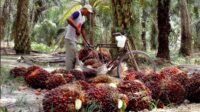
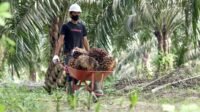
Nationally, the palm oil industry currently supports around 16.5 million jobs, both directly and indirectly. Sadino estimates that the current fine regime could result in mass layoffs affecting millions of workers, from harvesters and plantation maintenance crews to field transport operators.
Academics are now urging the government to ensure that Satgas PKH does not rely solely on coercive enforcement. Dialogue, on-site verification, and access to legal remedies are seen as essential so that forest governance does not end in the collapse of a strategic national industry.
“Law enforcement must continue, but justice, legal certainty, and economic sustainability cannot be sacrificed,” Prof. Budi Mulyanto emphasized. (P2)