PALMOILMAGAZINE, CENTRAL TAPANULI — The controversy surrounding the causes of the flash floods and landslides that struck the Aek Garoga area spanning Central Tapanuli and South Tapanuli, North Sumatra, continues to intensify. Most recently, two village administrations in Sibabangun Subdistrict, Central Tapanuli Regency, submitted formal letters to President Prabowo Subianto, expressing objections to official statements by law enforcement authorities that identified PT Tri Bahtera Srikandi (PT TBS) as one of the corporations allegedly responsible for the disaster.
The two villages, Anggoli and Simanosor, said they were deeply concerned about official press releases issued by the Criminal Investigation Agency of the National Police (Bareskrim), the Attorney General’s Office, and the Forest Area Enforcement Task Force (PKH Task Force), which they believe have unfairly singled out PT TBS and circulated widely across mainstream and social media.
The Anggoli Village Government stated that allegations linking PT TBS’s operations to the flash floods and landslides do not reflect on-the-ground realities. According to the village administration, water flows within PT TBS’s licensed area originate only from small springs that drain into the Aek Nahombar stream before eventually emptying into the Muara Sibuntuon River.
Also Read: KPBN Inacom CPO Prices and Bursa Malaysia Strengthen on Tuesday (20/1)
“The channels are winding and narrow. Even if there were residual wood from land clearing, it would be virtually impossible for it to be carried all the way to the Aek Garoga bridge,” Anggoli Village wrote in a letter signed by Village Head Oloan Pasaribu and village officials, as seen by Palmoilmagazine.com on Wednesday (14/1/2026).
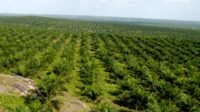
The Anggoli administration also emphasized that land covered under PT TBS’s location permit is not designated as forest area, but rather as Other Land Use Area (APL), which they said has long been cultivated by local communities with rubber, durian, sugar palm, petai, and some oil palm.
They further noted that not all community land had been released to the company, as many residents continue to depend on their farms for livelihoods. The landslide points near the village, they added, are located on community-owned land, not within company-cleared areas.
Also Read: Environmental Intelligence: Indonesia’s New Path to Sustainable Palm Oil
“Based on these considerations, we sincerely hope for the President’s wisdom in halting the investigation and legal process against PT TBS,” the letter stated. The Anggoli Village Government also argued that PT TBS’s presence has brought tangible benefits to residents, including plasma plantation development and local employment.
A similar position was expressed by the Simanosor Village Government, which sent its own letter to the President on 12 January 2026, signed by Village Head Tua Pandapotan Batubara, along with village officials and community leaders.
In its letter, Simanosor Village described accusations against PT TBS as the cause of the flash floods and landslides as “highly misleading and illogical.” Residents familiar with local conditions, the letter said, view the prevailing narrative as inaccurate and unreasonable.
The village outlined several points it believes strengthen its rebuttal, including claims that PT TBS’s plantation area is not state forest land and that prior land cover consisted largely of smallholder gardens planted with rubber, sugar palm, petai, and other crops.
Simanosor Village further stated that of the three areas developed by PT TBS, only around 20 hectares fall within the Garoga watershed. Most importantly, river systems originating in and passing through PT TBS’s plantation were said to have no direct connection to the Garoga River that experienced the flash floods.
“In other words, it is impossible and illogical to suggest that water flows and fallen timber from PT TBS’s plantations could ‘travel’ upstream to the Garoga River, located some four to five kilometers from the company’s estates,” the letter read.
The letters from the two villages add a new dimension to the post-disaster debate in Aek Garoga, signaling the emergence of local voices urging the central government to reconsider the designation of parties deemed responsible.
While official investigations and forest area enforcement measures are continuing, the formal submissions from village governments indicate that the debate over the disaster’s causes is not confined to legal narratives alone, but also encompasses social, economic, and community perspectives from residents living closest to the affected areas. (P2)