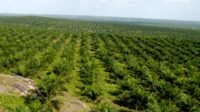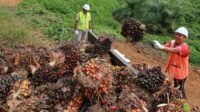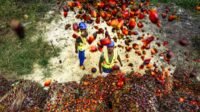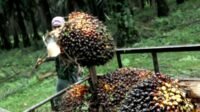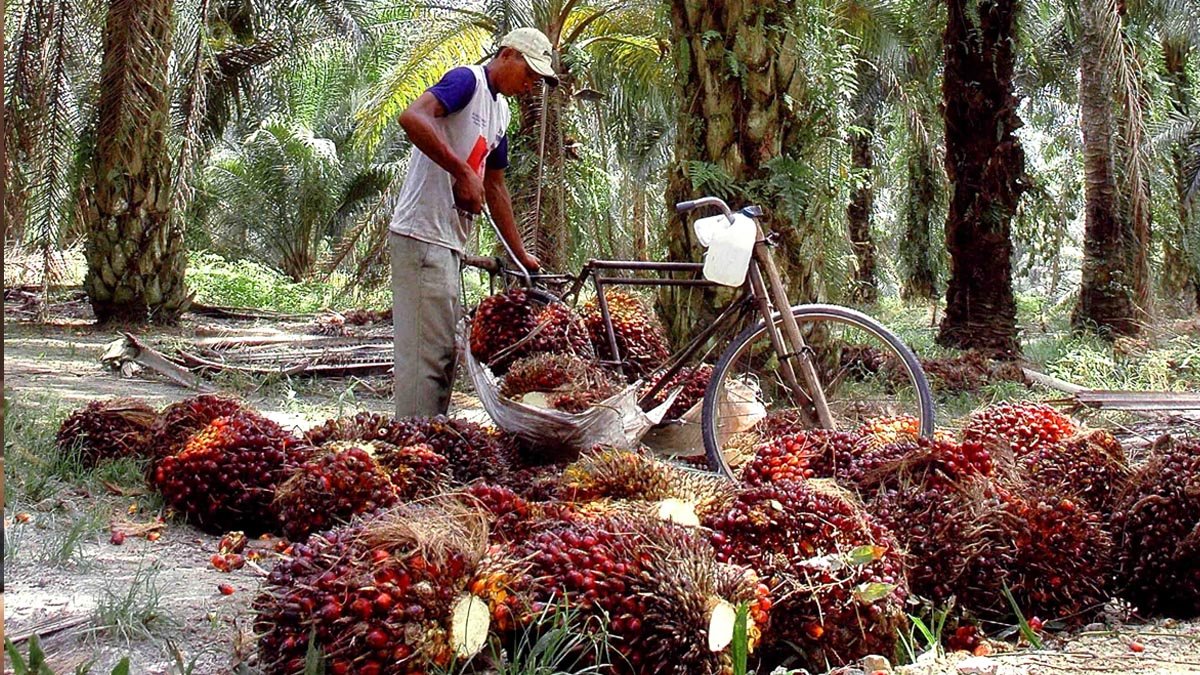
PALMOILMAGAZINE, BANDUNG — Despite the West Java Provincial Government’s firm stance against further palm oil expansion, smallholder-managed palm oil plantations in the province continue to operate and remain productive. Many of these community plantations are not new developments; they have existed for years and are now largely in their prime productive phase.
Based on the 2024 Final Figures of West Java Plantation Statistics, smallholder palm oil plantations in the province cover approximately 342 hectares, with total output reaching 2,163 tons. This translates into an average productivity level of around 8.62 tons per hectare. All of these plantations are recorded outside the large-scale estate sector, both state-owned and private.
Among all regions, Subang Regency stands out as the largest and most productive smallholder palm oil area in West Java. The regency accounts for about 110 hectares of smallholder plantations, producing 1,211 tons of crude palm fruit. Productivity in Subang reached approximately 11.53 tons per hectare, the highest level among all districts and municipalities in the province.
Also Read: Sustainability Risks Loom, GAPKI Pushes Productivity Over Papua Land Expansion
Garut Regency also plays a notable role in West Java’s smallholder palm oil landscape. The area hosts around 110 hectares of smallholder plantations, generating 633 tons of output, with productivity averaging 9.45 tons per hectare.
Smallholder palm oil is not limited to Subang and Garut alone. Other regions, including Tasikmalaya Regency, Pangandaran Regency, and Banjar City, are also home to community plantations, although on a much smaller scale. In Pangandaran, for instance, smallholder palm oil estates cover approximately 81 hectares, producing about 239 tons.
In Banjar City, local agricultural authorities have revised earlier provincial data. While provincial records previously listed about two hectares of smallholder plantations, updated field verification indicates the actual planted area is closer to 1.5 hectares, all located in Binangun Village, with production volumes still relatively limited.
Also Read: Overlapping Rules Cloud 20% Plasma Obligation, GAPKI Says Industry Caught in Regulatory Crossfire
Although West Java’s smallholder palm oil sector remains small compared with major national production centers, it continues to serve as an important supplementary source of income for local farmers. At the same time, stakeholders emphasize that management practices must comply with spatial planning regulations and environmental safeguards to ensure long-term sustainability.
The issuance of the Governor’s Circular Letter has further strengthened the legal basis for provincial plantation authorities to curb future palm oil development. Under the current policy framework, the establishment of new palm oil plantations in West Java is no longer recommended, aligning with long-standing positions among local stakeholders who oppose further palm expansion in the province.
Source: Field interviews, Deskjabar.com