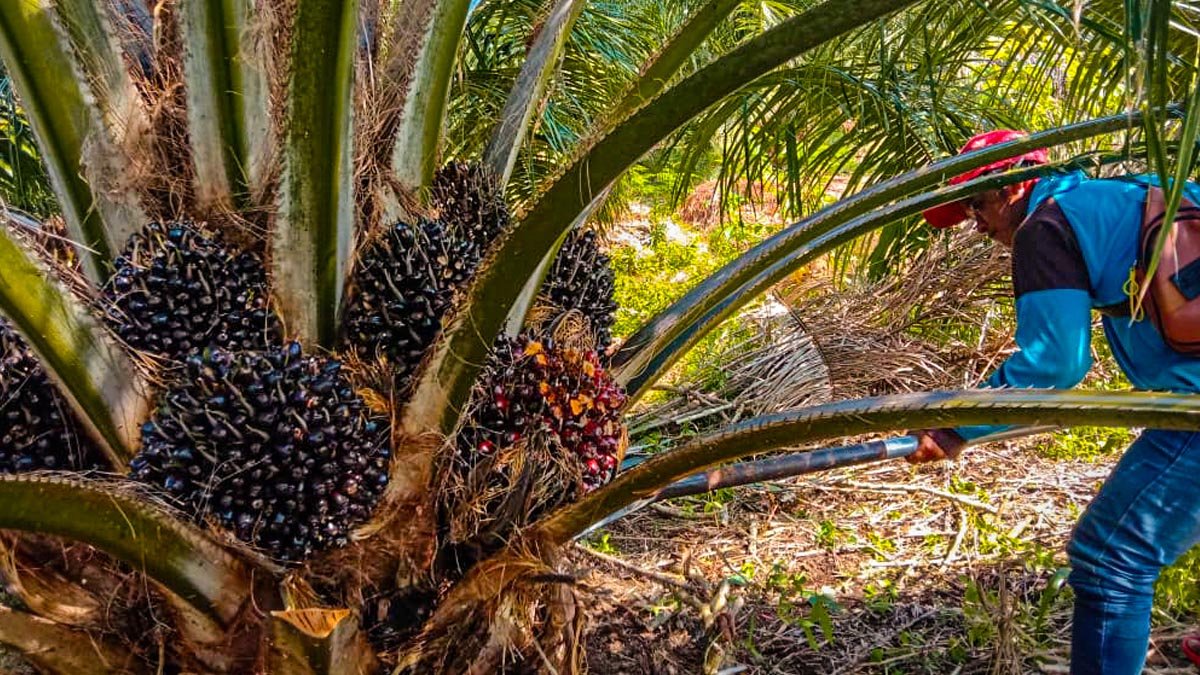
PALMOILMAGAZINE, WEST JAVA — Smallholder oil palm plantations in Banjar City, West Java, continue to survive and remain productive, even as the provincial government enforces a policy restricting the development of new oil palm estates. In Banjar, existing plantations are concentrated in Binangun Village, Pataruman District, covering a limited area but already operating at a productive stage.
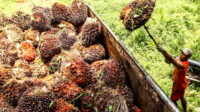
The Secretary of Binangun Village confirmed that total smallholder oil palm area in the village stands at around 1.5 hectares. From this modest plot, harvest output reaches approximately eight tons per harvesting cycle.
The achievement highlights that smallholder oil palm in Banjar remains active and continues to deliver economic contributions, despite its relatively small scale compared with Indonesia’s main oil palm regions in Sumatra and Kalimantan.
Also Read: Overlapping Rules Cloud 20% Plasma Obligation, GAPKI Says Industry Caught in Regulatory Crossfire
“The area is about 1.5 hectares. In one harvest, production can reach around eight tons,” the village secretary said when contacted.
Village-Initiated Project, Limited Scale and Far from Settlements
The presence of the oil palm plantation in Binangun Village is the result of a village government initiative launched several years ago, aimed at optimizing land use and strengthening the village’s economic potential.
Planting was carried out on a limited basis, with the plantation located far from residential areas, ensuring that plantation activities do not directly intersect with community settlements.
Also Read: DHE Retention Policy Seen as Operationally Safe, GAPKI Highlights Compliance Risks
Harvest Transported by Motorbike, Shipped to Garut
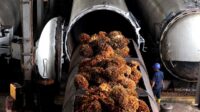
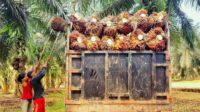
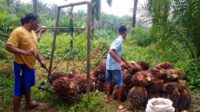
Due to difficult terrain and limited access, harvested fresh fruit bunches are transported using two-wheeled vehicles. After collection, the oil palm produce from Binangun is shipped to Garut Regency for marketing and further processing.
No Expansion Plans
Despite the economic benefits, the Binangun Village Government confirmed there are no plans to expand the plantation. This position aligns with district and provincial policies that no longer recommend new oil palm development in West Java.
According to the village secretary, the current plantation scale is sufficient as a supplementary source of income, without the need for additional land.
Provincial Data Clarified, Banjar Oil Palm Area Confirmed at 1.5 Hectares
Previously, the Banjar City Agriculture Office clarified provincial-level data that had recorded smallholder oil palm area at around two hectares. Based on local verification, the total area is confirmed at only about 1.5 hectares, all located in Binangun Village.
These smallholder plantations form part of West Java’s existing oil palm footprint that remains in production. Local authorities emphasize that while existing plantations will continue to be monitored, the development of new oil palm estates is no longer recommended under West Java Provincial Government policy. (*)
Reporter: Zainal Abidin (Banjar)