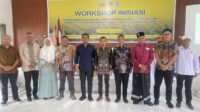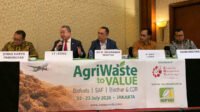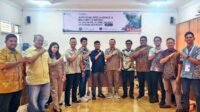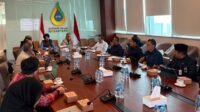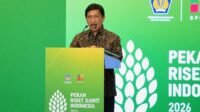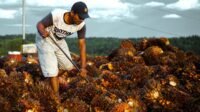
PALMOILMAGAZINE, YOGYAKARTA – Oil palm is not only Indonesia’s flagship plantation crop, but also a strategic national asset that continues to thrive even on marginal land. This was emphasized by Head of the IPB University Oil Palm Study Center, Prof. Budi Mulyanto, during the National Palm Oil Seminar hosted by UPN Veteran Yogyakarta on Thursday (22/1/2026.
“Oil palm grows exceptionally well and remains highly productive in Indonesia, even though much of it is cultivated on marginal soils,” Prof. Budi said.
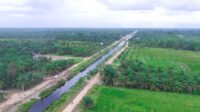
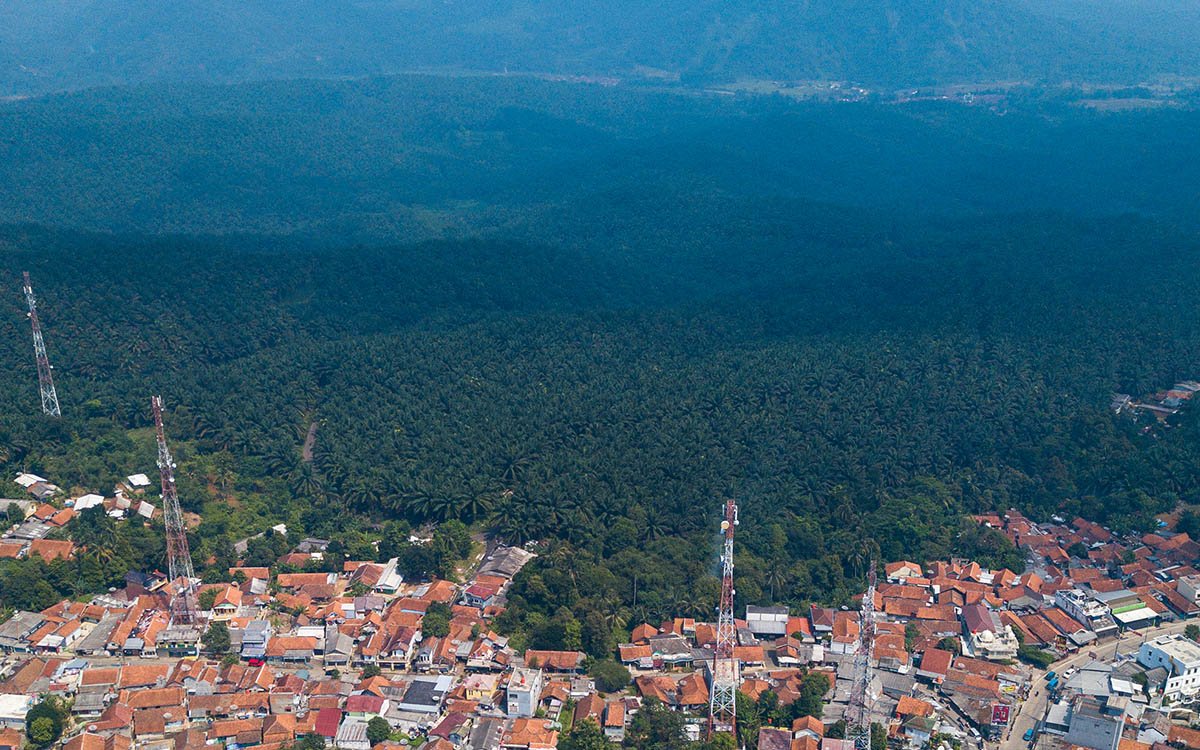
Indonesia currently manages the largest oil palm plantation area in the world, covering more than 16.8 million hectares. According to Prof. Budi, this massive scale positions palm oil not merely as an agricultural commodity, but as a key driver of economic growth from rural regions to the global market.
Also Read: Bustanul Arifin: Indonesia’s Palm Oil Must Shift from Volume to Value
Economic Engine and Major Source of Foreign Exchange
Prof. Budi underlined palm oil’s substantial contribution to Indonesia’s economy, particularly through export earnings. He noted that in 2022, palm oil foreign exchange revenues exceeded US$39 billion, reinforcing the industry’s role as one of the pillars of Indonesia’s international trade.
The palm oil sector also plays a significant role in national output. Its contribution to Indonesia’s Gross Domestic Product (GDP) reached 3.2 percent, and even rose to 3.5 percent during the Covid-19 pandemic.
Also Read: Indonesia Maps 3.32 Million Hectares of Oil Palm Inside Forest Areas, Figure Nears 4 Million
Beyond macroeconomic figures, Prof. Budi highlighted the sector’s strong social impact. Palm oil provides large-scale employment and supports the livelihoods of millions of Indonesian families.
“The palm oil sector creates more than 16 million jobs and supports the lives of millions of Indonesians,” he said.
He further explained that palm oil is a uniquely versatile commodity, producing around 160 downstream products ranging from food and oleochemicals to cosmetics and renewable energy.
Also Read: Sawit Watch Call for Transparency, Sanctions, and Agrarian Reform After 28 License Revocations
For that reason, he stressed that downstream industrialization must continue to be strengthened. Downstream development is not only about expanding markets, but also about increasing domestic value added and creating broader employment opportunities.
“Palm oil downstreaming is a strategic step to boost value creation and open up wider job opportunities,” Prof. Budi emphasized.
Palm Oil and Its Role in Carbon Issues
Prof. Budi also addressed the environmental dimension, which remains a frequent source of debate. He explained that oil palm has a high photosynthetic capacity, enabling it to efficiently capture energy and absorb carbon through biological processes.
He described the balance of nature through photosynthesis, respiration, and land use change—factors often highlighted in discussions on emissions. He even referred to oil palm plantations as “energy-binding machines,” as they store energy in biomass while contributing to oxygen production.
Nevertheless, he stressed that palm oil development must be accompanied by a more comprehensive and proportional understanding of its role in sustainable development.
According to him, the appropriate approach is to view palm oil within the framework of relative sustainable development—assessing sustainability across multiple dimensions, including physical and environmental aspects, socio-economic impacts, and broader dimensions of human life.
“There must be continuous efforts to improve understanding of palm oil’s role in relative sustainable development,” he said.
Land Legality Remains a Fundamental Challenge
On the other hand, Prof. Budi warned of a major unresolved issue still overshadowing the palm oil sector, especially smallholder plantations: land legality. He pointed to around 3.81 million hectares currently classified as forest areas, even though in reality they are no longer forested.
He argued that this situation should not be left as a lingering “problem object” without clear resolution, as it creates business uncertainty, hampers plantation development, and triggers conflicts on the ground.
Prof. Budi emphasized that solutions must be placed within a legal framework that guarantees certainty and protection of rights. He referred to Gustav Radbruch’s legal philosophy, which stresses the balance of three principles: legal certainty, utility, and justice.
“The fundamental issue facing smallholder palm oil is land legality. Its resolution must prioritize certainty, utility, and justice,” he concluded. (P2)