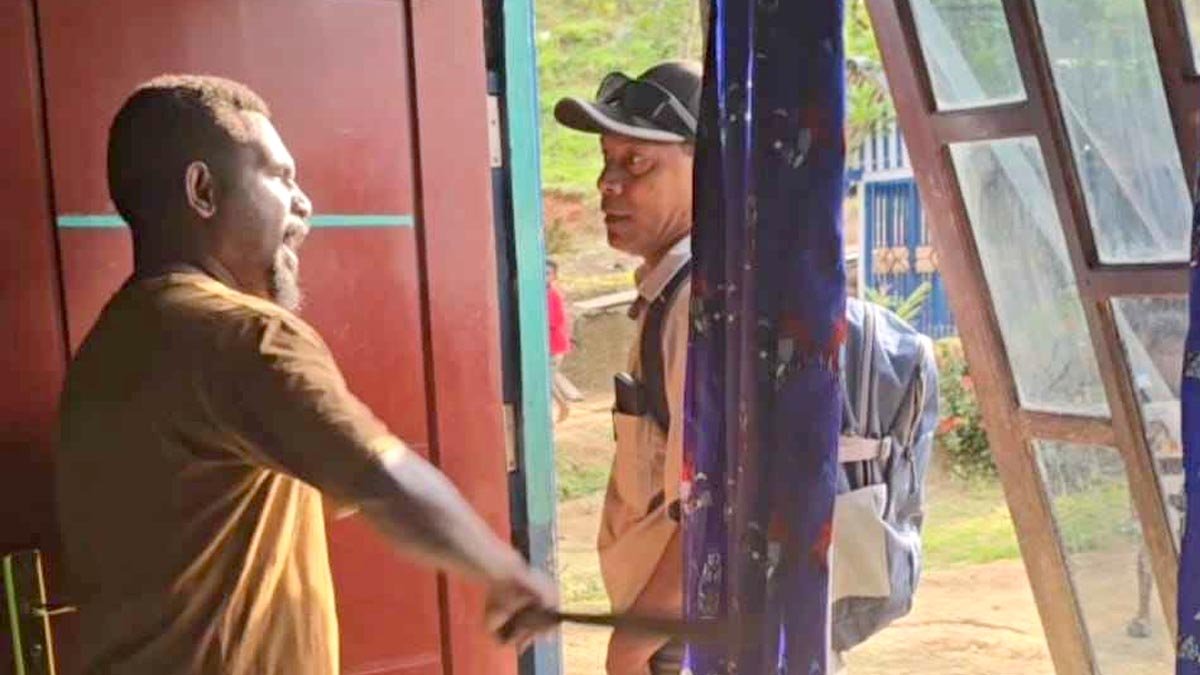
PALMOILMAGAZINE, SORONG, SOUTHWEST PAPUA – Tensions flared in Moisegen District, Sorong Regency, Southwest Papua, after members of the Klagilit Maburu Indigenous Community expelled a man claiming to be a representative of palm oil company PT Inti Kebun Sejahtera (IKSJ) on Monday (January 19, 2026). The move came after the individual was accused of persistently persuading residents to relinquish their customary forest for oil palm plantation development.
The man, identified as Algius, was asked to leave a resident’s home while attempting to approach members of the Indigenous community. Local leaders described the incident as the culmination of mounting frustration over repeated efforts seen as threatening the sustainability of customary forests and the livelihoods of the Klagilit Maburu people.
Indigenous leader Ambrosius Klagilit said the community had previously warned the company’s envoys not to provoke or pressure residents. He recalled meeting the same individual in Klasari Village, Moisegen District, in December 2025.
Also Read: PUSTAKA ALAM Accuses Forest Task Force of Defying Court Rulings in HGU Palm Estate Seizures
“I have already warned them not to seize our customary forests by inciting Indigenous people. Such actions would destroy the harmony we have long preserved,” Ambrosius said, as quoted by Palmoilmagazine.com from the Indigenous Peoples Alliance of the Archipelago (AMAN) website on Wednesday (February 4, 2026).
Promises Seen as a Tactic
Despite the warnings, Ambrosius said company representatives continued approaching members of the Klagilit Maburu clan. According to him, they offered various incentives, including promises of permanent housing, vehicles, education and health facilities, as well as compensation reportedly reaching IDR 2 billion.
“All of this is merely a tactic to take control of our customary forest,” he stressed.
Ambrosius reiterated that the Indigenous community firmly rejects oil palm plantation development in Papua. He argued that converting customary forests would not only cause environmental damage but also sever the spiritual ties and cultural identity that Indigenous people maintain with their ancestral land.
Also Read: Nagan Raya Regent Warns Palm Oil Mills: Smallholder FFB Must Be Bought at Official Prices
“Oil palm is not part of our ancestral heritage. For Indigenous Papuans, oil palm will only leave blood and tears for future generations,” he said.
He emphasized that customary forests are the foundation of life, culture, and identity for Indigenous communities. As such, any activities that threaten forest sustainability or undermine customary rights are firmly opposed. Ambrosius also urged local governments and relevant authorities to take concrete steps to protect customary forests from land appropriation carried out in the name of investment.
Academic Perspective
Indigenous studies researcher Margi Kurniawan, who has conducted research on the Moi tribe in Sorong, said the rejection by the Klagilit Maburu community is understandable. He noted that the customary forests protected by Indigenous communities are not merely physical landscapes, but living spaces encompassing educational, cultural, spiritual, and collective identity functions.
“On that basis, it is entirely reasonable for the Klagilit Maburu Indigenous community to reject the presence of palm oil companies on their customary land,” Margi said. (P2)