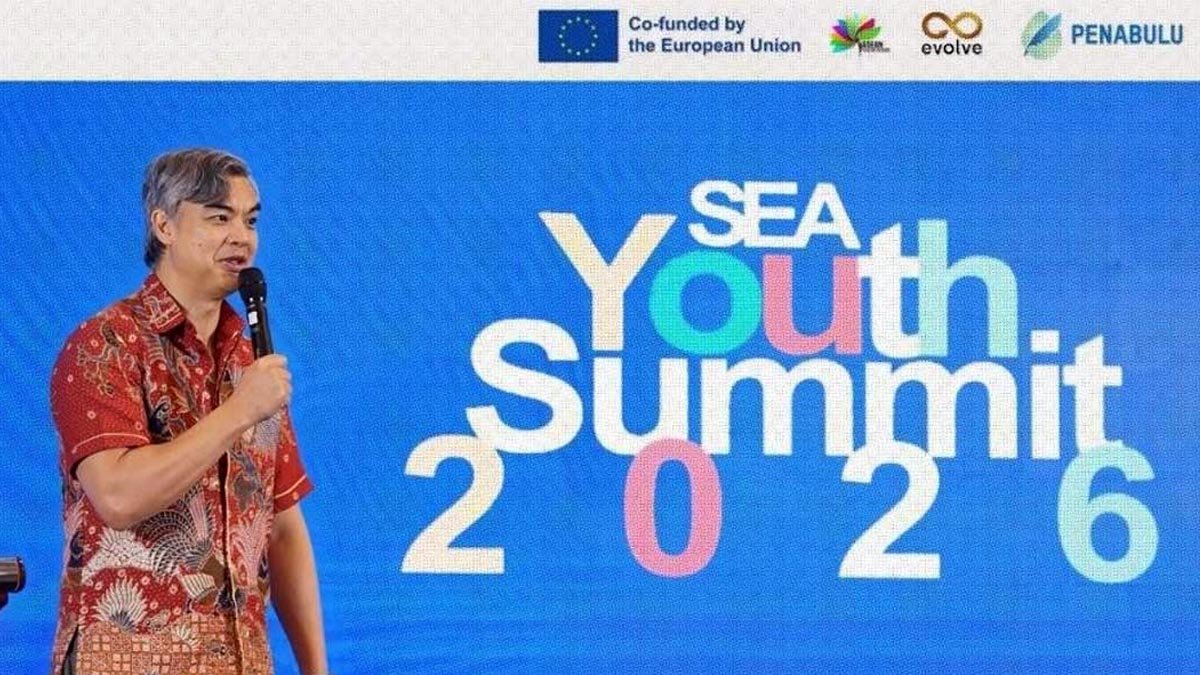
PALMOILMAGAZINE, JAKARTA – Over a hundred young people from across Southeast Asia convened at Aryaduta Menteng, Jakarta, on February 9, 2026, for the SEA Youth Summit 2026. Carrying the theme “Youth Action for Just and Inclusive Green Transition,” the forum served as a collaborative platform for ASEAN’s younger generation to advocate for a fair and inclusive pathway toward sustainability.
The summit was organized by the ASEAN Youth Forum (AYF) through the CO-EVOLVE 2 program initiated by Yayasan Penabulu, with support from the European Union. It brought together youth activists, community organizers, policymakers, academics, and civil society representatives from across the region.
Discussions focused on urgent regional challenges, highlighting concerns that the accelerated green transition in Southeast Asia has not fully incorporated human rights principles, grassroots perspectives, or the needs of communities most affected by environmental crises. With ASEAN home to more than 218 million young people, youth participation was emphasized as critical in shaping the region’s future trajectory.
Also Read: Science-Driven Collaboration Urged to Address Climate-Linked Disasters in Sumatra
EU Ambassador to ASEAN, H.E. Sujiro Seam, stressed that Southeast Asia is no longer anticipating climate disruption—it is already experiencing its consequences firsthand.
“A green transition is not only about technology or financing; it is fundamentally about social justice. No community should be left behind, and no new inequalities should emerge,” he stated.
The message resonated throughout the forum, with participants warning that green policies lacking social justice safeguards risk deepening inequality. Several speakers highlighted potential threats such as land dispossession and shrinking civic space if energy and environmental policies are not designed inclusively—particularly for Indigenous peoples, women, and other vulnerable groups.
Indonesia’s representative to the ASEAN Intergovernmental Commission on Human Rights (AICHR), H.E. Anita Ashvini Wahid, underscored that climate action cannot be separated from human rights and public participation.
“Youth engagement must move upstream. We must walk hand in hand to realize a sustainable green transition for all,” she affirmed.
Meanwhile, Rini Devianti Nasution, Program Director of Yayasan Penabulu, described young people as catalysts for change who play a strategic role in ensuring sustainability agendas remain grounded in justice.
Throughout the summit, participants engaged in various platforms, including the Grand ASEAN Youth Town Hall, thematic parallel sessions, and the Green Youth Hub Exhibition. Initiatives showcased ranged from energy justice advocacy and community-based green financing to circular economy models driven by local innovation.
The event concluded with the adoption of the SEA Youth Summit Communiqué—a collective statement outlining policy recommendations and demands directed at governments and ASEAN institutions. The document calls for meaningful youth participation, strengthened civic space, and full recognition of the right to a clean, healthy, and sustainable environment. (P2)