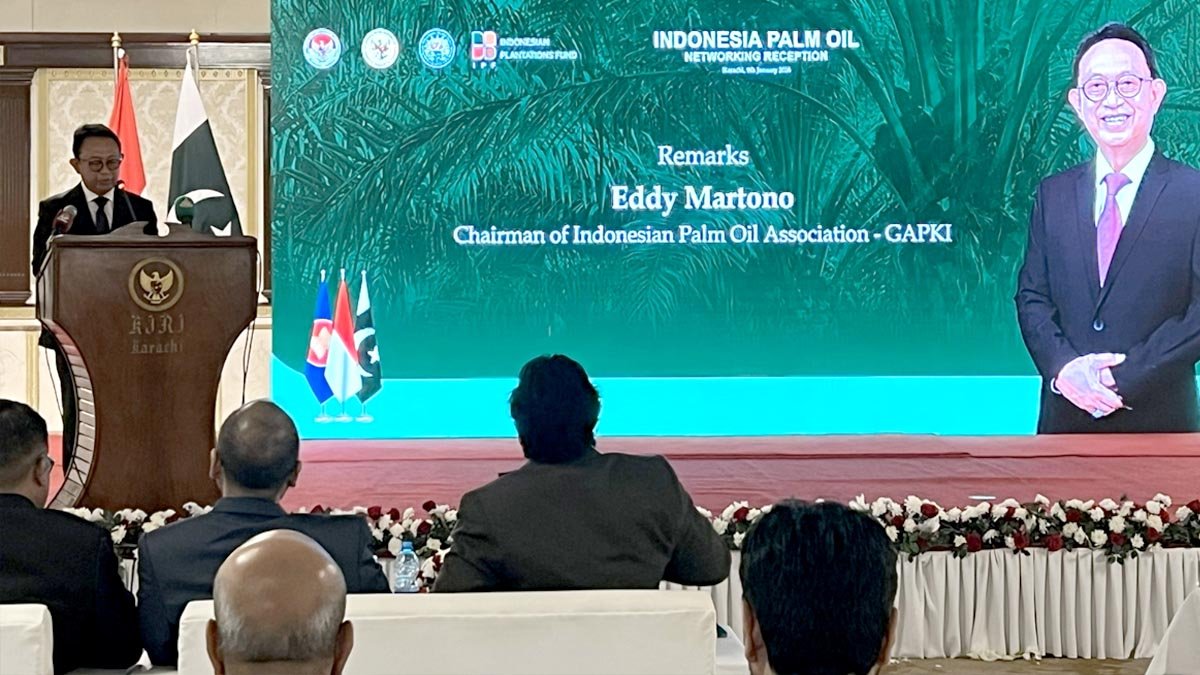
PALMOILMAGAZINE, KARACHI — Indonesia and Pakistan reinforced their strategic economic partnership through the Indonesia Palm Oil Networking Reception, jointly organized by the Consulate General of the Republic of Indonesia (KJRI) in Karachi and the Indonesian Palm Oil Association (GAPKI). The event marked a key milestone in the commemoration of 75 years of diplomatic relations between the two countries and followed up on the State Visit of President Prabowo Subianto to Islamabad in December 2025.
The high-level gathering brought together senior officials and industry leaders, including Indonesia’s Vice Minister of Trade Dyah Roro Esti Widya Putri, BA, MSc; Pakistan’s Federal Minister for Commerce Jam Kamal Khan, who served as Chief Guest; Indonesian Ambassador to Pakistan Chandra W. Sukotjo; Indonesian Consul General in Karachi Mudzakir, MA; and GAPKI Chairman Eddy Martono. Also in attendance were CPOPC Secretary General Mdm Izzana Salleh, CPOPC Director Antonius Yudi Triantoro, Malaysian Consul General in Karachi Herman Hardynata Ahmad, National Energy Council (DEN) member Satya Widya Yudha, Pakistani vegetable oil importers, and representatives of the Indonesian Chamber of Commerce and Industry (KADIN).
In his address, Ambassador Chandra W. Sukotjo highlighted the long-standing historical ties between Indonesia and Pakistan, stressing that bilateral relations have now entered a more strategic and future-oriented phase, in line with the outcomes of President Prabowo’s recent visit to Islamabad.
Also Read: West Papua Tightens Rules: Indigenous Approval Mandatory for Any Oil Palm Forest Release
He underlined that the palm oil industry remains a central pillar of economic relations between the two countries. Indonesia, he said, is committed to promoting shared prosperity and building a more balanced trade relationship, including by increasing imports from Pakistan and exploring value creation beyond purely transactional trade.
Karachi, as Pakistan’s main economic gateway, was described as a natural partner for Indonesia in expanding its economic footprint across South Asia.
“This gathering serves as a platform to recognize our existing partnership, strengthen mutual trust, and explore new opportunities toward a more structured and future-oriented economic cooperation,” Sukotjo said in a statement to Palmoilmagazine.com on Sunday (11/1).
Also Read: Indonesia Sets January 2026 Biodiesel Market Index at IDR 13,631 per Liter
GAPKI Chairman Eddy Martono emphasized that GAPKI acts as a strategic partner of the Indonesian government, particularly the Consulate General in Karachi and the Ministry of Trade, in strengthening bilateral economic relations. One of GAPKI’s key roles is to provide accurate and transparent information regarding Indonesia’s palm oil industry practices.
He reaffirmed that Indonesia remains a stable, responsible, and reliable supplier of palm oil to Pakistan, one of the world’s largest palm oil importers. Together with Pakistani partners, GAPKI will facilitate direct trade contracts between Indonesian producers and Pakistani buyers to secure palm oil supplies for Pakistan’s food and industrial needs, while also promoting technical collaboration in refining and processing.
Beyond trade facilitation, GAPKI also serves as a platform for palm oil business players to provide input to the Indonesian government—particularly the Ministry of Trade—in shaping export policies that enhance the global competitiveness of Indonesian products, including in the Pakistani market. Within the framework of the Indonesia Palm Oil Networking Reception, GAPKI played a leading private-sector role in translating political commitments into concrete transactions and long-term, mutually beneficial partnerships.
Also Read: GAPKI Boosts International Engagement, Secures Six Cooperation Deals Across the US and Europe
In her remarks, Vice Minister of Trade Dyah Roro Esti Widya Putri reiterated the strategic importance of Pakistan to Indonesia.
“Pakistan is important to Indonesia. The Pakistani market, Pakistani industry, and Pakistani consumers are all very important to us,” she said.
Indonesia–Pakistan trade relations have long been close, with Pakistan relying heavily on Indonesian palm oil supplies. Of more than 150 export destinations for Indonesian palm oil, Pakistan ranks third. According to Oil World 2025 data, Indonesia’s palm oil exports to Pakistan have continued to rise year after year, with the largest increase recorded in 2024, when shipments exceeded 3 million tons.
Also Read: GAPKI: Women’s Rights Protected, Child Labor Allegations Often Misleading
Further reinforcing the depth of the trade relationship, data presented by Chairman of the Pakistan Edible Oil Refiners Association (PEORA) Abdul Rasheed JanMohammad at the Indonesia Palm Oil Conference 2025 showed that Indonesia supplies around 90 percent of Pakistan’s total palm oil demand.
The Vice Minister also reaffirmed Indonesia’s commitment to building a more balanced trade relationship by opening wider opportunities for Pakistan’s leading products, ranging from agricultural commodities to digital services.
As a concrete outcome of the event, three key cooperation documents were signed: a Memorandum of Understanding (MoU) on the establishment of the Indonesia–Pakistan Joint Trade Commission, and MoUs on cooperation between GAPKI and PEORA, as well as GAPKI and the Pakistan Vegetable Manufacturers Association (PVMA).
The MoU on the Joint Trade Commission was signed by the Vice Minister of Trade of Indonesia and the Minister of Commerce of Pakistan. The commission is expected to serve as an official platform to manage bilateral economic relations in a sustainable manner, address trade barriers, and explore new export–import opportunities.
At the sectoral level, both ministers also witnessed the signing of cooperation agreements between GAPKI, PEORA, and PVMA. These partnerships aim to strengthen supply chain security and maintain palm oil price stability in both countries. (P3)