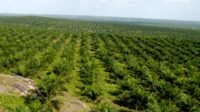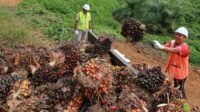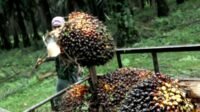


PALMOILMAGAZINE, JAKARTA — Beyond governance issues, Indonesian Palm Oil Association (GAPKI) Chairman Eddy Martono has highlighted smallholder palm oil replanting as one of the industry’s most pressing unresolved challenges. On the ground, the program continues to face structural barriers, particularly because a significant portion of smallholder plantations are located within designated forest areas, limiting farmers’ access to official replanting funds.
“Some smallholder plantations fall inside forest zones, which means farmers are unable to access replanting financing,” Eddy said during the Plantation Outlook 2026 webinar titled Assessing Palm Oil Prospects Amid Deregulation and Global Market Pressures, attended by Palmoilmagazine.com on Thursday (January 15, 2026).
Beyond regulatory hurdles, Eddy noted that many farmers remain reluctant to replant aging trees due to concerns over losing their primary source of income during the immature period of new plantings. According to him, more adaptive and farmer-oriented financial schemes are urgently needed, including waiting-period income support or soft loan facilities.
Also Read: APKASINDO North Kalimantan Pushes Palm Oil–MSME Synergy, Strengthens Local Workforce Development
He stressed that smallholder productivity could rise sharply if replanting were carried out using high-quality seedlings combined with improved plantation management. As an illustration, Eddy said plots previously producing around 10 tons of fresh fruit bunches (FFB) per hectare per year could potentially exceed 20 tons per hectare after replanting and management upgrades.
“With superior planting materials and proper management, yields can increase significantly. This is crucial if Indonesia is to maintain its position as a leading global palm oil producer,” he emphasized.
Taking these factors into account, Eddy called on the government and industry players to accelerate logistics infrastructure development, strengthen data-driven governance systems, and ensure that the smallholder replanting program moves faster and reaches its intended targets—key steps, he said, to safeguarding the long-term sustainability of Indonesia’s palm oil sector. (P2)