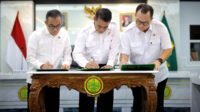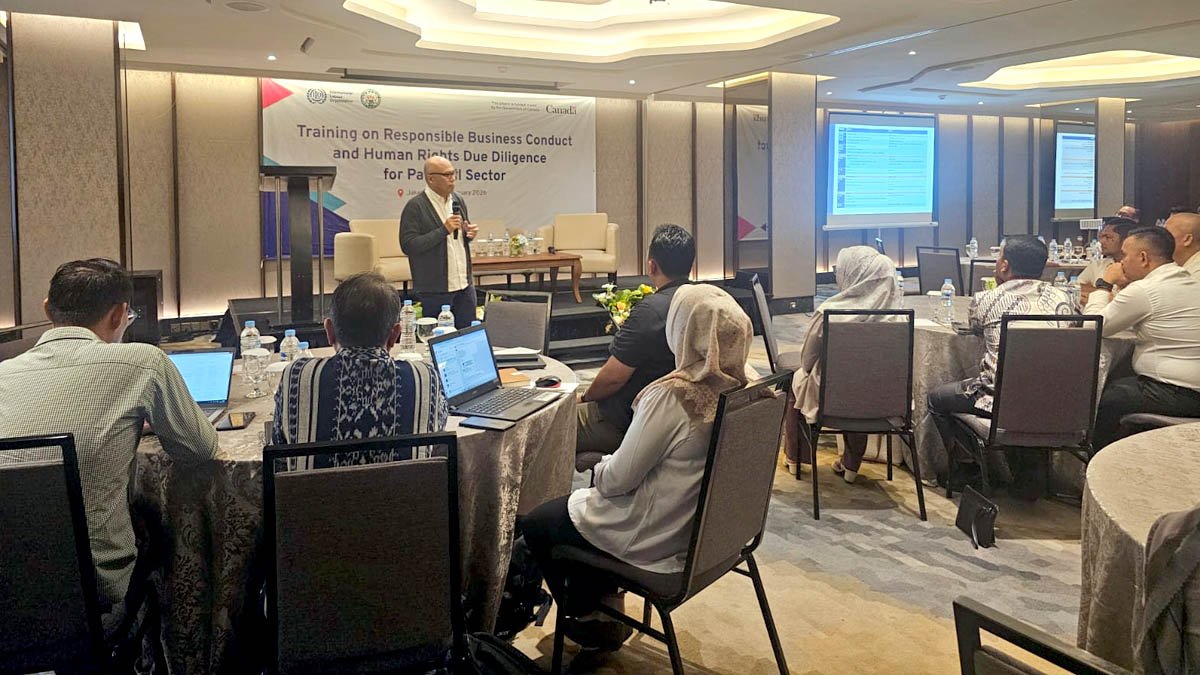
PALMOILMAGAZINE, JAKARTA – The Indonesian Palm Oil Association (GAPKI) and the International Labour Organization (ILO) have once again joined forces to enhance responsible business practices in the palm oil industry, organizing a Responsible Business Conduct (RBC) and Human Rights Due Diligence (HRDD) training program for GAPKI member companies in Jakarta.
Held on 28–29 January 2026, the training aimed to strengthen corporate understanding and capacity in implementing responsible business behavior and human rights due diligence, particularly in labor-related aspects of the palm oil sector.
The initiative comes amid rising expectations from global markets, investors, and governments for business practices that respect workers’ rights and human rights throughout supply chains.
Also Read: GAPKI Calls for Stronger Palm Oil Export Governance, Citing Port Inefficiencies and Data Gaps
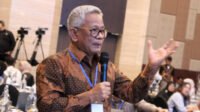
GAPKI Chairman Eddy Martono emphasized that labor and human rights issues go beyond regulatory compliance and have a direct impact on business sustainability and industry competitiveness.
“Strengthening labor practices aligned with human rights principles is part of corporate risk management and forms the foundation for maintaining market trust and competitiveness in global trade,” said GAPKI Chairman Eddy Martono in a statement received by Palmoilmagazine.com on Thursday, January 29, 2026.
The program covered key topics such as international instruments on responsible business conduct, including the ILO Tripartite Declaration of Principles concerning Multinational Enterprises and Social Policy and the ILO Fundamental Conventions, as well as practical stages of human rights due diligence. Participants were also equipped with practical tools and case studies to support the implementation of RBC and HRDD within their companies and supply chains.
Also Read: DHE Retention Policy Seen as Operationally Safe, GAPKI Highlights Compliance Risks
At the end of the training, each participating company was required to develop an action plan and implementation timeline focusing on labor-related priorities. GAPKI and the ILO will subsequently select at least ten companies to take part in a six-month follow-up mentoring program to ensure the action plans are effectively carried out.
This training forms part of the long-standing collaboration between GAPKI and the ILO, which has been ongoing since 2017, and is supported by the Realizing Trade Gains Free from Gender Discrimination and Child Labour (RealGains) project.
Through this initiative, GAPKI and the ILO hope Indonesian palm oil companies will be better prepared to meet evolving HRDD requirements in global trade and supply chains, while reinforcing their commitment to responsible and sustainable business practices. (P3)