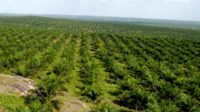
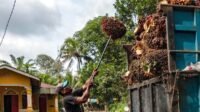
PALMOILMAGAZINE, PALU – While oil palm plantations in Sulawesi are not yet as extensive as those in Sumatra and Kalimantan, sustainability and labor protection must not fall behind. According to 2024 data from Statistics Indonesia (BPS), oil palm plantations in Sulawesi cover approximately 411,000 hectares, managed by private companies, state-owned enterprises, and independent smallholders.
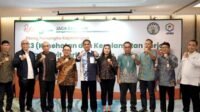
That commitment took center stage at the forum titled “Sulawesi Moves Forward: Advancing Women-Friendly Palm Oil Practices,” held on 11–12 February 2026 in Palu, Central Sulawesi.
The collaborative event between the Gabungan Pengusaha Kelapa Sawit Indonesia (GAPKI) and Badan Pengelola Dana Perkebunan Kelapa Sawit (BPDP) drew more than 150 participants, the majority of whom were female workers from palm oil companies across Sulawesi. Students, academics, government representatives, labor unions, NGOs, and smallholder farmers also attended.
Also Read: UMS Academic Warns of Shift from Natural Forests to Oil Palm Plantations
Sumarjono Saragih, Head of Human Resource Development at GAPKI and Supervisory Board Member of BPJS Ketenagakerjaan, stressed that protecting and fulfilling the rights of women workers is both a national and international legal mandate.
He noted that safeguarding women workers is also a fundamental requirement under sustainability certification schemes such as Roundtable on Sustainable Palm Oil (RSPO), which is voluntary, and Indonesian Sustainable Palm Oil (ISPO), which is mandatory.
“Protecting the rights of women workers is not only a moral obligation, but also a legal requirement and an integral part of the palm oil industry’s sustainability standards,” he said in an official statement received Thursday (12/2/2026).
Also Read: Riau Eyes Up to IDR 160 Billion Boost in Regional Revenue from Surface Water Levy Revision
The event also featured speakers and facilitators from the International Labour Organization (ILO), CNV Internationaal, and the Directorate of Labor Inspection at Indonesia’s Ministry of Manpower. Participants were presented with best practices from the Astra Group on inclusive and gender-equitable workforce management.
Total Safe, Total Health, Total Prosper
Sumarjono introduced a new framework for women worker protection under the concept of “total safe, total health & total prosper.”
Under this approach, women workers must be guaranteed full occupational safety with zero workplace accidents, maintain good health without exposure to work-related illnesses, and achieve economic well-being.
Also Read: BPDP Targets 50,000 Hectares Replanting to Boost Smallholder Yields and Regional Growth
He emphasized that prosperity must be strengthened through comprehensive participation in the national employment social security system (Jamsostek). Currently, BPJS Ketenagakerjaan administers five key programs: Work Accident Insurance (JKK), Death Benefits (JKM), Old-Age Security (JHT), Pension Security (JP), and Job Loss Insurance (JKP).
“With full participation in employment social security, workers and their families will have stronger protection—both during active employment and after retirement,” he explained.
The Informal Worker Challenge
Despite the progress, Sumarjono acknowledged significant challenges remain, particularly in extending protection to informal workers and vulnerable groups throughout the palm oil value chain. Informal employment arrangements, especially within MSMEs and smallholder operations, complicate social protection coverage.
He called for collective action among palm oil stakeholders across Sulawesi to ensure that social security protection reaches every layer of the workforce.
If successfully implemented, he believes the movement toward “Palm Oil PROTECTED by BPJS Ketenagakerjaan” will materialize—where “protected” reflects comprehensive welfare for workers and their families.
In that scenario, Sulawesi’s palm oil sector would not only grow economically, but also stand as a model of gender-responsive, worker-friendly, and sustainable industrial practice. (P2)