PALMOILMAGAZINE, KUALA LUMPUR — RHB Research is reviewing its 2026 crude palm oil (CPO) price assumptions, previously set at RM4,250 per metric ton, following Indonesia’s decision to increase export levies on CPO and refined palm products starting March 1.
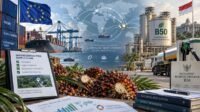
In its latest research note, RHB said Indonesia’s move to lift the CPO export levy to 12.5% from 10%, and refined products to 10% from 7.5%, could reshape global supply-demand dynamics. The higher levy is intended to secure long-term funding for Indonesia’s B40 biodiesel mandate through 2026.
“We will revisit our supply-demand projections after this development and reassess our 2026 CPO price assumption of RM4,250 per ton,” RHB Research said in a note quoted by Palmoilmagazine.com from New Straits Times on Monday (January 19, 2026). The research house added that earnings forecasts for plantation companies would also be adjusted to reflect the new tax structure.
B40 Maintained, B50 Put on Hold
According to RHB, Indonesia has opted to maintain its B40 program—requiring a 40% palm-based biodiesel blend—this year, while delaying the planned upgrade to B50. The postponement is largely due to technical constraints, particularly in sectors such as rail transport, heavy equipment, and industrial machinery.
The decision is also linked to rising domestic diesel production capacity. Authorities are expected to conduct further technical trials before announcing a new timeline for B50 implementation.
Despite the delay, funding needs for B40 remain substantial. As a result, the government has chosen to raise export levies as an additional financing source.
Higher Levies to Pressure Indonesian Planters
RHB warned that plantation companies with a strong Indonesian footprint are likely to bear the brunt of the new policy from March onward. The higher export levy is expected to reduce effective average selling prices (ASP), squeezing margins across the sector.
The change also forces a reassessment of market balances. In its earlier projections, RHB had assumed an additional two million tons of CPO would be absorbed by the domestic market for B50 in the second half of 2026.
Potential Biodiesel Funding Surplus
With the revised levy structure, Indonesia’s biodiesel fund is projected to be on firmer footing. RHB estimates the policy could generate a surplus of around US$135 million, compared with a previous scenario that risked a deficit of up to US$448 million had levies remained unchanged.
Neutral Stance, Preference for Malaysian Names
RHB is maintaining a “Neutral” rating on the plantation sector overall but said it currently favors Malaysia-oriented players such as Johor Plantations Group Bhd, Sarawak Oil Palms Bhd, IOI Corp Bhd, and SD Guthrie Bhd.
For Indonesia-focused exposure, the firm highlighted London Sumatra Indonesia and First Resources as its preferred picks.
The export levy hike is expected to become a new defining factor in the 2026 palm oil market, prompting analysts, industry players, and investors to recalibrate price expectations and strategic positioning. (P2)