

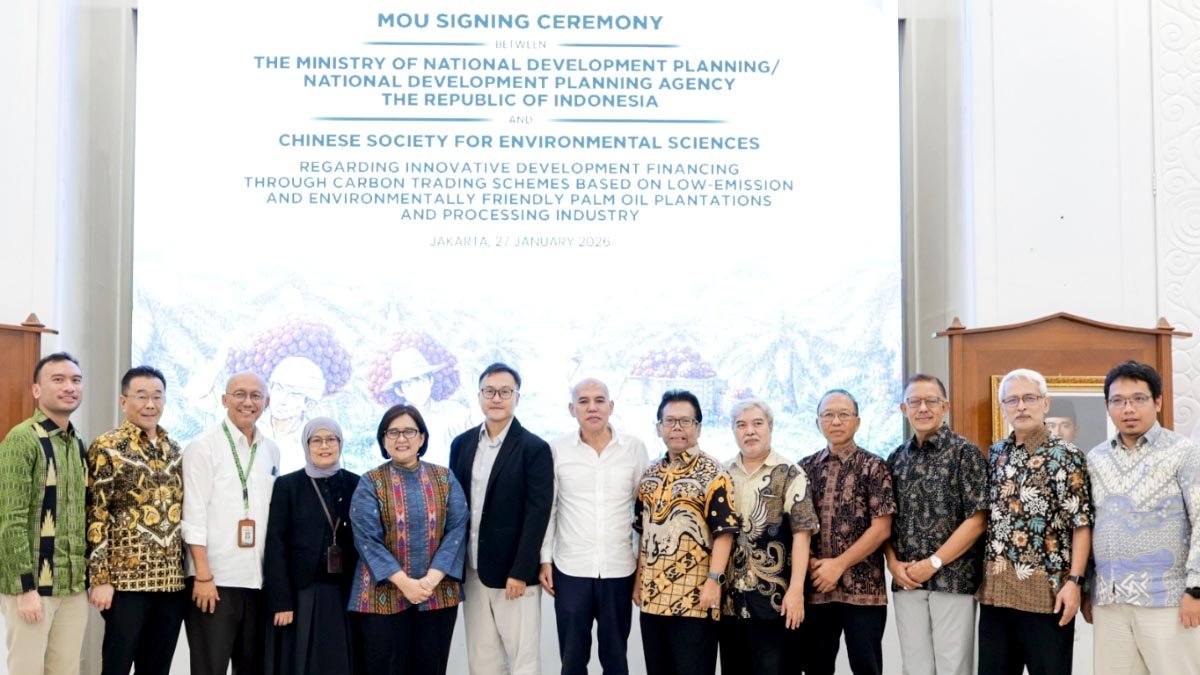
PALMOILMAGAZINE, JAKARTA — Indonesia’s Ministry of National Development Planning (PPN/Bappenas) and the Chinese Society of Environmental Sciences (CSES) have formally signed a Memorandum of Understanding (MoU) to cooperate on the development of a low-emission and sustainable palm oil industry. The agreement marks a strategic step in accelerating the transformation of Indonesia’s palm oil sector in line with green development priorities and national carbon emission reduction targets.
The cooperation covers the development of low-emission technologies, the formulation of carbon emission calculation methodologies to support carbon trading mechanisms, and efforts to strengthen the capacity and welfare of smallholder palm oil farmers. These initiatives will be implemented through farmer cooperative development, training programs, and knowledge exchange, aimed at ensuring environmentally friendly palm oil processing while generating higher added value.
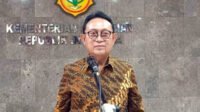
Secretary of the Ministry of PPN and Principal Secretary of Bappenas, Teni Widuriyanti, said the partnership is designed to fast-track the transformation of the palm oil industry through the adoption of innovative low-emission technologies and the use of more creative development financing instruments.
Also Read: Indonesia Raises February CPO Reference Price, Export Duty and Levy Increase
“One of the key pillars of this partnership is the development and implementation of innovative low-emission technology, which we refer to as PaMER (Low-Emission Palm Oil Mills). This technology not only produces highly nutritious edible oil and environmentally friendly products, but also has the potential to cut carbon emissions by up to 79.19 percent compared to conventional technologies,” Teni said in an official statement cited by Palmoilmagazine.com on Wednesday (February 4, 2026).
The adoption of PaMER technology is expected to enhance the global competitiveness of Indonesia’s palm oil industry while opening new opportunities for innovative development financing through carbon trading. Under the agreement, both parties will conduct joint studies to design a comprehensive and practical carbon trading framework tailored to the palm oil sector.
Meanwhile, CSES Vice President and Secretary General Xia Zuyi described the partnership as carrying strong innovation and pilot-project value within the broader context of the global green transition.
Also Read: Deputy Trade Minister Highlights Traceability and Sustainability in Visit to PT SMART Marunda
“This cooperation focuses on developing a low-emission, environmentally friendly palm oil industry, while exploring the integration of carbon trading mechanisms with industrial development and improvements in smallholder farmers’ welfare. This initiative has significant innovation and demonstration value,” he said.
A similar view was shared by Siliwanti, Special Advisor to the Minister of PPN for Development Financing Innovation. She noted that the collaboration reflects a balanced approach between economic interests and environmental protection.
“This partnership establishes a comprehensive cooperation framework that represents the meeting point between economic and environmental objectives. It provides clear direction for both countries to achieve climate targets in a mutually beneficial manner,” she explained.
Beyond technology and policy, the Bappenas–CSES cooperation places smallholder farmers at the center of Indonesia’s palm oil transformation. Through capacity building and cooperative development, farmers are expected to play a direct role in carbon trading mechanisms and gain sustainable economic benefits from the shift toward a greener palm oil industry. (P2)