PALMOILMAGAZINE, JAKARTA – The issuance of Circular Letter No. 1598/SE/KB.410/E/11/2025 by the Directorate General of Plantations marks a significant turning point in the governance of Indonesia’s palm oil sector. More than a technical guideline, the regulation represents a regulatory breakthrough aimed at resolving long-standing bottlenecks in the implementation of the Community Plantation Development Facilitation (Fasilitasi Pembangunan Kebun Masyarakat Sekitar/FPKMS).
For years, FPKMS progress has been hindered by two fundamental challenges: the limited availability of community land around plantation concessions and the high cost of livestock production, particularly feed. The new circular offers a practical, realistic way to address both issues.
Productivity-Driven Partnerships
The mandatory 20% FPKMS allocation has often stalled due to insufficient land owned by surrounding communities. Attempts to force the provision of physical land frequently triggered tenure conflicts or caused the program to stagnate.
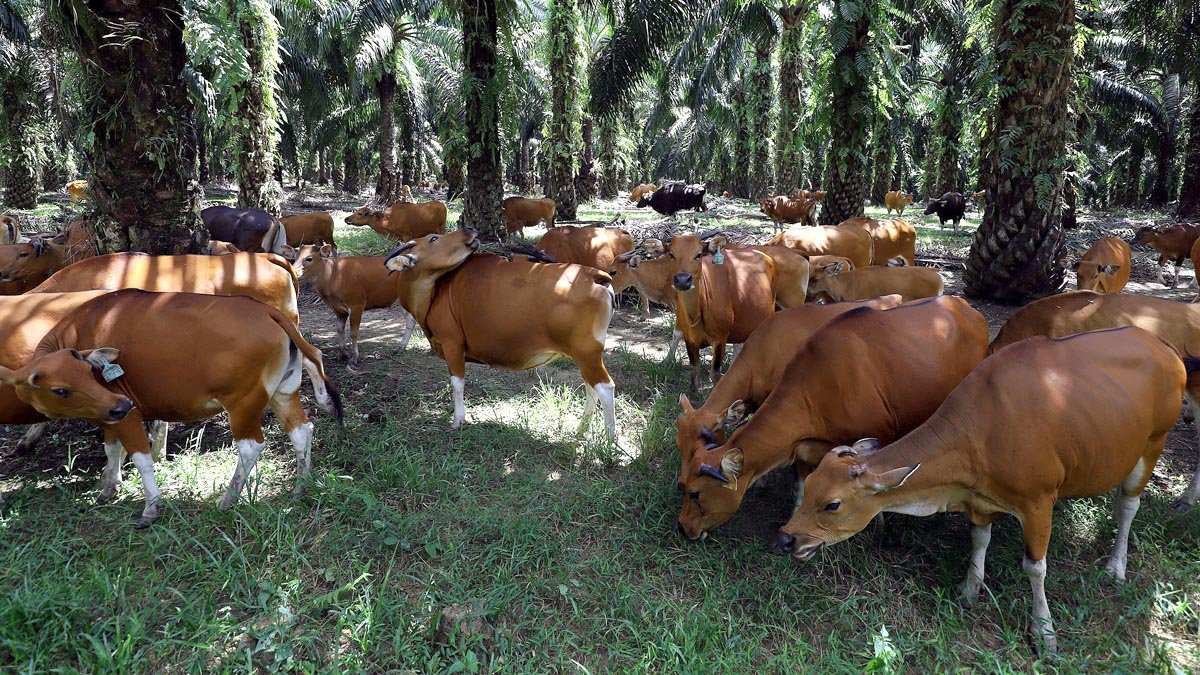
Through this new policy, the government provides a strong legal basis to convert land-based obligations into productive enterprises under the Palm–Cattle Integration System (Sistem Integrasi Sawit-Sapi/SISKA). This paradigm shift transforms the traditional land-sharing model into an economic empowerment scheme built on biological assets.
Also Read: CPOPC: India Will Return to Palm Oil as Global Soyoil Supply Tightens
From a resource-economics perspective, the approach increases land utility without requiring the opening of new areas. By intensifying the use of existing plantations through palm–cattle intercropping, companies and communities can create sustainable added value.
Ensuring a Reliable Feed Supply
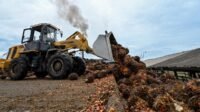
Feed availability remains the most decisive element in successful smallholder livestock farming. Circular Letter 1598/2025 explicitly requires plantation companies and palm oil mills to provide Palm Kernel Expeller (PKE) as feed within the SISKA framework. PKE is a high-protein material widely available within the palm oil ecosystem.
By mandating a consistent PKE allocation, the regulation significantly reduces feed logistics costs, allowing a more efficient cattle production cost structure. This model also strengthens the circular economy—processing waste from the palm oil industry becomes animal feed, while livestock manure enriches soil fertility within palm plantations.
Standardizing Economic Valuation
Concerns that converting FPKMS obligations into cattle-farming schemes could disadvantage communities are addressed through the requirement to use the Optimum Production Value (NOP) standard. This valuation tool ensures that every partnership arrangement delivers an economic value equal to or greater than that of physical community plantations.
The NOP provides transparency and accountability in translating hectare-based obligations into cattle units, supporting facilities, and projected economic returns. With this quantitative approach, community benefits remain protected and optimized.
Circular Letter 1598/2025 brings legal certainty and a new direction for both the palm oil industry and livestock development. For companies, the regulation offers an elegant exit strategy to fulfill FPKMS obligations amid land shortages. For communities, it opens pathways to build more bankable and sustainable livestock enterprises supported by an integrated industrial ecosystem.
The key challenge now lies in implementation. Success will depend on precise adherence to cultivation SOPs and transparent partnership management. But from a regulatory standpoint, the door to accelerating SISKA nationwide is now firmly open. (*)
By: Wahyu Darsono — Secretary General of GAPENSISKA
Disclaimer: This article represents the author’s personal views and sole responsibility.