PALMOILMAGAZINE, JAKARTA — Throughout 2025, land-based and natural resource industries have remained under intense scrutiny from both the government and the public. This scrutiny has ranged from crackdowns on business activities operating inside forest areas—targeting oil palm plantations and mining operations through the Forest Area Enforcement Task Force (Satgas PKH) established under Presidential Regulation No. 5/2025—to the suspension of permits and operational halts imposed on extractive industries suspected of triggering major floods in Aceh, North Sumatra, and West Sumatra. The involvement of the Indonesian National Armed Forces (TNI) in supporting law enforcement in the mining and oil palm sectors has further drawn widespread attention.
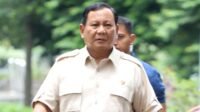
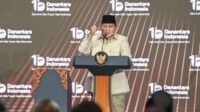
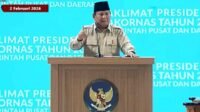
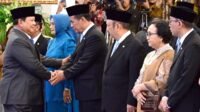
Across these developments, the central government appears intent on correcting policy failures of the past by enforcing the law against extractive industries that have illegally occupied state forest areas. At the same time, it seeks to address environmental degradation through conservation, habitat restoration, and flood mitigation efforts. The government has also repeatedly stressed its commitment to recovering state losses resulting from illegal activities. This was underscored by President Prabowo Subianto’s remarks during the handover of IDR 6.6 trillion in recovered state losses from forest area enforcement fines at the Attorney General’s Office on Wednesday, 24 December 2025.
Yet, on the other hand, the government continues to expand extractive-based development programmes initiated during the administration of former President Joko Widodo under the National Strategic Project (PSN) scheme. This framework was most recently updated through Coordinating Minister for Economic Affairs Regulation No. 16/2025. Furthermore, Presidential Instruction No. 14/2025 on accelerating the development of food, energy, and water self-sufficiency zones mandates the creation of one million hectares of new rice fields, centred in South Papua Province.
Also Read:
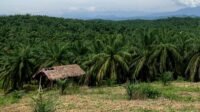
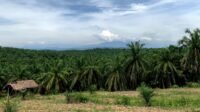
Following this instruction, the Ministry of Forestry issued Ministerial Decree No. 591/2025, reclassifying 486,939 hectares of forest area into Areas for Other Uses (APL). These lands are designated for energy expansion programmes in the form of sugarcane and oil palm plantations in South Papua.
A Policy Misstep
Public response to this series of policies has reinforced perceptions that the government is applying double standards in regulating extractive industries and environmental protection. On one side, forest enforcement policies are framed as corrective measures against exploitative practices that have caused ecological disasters in Sumatra. On the other, the government continues to grant permits for the conversion of millions of hectares of natural forest in Papua.
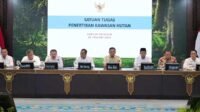
In practice, the forest enforcement drive led by Satgas PKH—coordinated by the Ministry of Defence and the Attorney General’s Office—initially targeted corporations operating oil palm plantations and mining activities inside forest areas without permits. The Ministry of Forestry subsequently issued Ministerial Decree No. 36/2025, listing oil palm plantation entities operating illegally within forest zones, covering a total area of 1.1 million hectares. In the mining sector, the Ministry of Energy and Mineral Resources (ESDM) released Decree No. 391.K/MB.01/MEM.B/2025, which sets administrative fines for mining violations in forest areas involving nickel, bauxite, tin, and coal.
These enforcement measures derive from Articles 110A and 110B of the Job Creation Law enacted during the Jokowi administration. Their implementation was initially governed by Government Regulation No. 24/2021, which prioritised area-based fines per hectare, and later revised under President Prabowo through Government Regulation No. 45/2025.
ALso Read: Indonesia Sets January 2026 CPO Reference Price at USD 915.64 per MT
Debate has intensified since forest enforcement efforts began focusing on corporations. While few companies have openly opposed the policy, corporate support for law enforcement generally hinges on transparency, accountability, and objective legal facts. Problems arise, however, because many of the lands seized by Satgas PKH are, in fact, covered by valid Cultivation Rights (HGU). These lands were later reclassified as forest areas due to spatial plan revisions or inaccurate boundary markers installed by officials from the National Land Agency (BPN) during field measurements.
For indigenous and local communities, forest enforcement has become an even more serious issue as Satgas PKH has begun confiscating community-owned oil palm plantations. Resistance has emerged across Sumatra and Kalimantan, where residents view unilateral state claims over forest areas as lacking consultation or consent from communities that have lived in and around these forests for generations. Many believe the areas designated as state forest are, in fact, customary territories and ancestral lands managed long before Indonesia’s independence in 1945.
Documentation by civil society organisations advocating for indigenous rights shows that ongoing protests in South Papua exemplify how state forest claims have stripped indigenous peoples of ancestral lands they regard as their “Mother.” Natural forests, which serve as habitats for wildlife and sources of food, are increasingly threatened, placing the survival of local communities at risk. Similar conditions persist in North Sumatra, Riau, West Sumatra, Central and West Kalimantan, Maluku, North Maluku, South Sulawesi, Central Sulawesi, and other regions.
Also Read: Indonesia Revokes Palm Oil and Mining Permits in Sumatra After Wave of Natural Disasters
Communities continue to question the state’s slow progress in recognising indigenous peoples and their customary territories. At the same time, corporations appear to obtain concessions and management rights with relative ease. The state is increasingly perceived as unjust—imposing its will on citizens while rolling out the red carpet for corporations, often granting them additional protection by designating their operations as vital national objects. Calls for legal protection through an Indigenous Peoples Law remain stalled, having only entered the National Legislative Programme (Prolegnas). Promises by members of parliament to prioritise and pass the bill have so far amounted to little more than empty rhetoric.
Looking ahead to 2026, there is hope that President Prabowo will genuinely operationalise Article 33 of the 1945 Constitution through more balanced and coherent policies. The involvement of the TNI in forest enforcement should adopt a more dialogical and democratic approach. More importantly, accelerated recognition and legal protection for indigenous and local communities must be realised through the enactment of an Indigenous Peoples Law.
Investment development should also be governed by policies that compel corporations to comply with ecological principles, enabling effective climate change mitigation and adaptation. At the same time, investment must uphold human rights values, including the protection, respect, and restoration of the rights of indigenous and local communities.
By: Ahmad Zazali, SH., MH. — Chairman of the Centre for Law and Agrarian Conflict Resolution (PURAKA).
Disclaimer: This article reflects the personal views of the author and is solely his responsibility.