PALMOILMAGAZINE, JAKARTA — Reports claiming that approximately 4 million hectares of oil palm plantations operate illegally within conservation areas should be addressed carefully and grounded in verified official data. Clarification is essential to ensure that President Prabowo Subianto, policymakers, and the public receive accurate and balanced information.
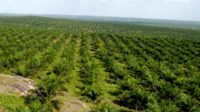
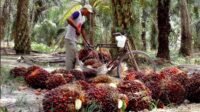
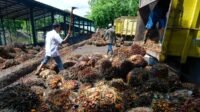
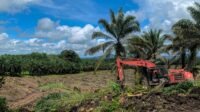
According to the national oil palm data reconciliation conducted in 2019 by Indonesia’s Ministry of Environment and Forestry in collaboration with the Corruption Eradication Commission (KPK), Indonesia’s total oil palm plantation area was estimated at around 16.37 million hectares. Of this figure, approximately 3.37 million hectares were identified as being located within designated forest areas with varying classifications. However, this figure cannot automatically be interpreted as illegal plantations within conservation zones.
Data shows that only a small portion of oil palm plantations located within forest areas falls under conservation and protected forest categories. The breakdown indicates that about 1.12 million hectares are located in convertible production forest areas (HPK), 1.49 million hectares in permanent production forests (HPT), 501,000 hectares in production forests (HP), approximately 155,000 hectares in protected forest areas, and only around 91,000 hectares in conservation forests.
Also Read: Prabowo Stresses Food–Energy Independence, Positions Palm Oil as Key “Miracle Crop”
Therefore, claims suggesting the presence of 4 million hectares of illegal oil palm plantations within conservation and protected forest areas are considered inaccurate, disproportionate, and potentially misleading for high-level policymaking. Oversimplifying such a complex issue risks triggering policy decisions that overlook principles of fairness and legal certainty.
Such misinformation may also contribute to negative stigma toward Indonesia’s palm oil sector and weaken the country’s position in global trade diplomacy. In reality, the total oil palm area located in protected and conservation forests—approximately 246,000 hectares—represents a relatively small portion compared to Indonesia’s overall plantation footprint. Addressing the issue requires precision, reliable data, and an approach that avoids propaganda-driven narratives.
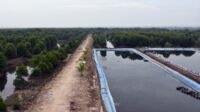
Furthermore, the “illegal palm oil” narrative is often used to justify unilateral asset seizures by the Forest Area Control Task Force (Satgas PKH), frequently conducted without sufficient dialogue or resolution mechanisms that consider the typology of oil palm plantations within forest areas. Public transparency regarding the management of confiscated plantations remains limited, including details on operational cooperation schemes, stakeholders involved, asset management accountability, and the mechanism for channeling harvest revenues into state coffers.
Also Read: Agrinas Palma Marks First Anniversary with Community Outreach in Riau
Ironically, the state could potentially become the primary economic beneficiary through penalties and asset management schemes, even before court rulings reach final legal standing. Meanwhile, smallholders, cooperatives, and small-scale business actors often face prolonged legal uncertainty.
Concerns have also emerged that inaccurate narratives may be deliberately mobilized to build public support for repressive approaches rather than encouraging fair and sustainable structural solutions. In fact, the government already possesses policy instruments designed to address oil palm plantations within forest areas, including distinctions based on land tenure timelines, legal subjects, and forest function classifications.
A one-size-fits-all and enforcement-heavy approach risks creating new injustices while potentially undermining long-term governance of Indonesia’s forestry and plantation sectors. What is needed instead is data-driven policymaking, open dialogue, and a commitment to social justice.
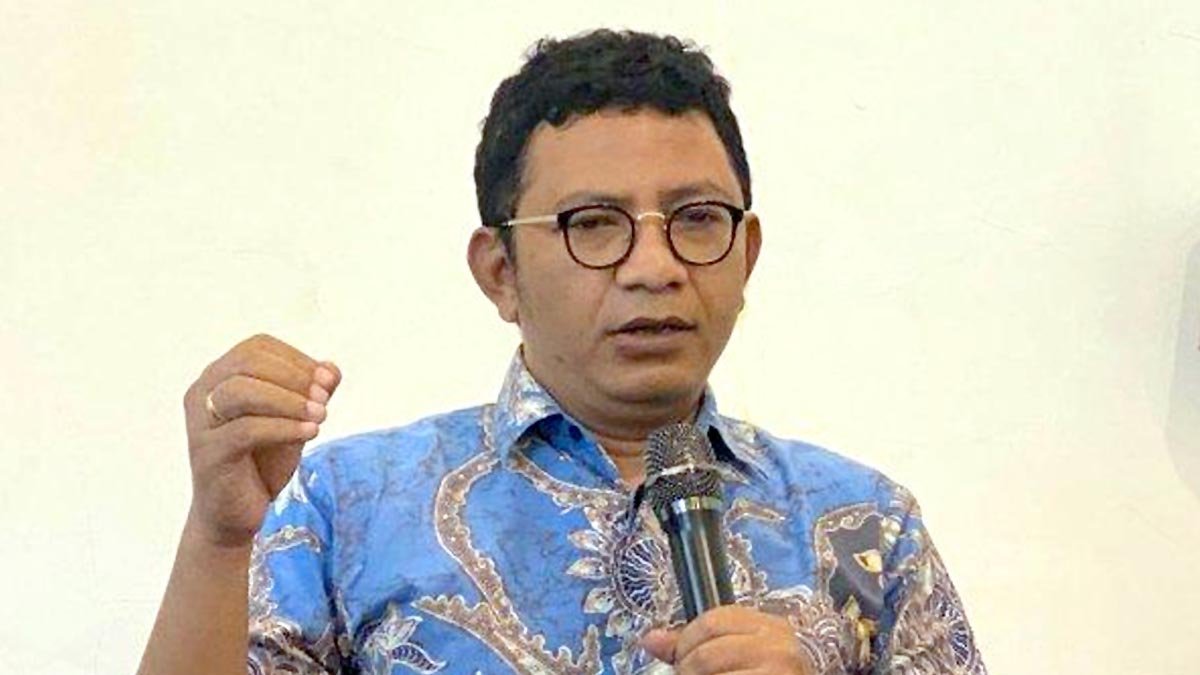
Author: Mansuetus Darto, Chairman of the Perkumpulan Forum Petani Kelapa Sawit Jaya Indonesia (POPSI)
Disclaimer: This article reflects the personal views of the author and is solely the author’s responsibility.