PALMOILMAGAZINE, JAKARTA — Amid the growing threat of global climate change, Sinar Mas Agribusiness and Food reaffirmed its commitment to bolstering Indonesia’s agricultural resilience through continuous innovation and cross-sector collaboration. The message was conveyed during the Indonesia International Sustainability Forum (IISF) 2025, a platform bringing together industry players, government representatives, and communities to explore real-world solutions to future sustainability challenges.
During the forum, Sinar Mas Agribusiness and Food underscored the strategic role of the palm oil industry in supporting national food security. The company emphasized that increasing productivity must go hand in hand with protecting communities and ecosystems—striking a balance between economic progress and environmental stewardship.
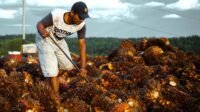
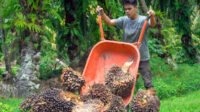
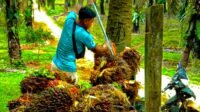
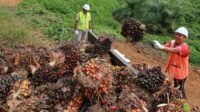
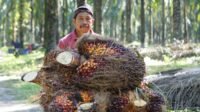
Sinar Mas Agribusiness and Food continues to make tangible contributions through initiatives such as the Sawit Terampil program and support for the Smallholders Replanting Program (PSR). Both initiatives are designed to help smallholders adopt sustainable farming practices and boost yields without harming the environment.
Also Read:
“As a company, we have a responsibility to help smallholders remain resilient in the face of climate threats,” said Anita Neville, Chief Sustainability and Communications Officer at Sinar Mas Agribusiness and Food, in a statement received by Palmoilmagazine.com on Wednesday (15/10/2025). She added that empowering smallholders remains a key part of building a sustainable palm oil supply chain.
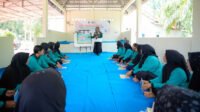
Through its Collective for Impact framework, the company aims to train 100,000 smallholder palm farmers by 2035, focusing on the implementation of Good Agricultural Practices (GAP) to improve efficiency, productivity, and economic resilience amid an increasingly unpredictable climate.
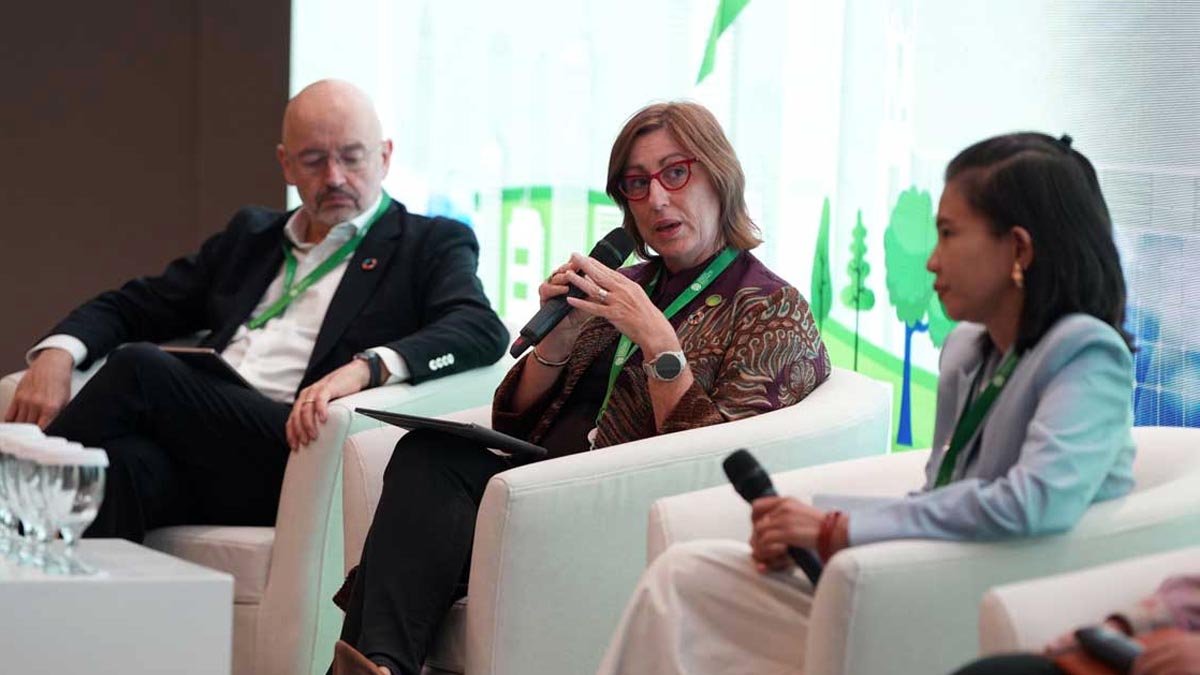
At IISF 2025, the theme of building resilient agriculture was a major highlight. In a panel session titled “Feeding the Future: Sustainable Innovation to Boost Agricultural Productivity” held on Friday (10/10), Neville highlighted the importance of multi-stakeholder collaboration in achieving food security goals.
“The private sector cannot address these challenges alone,” she said. “Through our inclusive closed-loop model, we help smallholders adopt sustainable practices, access high-quality seeds, and improve productivity. These initiatives ensure small farmers across the palm oil industry can remain resilient in the face of climate change.”
Also Read:
Beyond local efforts, Sinar Mas Agribusiness and Food also collaborates with global partners such as IDH, Greenhope, the World Business Council for Sustainable Development (WBCSD), and PepsiCo. In a discussion session themed “Advancing Food Security Through Sustainable Innovation”, the partners explored how agricultural technology, superior planting materials, and efficient production processes can enhance the economic value of farming communities while strengthening global food security.
The company’s sustainability drive also includes research on climate-resilient planting materials and exploration of nature-based income opportunities, such as the use of biochar to enrich soil health and capture carbon. These initiatives align with the company’s long-term vision to foster productive yet environmentally friendly agriculture.
In another session, “Green Business Building” held on Saturday (11/10), Dr. Götz Martin, CEO of Nature-Based Solutions at Sinar Mas Agribusiness and Food, stressed that green business models must not only prioritize the environment but also maintain strong economic foundations.
“Green businesses don’t succeed just because they are ‘green’,” he said. “They succeed because they are sustainable models that deliver real value—to the planet and to people.”
Beyond advancing agriculture, Sinar Mas Agribusiness and Food also works to strengthen local economies by empowering micro, small, and medium enterprises (MSMEs). At the company’s pavilion during IISF 2025, visitors were welcomed with a variety of value-added products created by rural entrepreneurs—part of over 100 MSMEs supported through the Bright Future Initiative.
The program helps MSMEs develop innovative, locally sourced products while creating new job opportunities in rural areas—demonstrating that sustainability can be realized not only at the corporate level but also within grassroots communities.
Through a blend of technological innovation, farmer training, planting research, and global collaboration, Sinar Mas Agribusiness and Food shows that sustainability is not just a concept—it is a long-term strategy to ensure food security, community welfare, and environmental balance go hand in hand.
With its vision of “Feeding the Future,” the company continues to drive the transformation of Indonesia’s palm oil sector toward becoming more productive, inclusive, and green—positioning Indonesia not only as the world’s top palm oil producer but also as a global leader in sustainable agriculture. (P2)