PALMOILMAGAZINE, JAKARTA — The Meteorology, Climatology, and Geophysics Agency (BMKG) has predicted a weak La Niña event may develop toward the end of 2025. Although expected to be mild, the phenomenon could bring increased rainfall to several parts of Indonesia, particularly the western and central regions of the archipelago.
According to BMKG, Indonesia’s rainy season will not begin simultaneously across the country. Some parts of Sumatra and Kalimantan have already experienced early rainfall, even before September 2025. The wet season is expected to expand to southern and eastern regions, with most areas reaching peak rainfall between September and November 2025.
In response, PT Teladan Prima Agro Tbk. (TLDN), a leading palm oil plantation company, stated that it has prepared anticipatory and adaptive measures to manage the potential weather shifts.
Also Read:
“Climate phenomena like El Niño and La Niña are external factors beyond our control. What truly matters is a company’s ability to anticipate and adapt through data-driven and precision-based management,” said Noor Falich, Director of Plantation and Agronomy at TLDN, quoted by Palmoilmagazine.com from Bloomberg Technoz on Monday (October 13, 2025).
Turning La Niña into Opportunity
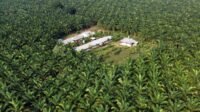
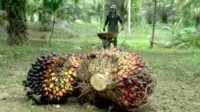
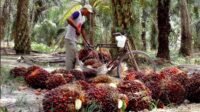
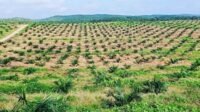
Unlike El Niño, which typically brings drought, La Niña often results in increased rainfall. For TLDN, this could actually benefit palm oil production, especially in the company’s estates across Kalimantan.
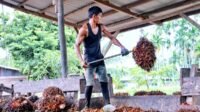
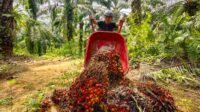
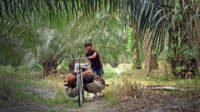
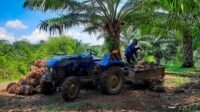
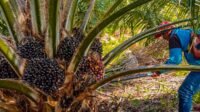
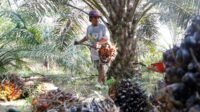
“When La Niña or wet conditions occur, rainfall in the afternoon or evening can have a positive impact on fruit formation and increase the volume of fresh fruit bunches (FFB),” Noor explained. “We also rely on an early warning system to monitor pests and diseases while ensuring smooth access for FFB harvesting and transportation to mills.”
Based on TLDN’s historical data, the impact of La Niña on productivity is generally milder than that of El Niño. During dry spells, the company mitigates yield declines through the use of precision technologies and efficient water management.
Technology as a Climate Adaptation Tool
To strengthen climate resilience, TLDN utilizes its proprietary Teladan Productivity Technology Science (TPTS) platform—an Internet of Things (IoT)-based system that provides real-time monitoring of weather conditions, soil moisture, and plant health. This allows faster and more informed decision-making, including crop scheduling and harvest management.
“During last year’s El Niño, we successfully maintained production levels, recording 1,071,173 tons of core FFB in 2024—up 0.3% from 2023. Plasma FFB production also rose 2.3% year-on-year to 148,121 tons,” Noor added.
This momentum continued into the first half of 2025, with core FFB production reaching 544,287 tons, up 4.5% YoY, while plasma FFB climbed 9.6% YoY to 75,478 tons.
Despite increasingly unpredictable global climate patterns, TLDN remains optimistic. The company believes that science-based management, precision technology investment, and strong operational readiness are key to sustaining productivity in the long term.
“La Niña requires vigilance, but for us, it’s also an opportunity to prove that the plantation sector can be both resilient and adaptive,” Noor concluded. (P2)