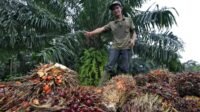
PALMOILMAGAZINE, MAKASSAR — The push for palm oil downstreaming is now reaching micro, small, and medium enterprises (MSMEs) in South Sulawesi. A recent workshop in Makassar showcased how palm oil–based chocolate can not only become a reality but also serve as an entry point to global markets.
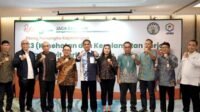
Organized by the Makassar branch of the Industrial Services and Standards Agency for Plantation, Mineral, and Maritime Products (BBSPJIHPMM) — a technical unit under the Ministry of Industry — the workshop was held in collaboration with the Palm Oil Plantation Fund Management Agency (BPDPKS) and APKASINDO Perjuangan from April 22 to 24, 2025.
The event, titled “Palm Oil Product Innovation: Palm-Based Chocolate for MSMEs,” brought together 30 participants from local communities and MSMEs. It focused on training them to process palm oil into high-value chocolate products. Shinta Virdhian, Head of BBSPJIHPMM Makassar, described it as a strategic step to boost the competitiveness of palm oil–based MSMEs in both domestic and international markets.
Also Read: Soaring Abroad: Indonesia’s Palm Oil Exports Bring Fresh Momentum in February 2025
“Through a mix of technology and hands-on training, we want to show that downstream palm oil processing isn’t just for big corporations — it can be a growth platform for local MSMEs,” said Shinta in a statement released Monday (May 5, 2025).
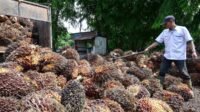
South Sulawesi has great potential in this regard, with palm oil plantations spanning 44,014 hectares and producing 112,377 tons of CPO in 2024, according to Statistics Indonesia (BPS). The province is seen as a promising hub for inclusive and sustainable palm oil–based industries in Eastern Indonesia.
Andi Rizaldi, Head of the Industrial Services Standardization and Policy Agency (BSKJI) at the Ministry of Industry, emphasized that the palm oil industry’s transformation isn’t just about exporting CPO. “It’s also about driving local economies through product diversification and MSME participation,” he said.
Anwar Saddat, Senior Analyst at BPDPKS’ MSME Division, added that the workshop was a concrete example of how palm oil funds can empower local economies. “We aim to give MSMEs access to practical, hands-on training to help them develop sustainable and innovative palm oil products,” he stated.
Echoing that sentiment, A. Sulaiman H Andi Loeloe, Secretary-General of APKASINDO Perjuangan, praised the cross-agency collaboration. He believes that palm oil–based chocolate is a creative solution to improve the economic value of smallholder palm oil.
This initiative reinforces the Ministry of Industry’s vision of broadening the impact of palm oil downstreaming beyond export value — by creating jobs, supporting small industries, and expanding local product markets.
For South Sulawesi’s MSMEs, this training offers more than just new skills. It opens the door to competing in the global market — and inspires other regions in Eastern Indonesia to innovate with their own unique palm oil–based products. (P2)