PALMOILMAGAZINE, YOGYAKARTA — Indonesia’s palm oil industry is entering a decisive new chapter, as the country shifts from defending market dominance to building a more sustainable, efficient, and value-driven industry. That message was firmly delivered by Professor Bustanul Arifin, agricultural economist at the University of Lampung, during the National Palm Oil Seminar hosted by UPN Veteran Yogyakarta on Thursday (22/1/2026.
Bustanul said the core challenge ahead is no longer simply maintaining global leadership, but ensuring a steady supply of palm oil that is sufficient in volume, consistent in quality, and fairly priced.
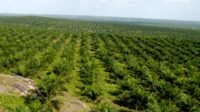
Indonesia remains the world’s largest palm oil producer, contributing about 48% of global output. In 2025, national oil palm plantation area was estimated at 17.1 million hectares, with crude palm oil (CPO) production reaching 49.4 million tons.
Also Read: Agrinas Palma Manages 1.7 Million Hectares, Posts IDR 4.3 Trillion Revenue in First Year
Amid competition from other vegetable oils, Bustanul stressed that palm oil remains the most efficient crop in terms of oil yield.
“Palm oil is still the most efficient source of vegetable oil in the world,” he said.
B40 Policy Pushes Prices: Opportunity or Warning Sign?
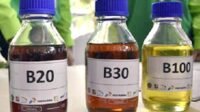
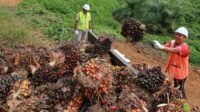
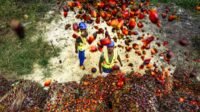
Bustanul highlighted Indonesia’s B40 biodiesel mandate as a major factor driving up CPO and cooking oil prices, which has also lifted fresh fruit bunches (FFB) prices at farmer level.
While higher prices can improve farmer incomes, he cautioned that the trend must be interpreted carefully, as rising prices may also signal tightening supply and structural vulnerabilities.
“CPO and cooking oil prices are rising, and so are smallholder FFB prices. Is this a good sign?” he asked.
Also Read: Indonesia Delays B50 Mandate as Malaysia Gains Edge in Global CPO Exports
Sustainability Certification Still Lagging
Indonesia has adopted multiple sustainability certification schemes, both voluntary—such as RSPO and ISCC—and mandatory through ISPO. However, Bustanul said implementation remains slow and must be accelerated, especially to meet growing demands for governance, traceability, and supply-chain transparency.
He emphasized that upstream strengthening cannot be approached uniformly, given the wide diversity among Indonesian smallholders. He referred to at least five distinct smallholder typologies, ranging from those partnered with companies and NGOs, to fully independent farmers reliant on middlemen, as well as those operating under KKPA and NES partnership schemes.
This diversity, he said, must be reflected in policy design so empowerment programs and technical assistance reach the right targets.
Also Read: Indonesia Maps 3.32 Million Hectares of Oil Palm Inside Forest Areas, Figure Nears 4 Million
Global Demand Rising, but Supply Growth Is Slowing
Global consumption of vegetable oils continues to climb, increasing by an average of 6.3 million tons annually over the past two decades. Palm oil and soybean oil still dominate price formation, accounting for about 57% of global consumption.
However, Bustanul warned that supply dynamics are shifting. Annual supply growth has slowed to around 1.4 million tons, compared to an average of 2.9 million tons before 2020. Meanwhile, competing vegetable oils are expanding more rapidly.
In this environment, he argued, palm oil no longer needs to defend its market share through price discounts, but must compete on efficiency and productivity.
“Palm oil is still dominant, but we no longer need to rely on price discounts to protect market share. Efficiency is what matters,” he said.
CPO Exports Decline as Rivals Advance
Bustanul noted that global CPO exports currently stand at about 55.3 million tons, representing roughly 49% of total vegetable oil trade—down from 57% in 2019.
Indonesia’s CPO exports in 2025 were estimated at 26.7 million tons, a significant decline from 30.2 million tons in 2019. Malaysia has experienced a similar trend, falling from 18.4 million tons to 15.6 million tons over the same period.
By contrast, exports of soybean, rapeseed, and sunflower oils have increased by around 8 million tons over the past six years.
EUDR Emerges as a New Shock
Bustanul warned that the European Union Deforestation Regulation (EUDR) could deliver a major impact on the palm oil sector. The regulation restricts access to the EU market unless products meet strict deforestation-free standards, comply with national laws, and pass due diligence requirements, including full geolocation traceability.
Palm oil is projected to be the most affected commodity, with exposure valued at around €5.12 billion—roughly 65% of the total value of the seven commodities covered under the policy.
“Traceability is no longer optional. It is now a condition for survival,” he said.
Low Productivity Remains the Industry’s Biggest Homework
According to Bustanul, the most pressing challenge facing Indonesia’s palm oil sector is low productivity, particularly among smallholders.
Average smallholder FFB yields are around 12.5 tons per hectare, compared with 17.5 tons at private estates—far below the potential of 30 tons per hectare. CPO productivity is also low and showing a downward trend, at approximately 3.43 tons per hectare for smallholders and 4.45 tons per hectare for large plantations, well under the potential level of 8 tons per hectare.
He attributed this gap largely to uneven adoption of Good Agricultural Practices (GAP), driven by wide variations in farm management capacity and land control among smallholders.
Downstream Expansion Must Be Anchored Upstream
In closing, Bustanul underlined that downstream industrialization is essential, but cannot succeed without strong integration with upstream reform.
He said the palm oil moratorium does not need to be lifted, as national priorities should center on boosting productivity through better cultivation practices, technical support, smallholder empowerment, and fair, transparent FFB pricing mechanisms.
Traceability and certification, he added, must be strengthened as the foundation of sector governance. He also highlighted the importance of economic diplomacy, particularly through the Indonesia–European Union Comprehensive Economic Partnership Agreement (IE-CEPA), as a strategic benchmark for downstream development.
Over the medium to long term, Bustanul encouraged Indonesia’s downstream roadmap to go beyond energy and oleochemicals, and move toward functional food industries that support health and human vitality.
“The prerequisites for successful downstream development are synergy, integration, and a strong upstream sector,” he concluded. (P2)