PALMOILMAGAZINE, SURABAYA — Sepuluh Nopember Institute of Technology (ITS) has once again demonstrated its role in supporting strategic national sectors, particularly palm oil. Through collaboration with the Palm Oil Plantation Fund Management Agency (BPDP), ITS has introduced three renewable technological innovations designed to accelerate the development of a sustainable palm oil ecosystem in Indonesia.
These three innovations are part of the 2023 Grand Palm Oil Research (GRS) program, fully funded by BPDPKS. The program enables long-term, upstream-to-downstream research that directly benefits farmers and the industry.
“The GRS scheme is highly strategic as it creates room for multi-year research with tangible results that can be felt by the community,” said Dr. Lila Yuwana, one of the lead researchers from ITS, as quoted by Palmoilmagazine.com from ITS’s official website on Thursday (June 25, 2025).
Also Read: BPDP Launches 100 Palm-Based MSME Products Catalogue to Drive Innovation and Local Economic Growth
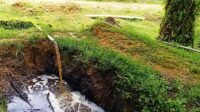
One of the flagship innovations comes from a team led by Dr. Maya Shovitri. They developed iFovib-G, an intelligent robot capable of detecting the presence of Ganoderma boninense, one of the main threats to oil palm cultivation.
“iFovib-G uses photon and vibration technology to detect the fungus before symptoms appear on the palm trunk,” explained Dr. Maya, who also teaches in the ITS Biology Department. This early detection allows preventive measures to be taken sooner, helping farmers avoid major losses from disease spread.
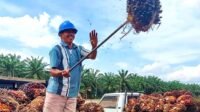
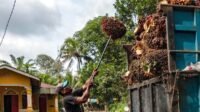
The second innovation comes from a team led by Dr. Erwin Widodo. They designed the Egrek Merah Putih, a digital oil palm harvesting tool equipped with angle sensors, a cutting assistance system, and a machine learning-based camera to detect fruit ripeness.
“With this tool, we are no longer dependent on imported harvesting poles. Additionally, work efficiency increases because it helps harvesters select only ripe fruit,” said Dr. Erwin from the ITS Department of Industrial and Systems Engineering.
To address the challenge of transporting fresh fruit bunches (FFB) from plantations to collection points, ITS also introduced the Electric Wheelbarrow—a motorized cart developed by Dr. Lila Yuwana’s team from the Department of Physics.
The cart is designed with two front wheels and a differential axle system, making it agile in narrow terrain and capable of climbing slopes without burdening the worker. “It can be charged with solar panels and travel up to 10 kilometers on a single charge,” Dr. Lila explained.
The three innovations have been directly tested on farms in South Kalimantan and the city of Surabaya, with promising results. Farmers responded positively, as the tools were proven to reduce physical fatigue and increase work efficiency.
Following the completion of the research phase in 2025, these products are being prepared for commercialization through the Indonesian Inventors Association (AII), with the goal of making them widely available to farmers and palm oil industry players.
This collaboration between ITS and BPDP is a testament to how academic innovation can address real-world challenges. ITS reaffirms its commitment to pushing forward the downstream application of research results, strengthening the role of universities in supporting a more efficient, self-reliant, and environmentally friendly palm oil industry.
Furthermore, these three innovations support the achievement of the Sustainable Development Goals (SDGs), particularly Goal 3 (Good Health and Well-being) through early plant disease detection, Goal 7 (Affordable and Clean Energy) through solar energy use, and Goal 8 (Decent Work and Economic Growth) by increasing farmer productivity.
With these steps, ITS proves that science and technology can serve as key drivers in transforming Indonesia’s palm oil sector toward a greener and more competitive future. (P2)