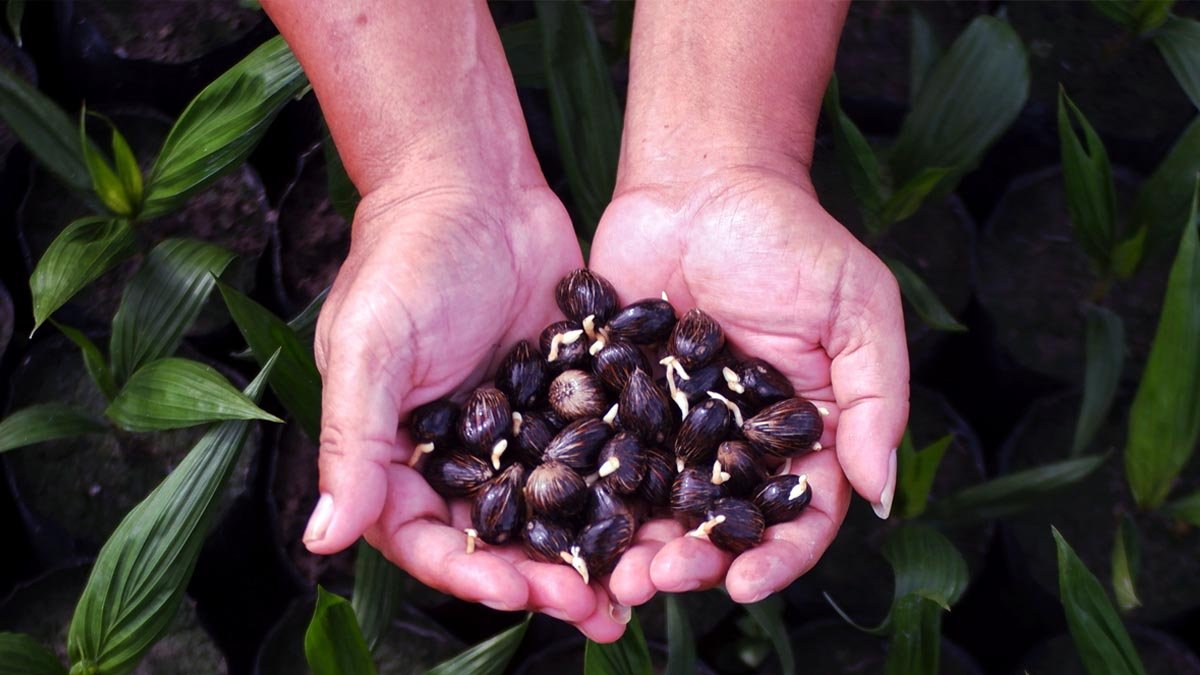
PALMOILMAGAZINE, JAKARTA — Efforts to reinforce Indonesia’s food and energy security do not always begin with downstream policies or industrial megaprojects. In many cases, the real foundation is built far from public attention—inside laboratories, through genetic research and biodiversity exploration. This is precisely the approach Indonesia is now taking by strengthening the Strategic Genetic Diversity (SDG) of oil palm, a long-term initiative with implications well beyond scientific circles.
In the near term, the program expands access to critical genetic resources needed to develop superior planting materials. Over the longer horizon, its impact is far broader: safeguarding sustainable palm oil supply for food and renewable energy, reinforcing national resilience, and securing Indonesia’s position as the world’s leading palm oil producer.
“This is about the long-term sustainability of Indonesia’s palm oil industry,” said Edy Suprianto, Senior Vice President of Business Development at PT Riset Perkebunan Nusantara (RPN). “We are not only talking about today’s harvests, but about our capacity to protect productivity for future generations.”
Aslo Read: Indonesian Lawmaker Urges Stronger Diplomacy to Counter Global Disinformation on Palm Oil
A major milestone in this agenda is Indonesia’s oil palm genetic exploration project in Tanzania, East Africa. The initiative marks a historic moment, as it is the first to receive direct support from the Plantation Fund Management Agency (BPDP). The backing goes beyond symbolism, covering research financing, quarantine facilities, and master’s degree scholarships for researchers from the Tanzania Agricultural Research Institute (TARI) through a Plant Breeding and Biotechnology program launched in September 2025.
“This collaboration reflects a shared commitment between government, industry, and research institutions,” Edy said. “We want to ensure Indonesia does not fall behind in oil palm genetic innovation, because that is where long-term competitiveness will be decided.”
The move underlines a critical reality: building a sustainable palm oil industry can no longer rely solely on land expansion or incremental productivity gains. As expansion space narrows and global sustainability requirements intensify, control over genetic resources becomes a decisive factor for the future of the industry.
Also Read: Papua Governor Bans New Palm Oil Permits, Pushes for Processing Plants and Value Addition
Indonesia’s own research journey mirrors this evolution—from modest laboratories in Deli during the early days of oil palm development to cross-continental genetic expeditions in East Africa. The policy direction is increasingly clear: sustainability is not only about production volumes, but about knowledge, innovation, and genetic conservation.
As Edy Suprianto concluded, the future of Indonesian palm oil is being shaped by today’s choices. “If we want palm oil to remain a source of national pride for the next 100 years, we must protect its genetic roots now.” (P2)