PALMOILMAGAZINE, JAKARTA — As Indonesia accelerates its renewable energy agenda, the Ministry of Industry (Kemenperin) is reassessing bioethanol feedstocks to ensure these resources do not undermine national food security. Palm biomass, sugarcane mixtures, and rice husks have been identified as three viable options considered safe for further development.
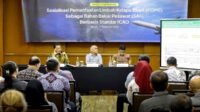
“We are very concerned about food security. That’s why we select bioethanol feedstocks that will not create conflicts of interest with the nation’s food needs,” said Apit Pria Nugraha, Head of the Ministry’s Center for Green Industry (PIH), during the Energy Outlook seminar in Jakarta on Thursday.
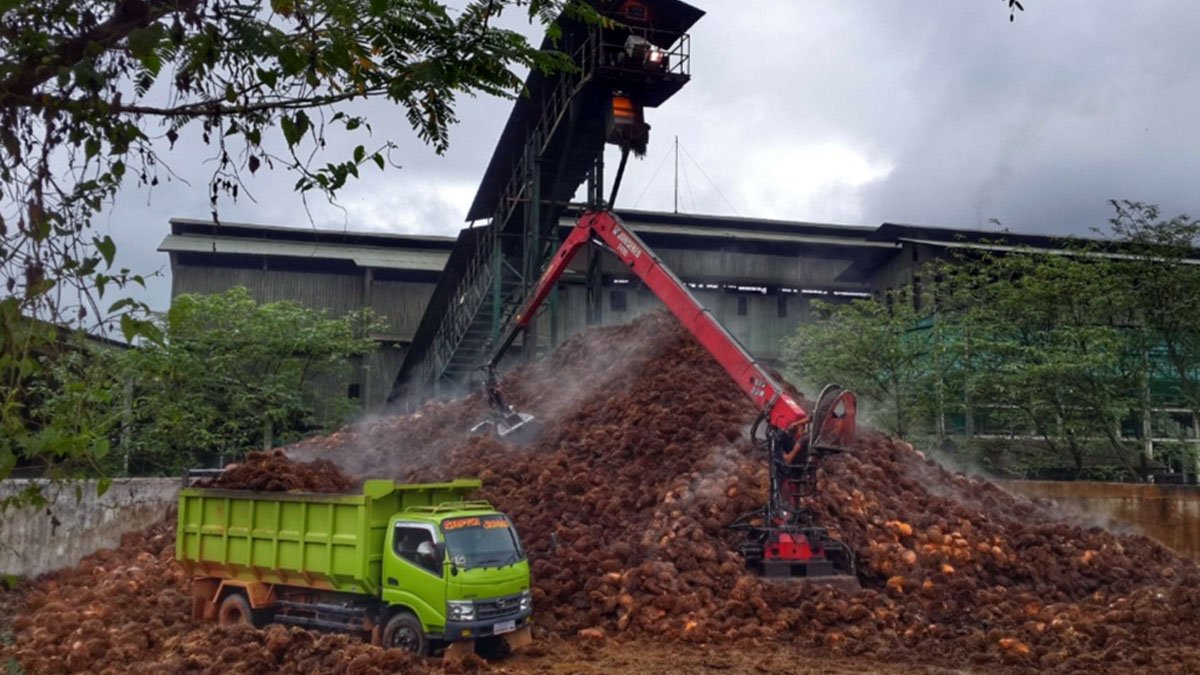
Apit explained that empty palm fruit bunches (EFB) offer substantial potential as a bioethanol source. However, processing them requires two stages — beginning with glucose extraction before being refined into bioethanol.
Also Read: India Boosts Palm Oil Imports in November as Lower Prices Shift Buyer Preference
The utilization of palm biomass waste is being advanced through collaboration between the Center for Agro-Based Industry Standardization and Services (BBSPJIA) and PT Toyota Motor Manufacturing Indonesia (TMMIN). PT Rekayasa Industri and the Bandung Institute of Technology (ITB) also serve as strategic partners in developing renewable energy technologies.
However, Apit acknowledged that economic feasibility remains the largest hurdle. Two development schemes are now being discussed: sending palm bunches to centralized processing facilities or building processing units closer to the raw material source.
“In my view, it’s better to bring the processing facilities closer to the palm bunches, so once they’re converted into bioethanol, the value-added stays higher. That’s one of the options,” Apit said, as quoted by Palmoilmagazine.com from Antara.
Also Read: Finance Minister Purbaya: Palm Oil Industry Remains the Backbone of Indonesia’s Economy
In addition to palm biomass, blended sugarcane feedstocks and rice husks are considered other safe alternatives that do not interfere with food security. “These are the options that don’t conflict with food needs. These are the pathways we choose — though they’re not easy,” Apit added.
From the energy policy side, the Ministry of Energy and Mineral Resources (ESDM) projects that the mandatory 10 percent bioethanol blending program (E10) could be rolled out by 2028 or sooner. E10 refers to a gasoline blend containing 10 percent bioethanol.
Eniya Listiani Dewi, Director General of New, Renewable Energy, and Energy Conservation at the Ministry, said the mandate is designed to curb the country’s high gasoline import levels.
Data from the ministry show that Indonesia continued to import 330 million barrels of oil in 2024 — comprised of 128 million barrels of crude and 202 million barrels of refined fuel — while domestic oil production reached only 212 million barrels within the same year.
By advancing bioethanol derived from non-food feedstocks, the government hopes to ease import pressures while unlocking greater use of agricultural and plantation waste as a future energy source. (P2)