PALMOILMAGAZINE, JAKARTA — The Indonesian government is reinforcing its position in international trade amid global uncertainties through active and measured economic diplomacy. The strategy aims to safeguard national interests, expand market access, and enhance the global competitiveness of Indonesian products.
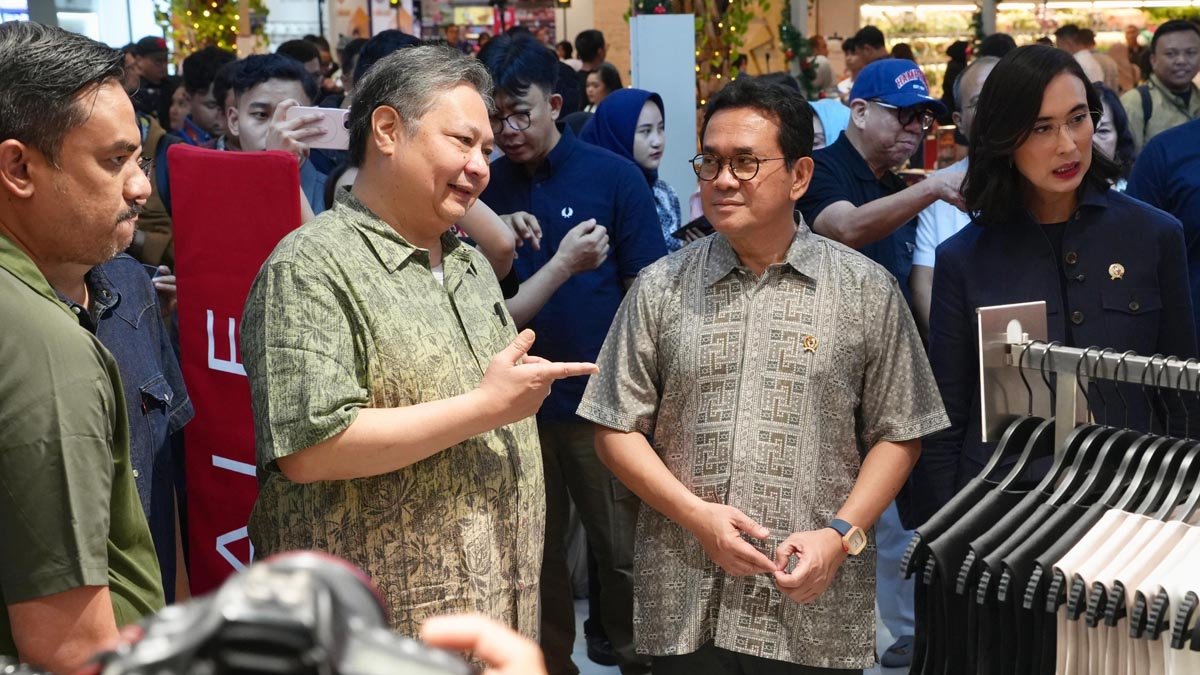
Speaking at a media briefing in Jakarta on Friday (Dec. 26), Coordinating Minister for Economic Affairs Airlangga Hartarto said trade cooperation with the United States has made significant progress across multiple sectors.
“Discussions with the United States have covered all sectors, including access to critical minerals. Talks are already underway with U.S. export authorities, and American companies have engaged directly with Indonesian critical mineral producers. This access is being facilitated by the government,” Airlangga said.
Indonesia and the Office of the United States Trade Representative (USTR) have agreed on all key and technical elements of the Agreements on Reciprocal Trade (ART) during meetings in Washington, D.C., based on a balanced approach that accommodates the interests of both countries. Under the agreement, the U.S. has granted tariff exemptions for several of Indonesia’s flagship exports, including crude palm oil (CPO), coffee, tea, cocoa, and a range of labor-intensive manufactured products. The exemptions are expected to preserve Indonesia’s export competitiveness while providing greater certainty for domestic businesses.
Beyond tariffs, Indonesia–U.S. cooperation also covers cross-sectoral issues, notably critical minerals. Airlangga emphasized that collaboration in this area is not new, citing the long-standing presence of U.S. companies in Indonesia’s mining sector, including Freeport’s operations since 1967, as well as investments by other multinational firms.
The ART document is currently undergoing legal scrubbing and finalization. The government is targeting the signing of the agreement by the Presidents of Indonesia and the United States before the end of January 2026.
At the same time, Indonesia is accelerating export market diversification by strengthening trade ties with non-traditional partners. A key milestone was the signing of the Indonesia–Eurasian Economic Union Free Trade Agreement (I-EAEU FTA) on December 21, 2025. The agreement opens access to the Eurasian region—comprising Russia, Kazakhstan, Kyrgyzstan, Belarus, and Armenia—with a combined population of nearly 180 million and a total GDP of about USD 2.56 trillion. More than 95% of trade value under the agreement will receive tariff preferences, with average import duties close to zero.
Through the FTA, Indonesia is expected to boost exports of leading commodities such as CPO and its derivatives, footwear, coffee, cocoa, textiles, fisheries products, as well as digital services and creative economy outputs. In addition to diversifying export destinations, the agreement is projected to lift Indonesia’s economic growth by up to 2.36% and strengthen the competitiveness of value-added products.
To accelerate utilization of trade agreements, the government is encouraging the establishment of business councils and the organization of business forums with partner countries, including those in Eurasia and the European Union. These initiatives are intended to facilitate direct engagement among businesses and speed up trade cooperation without waiting for the full ratification process.
The government reaffirmed its commitment to balancing domestic economic resilience with broader global market access. By expanding its network of international trade agreements, Indonesia aims to improve export performance, widen opportunities for businesses—including MSMEs—and sustain long-term economic resilience.
“The government is safeguarding domestic purchasing power while opening new markets abroad, including through the I-EAEU agreement. With average import duties already close to zero, Indonesian businesses—including MSMEs—now have greater opportunities to compete and access global markets,” Airlangga concluded.
The briefing was attended by several ministers and senior officials, including the Minister of Trade, the Minister of Tourism, the Minister for MSMEs, the Minister of Religious Affairs, senior officials from the Coordinating Ministry for Economic Affairs, as well as leaders of major retail and shopping center associations. (*)
Source: Coordinating Ministry for Economic Affairs of the Republic of Indonesia